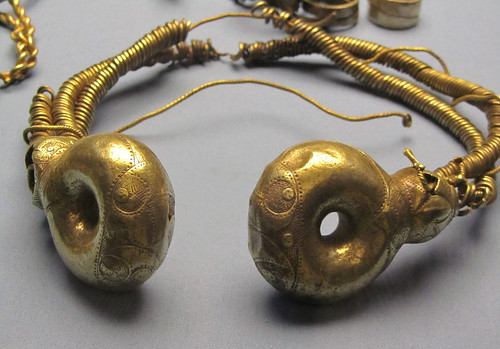
Number 1 is a torc (neck ornament) from the Snettisham hoard. It's one ofmore than 150 pieces of Iron Age gold found in the 1950s in a field near the Norfolk seaside town of Snettisham,. It's not clear where the items came from originally, but it's been suggested that they were part of the royal Iceni treasure. (Queen Boadicea's tribe.)
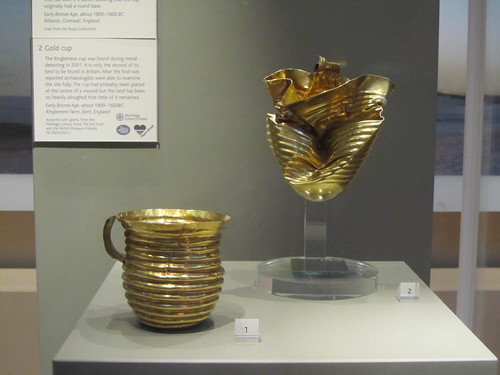
Here's the Rillaton Cup. Found in a Bronze Age round barrow in Cornwall. Excavated in 1837 and containing a centrally-placed inhumation in a stone cist measuring 2m by almost 1m. Human remains were found along with grave goods including the Rillaton Gold Cup, a bronze dagger, beads, pottery, glass and other items. The squashed cup above is from Ringlemere in Kent. Found in 2001 by metal detectorists.
.
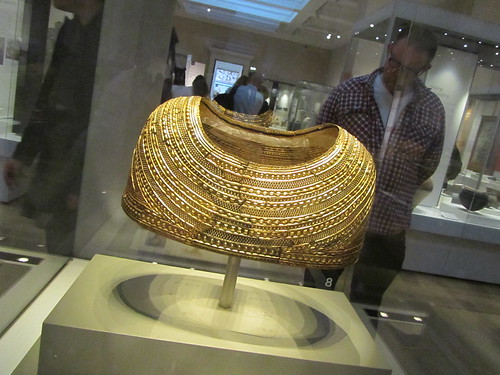
The Mold cape, from near Mold in North Wales. Found in 1833 in a Bronze Age burial. The cape is clearly ceremonial since wearing it would make it impossible to move the arms. It is extremely narrow and almost certainly worn by a woman.
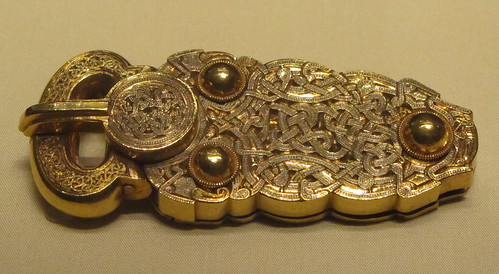
This is the magnificent belt buckle found in the best preserved Anglo-Saxon boat burial at Sutton Hoo in Suffolk. The site was excavated in 1939 and is one of the richest graves dating from the period (early 7th century). The grave is possibly that of Rædwald, the ruler of the East Angles, and there are many parallels with the poem Beowulf.
Merry Christmas one and all!
