Showing posts with label Five things. Show all posts

June 09, 2017

Five clocks (four clocks and a sign, really)

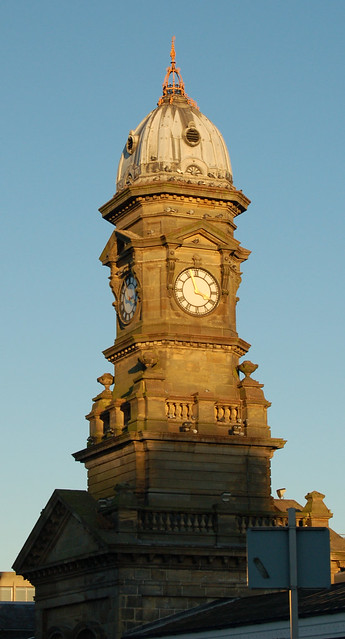
Yes, it's a clock. Specifically it's the clock on the top of Scarborough railway station. It's a symbol from my teen years because it stands opposite the old Odeon Cinema (which is now the Stephen Joseph Theatre where Alan Aykbourn plays are always premiered) and many's the evening or afternoon that I've stood looking at this clock while waiting to meet a date. (You get to know it particularly well on the occasions that said date doesn't turn up.  How much longer do I leave it before I accept that I've been stood up?)

Scarborough station opened on Monday 7 July 1845, following the completion of the line from York. The station clock was added in about 1884, and was built by Potts of Leeds costing £110, or around £10,000 at today's prices.  The whole building is Grade II listed. Interestingly (and something I didn't know until I began my research) it has the longest station bench in the world, at a staggering 95 yards long.
It was needed to accommodate the hundreds of tourists who flocked to the town to drink the spa waters and enjoy the sea air.

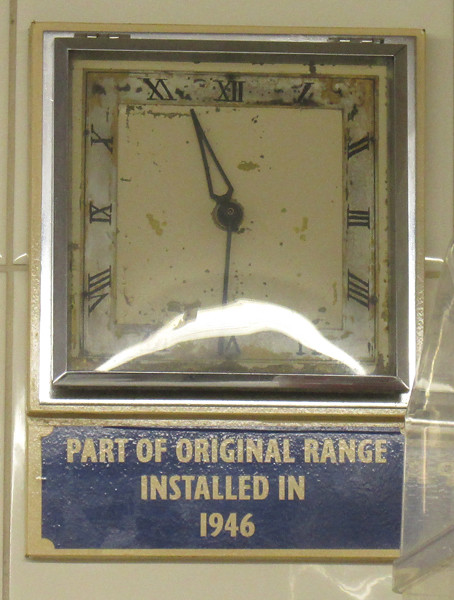
You might have seen this wonderful thing before if you read my blogs regularly. It's clearly labelled with its date and purpose. What's a range you ask?  It's the thing you cook fish and chips in, and this was the clock that I used to stare at while waiting for my "six penn'orth of chips and scraps" at my local chippy.

The old range didn't meet modern catering hygiene standards and was replaced by a shining stainless steel construction a few years back. I can still remember the beautiful green and off-white sunray back plate in wonderful art deco style. I'm pleased to say that they kept the clock.

Except it isn't a clock, it's a timepiece. What's the difference?  A clock chimes. It has a bell. Indeed the word clock derives from various old Germanic, Celtic and French words for bell - like clocca and glocken.

Here's one for my transatlantic friends. It is, of course, the clock in the heart of Grand Central Station in New York. Grand Central is a rapid transit railroad station and you can find it at 42nd and Park. They use the word 'iconic' a lot these days but this thing truly is. Wikipedia says: "The four-faced brass clock on top of the information booth was designed by Henry Edward Bedford (1860–1932) and cast in Waterbury, Connecticut. Each of the four clock faces is made from opalescent glass, though urban legend has it that the faces are made of opal and that Sotheby's and Christie's have estimated their value to be between $10 million and $20 million."

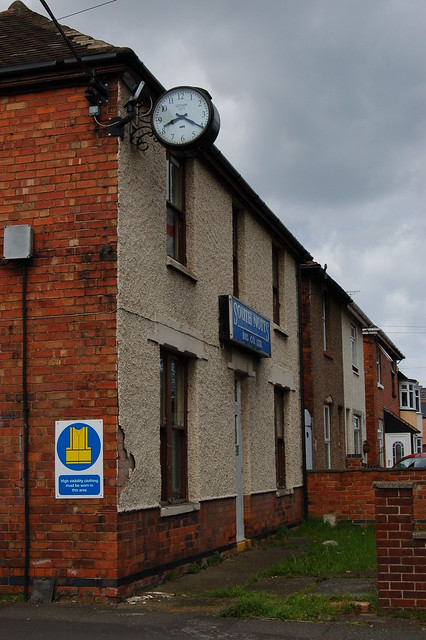
You'll need to look very closely at this one even to spot the clock, let alone see why it's important. It's in the Nottinghamshire village of Gotham (pronounced Goat-um. Sorry to disappoint you.) and it's on the side of the bus depot.  Look really closely though......
Yes - it does say Gotham City and that is the bat symbol above the six!

Which brings us to five.
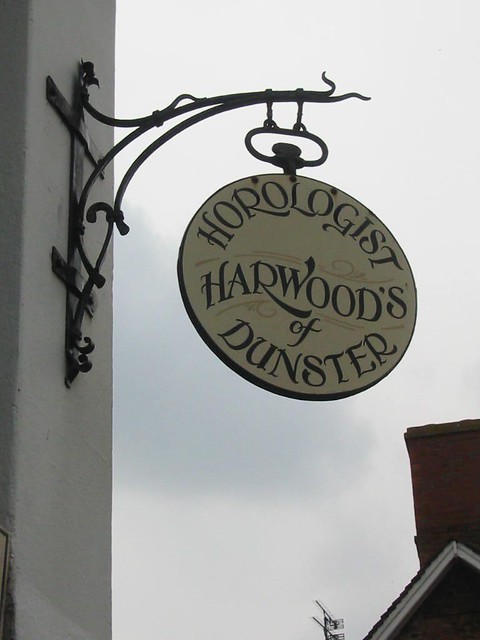
This one is self-explanatory. A horologist is a clock maker and repairer. Literally 'one who studies the hours'. I've always loved this sign. It's in the gorgeous Somerset village of Dunster and it's just so perfect for the shop. A huge pocket-watch hanging over the door.

So there you are.  Now the clocks are saying it's time for you to travel over to Tricky's FAST Blog to see other Fives this Friday.


May 12, 2017

Five things: the Cinque Ports

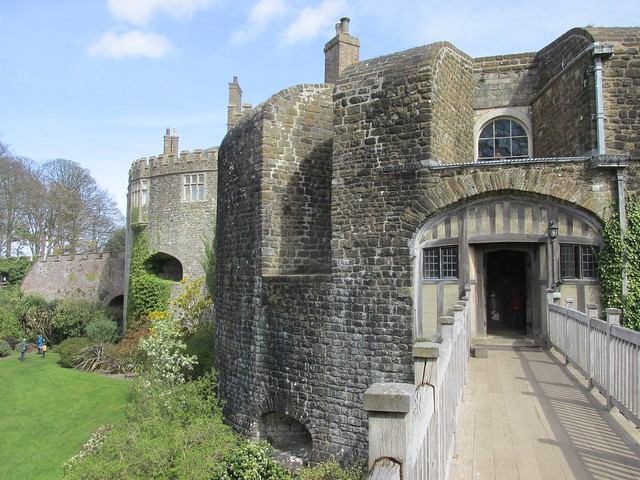
Entrance to Walmer Castle
There is a group of old towns on the south east coast of Britain called the Cinque Ports. The name is Norman French and means "five ports" because that's how many of them there originally were. Hastings, New Romney, Hythe, Dover and Sandwich. New Romney, however,  was damaged by storms and its harbour silted up, so its place was taken by Rye, which was already associated with the group in a way described below.

The five initially joined forces to create a military and trade association to defend the area against potential threats from the English Channel but the arrangement is now completely ceremonial.

The first team must have been proud of the name because they never changed it, in spite of enrolling lots of other towns to support them. Rye (mentioned above) and Winchelsea, were designated "Antient Towns" and the many other places were deemed to be 'limbs' of the original five. At its height the Cinque Ports alliance included 42 towns and villages - but quarante-deux ports doesn't have the same ring to it.

Among them were Bekesbourne, Bulverhythe, Eastbourne, Bexhill-on-Sea, Pevensey, Reculver, Sarre, Walmer, Ramsgate, Brightlingsea, Birchington, St John's (part of Margate), Margate, Folkestone, Ringwould, Woodchurch, Kingsdown and West Hythe. (This is not an exhaustive list!)

Incidentally, it's pronounced "sink ports" not "sank" like proper French would be. But then, Happisburgh in Norfolk is pronounced "Hazebruh" so what does the south east coast know?

In 1155 the Cinque Ports received a Royal Charter to maintain ships ready for the Crown in case of need. The towns were expected to provide 57 ships for 15 days service each, but in exchange residents were exempt from a number of taxes and had various rights - one of which was the right to break into someone's property in order to build sea defences! They were also allowed to keep some of the salvage from shipwrecks. Such privileges made the area a haven for smugglers because the revenue men stayed out of their way. 

Over the years flood, high tides, the French and other marauding forces changed the coast in many ways. Erosion and geological movement mean that Sandwich, for example, is now three miles inland. Hastings harbour was sacked by the French in the 13th century and the town no longer acts as a port. (Though it's a lovely fishing town, but they haul the boats up onto the beach.)

In keeping with their current ceremonial status the Cinque Ports today have an official leader called the Lord Warden. The title has often been held by Prime Ministers or other big wigs. Pitt the Younger was Lord Warden in the 18th century and around 20 years later the role went to Arthur Wellesley, Duke of Wellington. Winston Churchill was appointed, as was The Queen Mother. The current holder is Admiral of the Fleet Michael, Baron Boyce. One thing they all have in common is that the post gives them the right to live in Walmer Castle - though these days they tend to have a ceremonial annual week, rather than permanent residence.

Like lots of things in this fair country, the Cinque Ports are a remnant of an older time that are now completely irrelevant, but they impress younger countries who can’t trace their traditions back 200 years, let alone nearly 1,000. They’re pointless. But we can’t quite bear to get rid of them.
Now go over to Tricky's FAST blog to see more Fives on Friday. 

April 07, 2017

Margate 5

Sorry for a very brief Five this week. We've been away for my birthday.  Where?  Margate. (It's in Kent.) So here's five things from there.


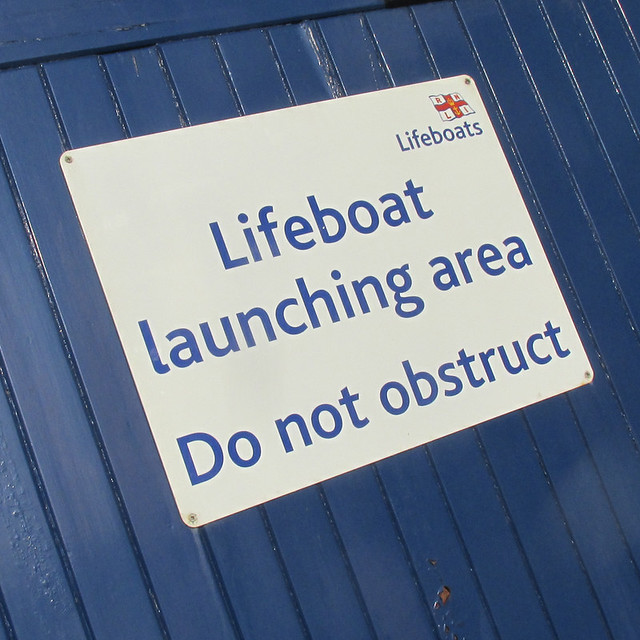
The RNLI is the charity that saves lives at sea.  Hundreds of men and women up and down the country risk their lives regularly in rough and hazardous seas to go to the help of others. There's a rescue boat near the harbour arm in Margate.

This clock is on the tower of the tourist information office, known as the Droit House, a building which used to act as the customs house and also the place where ships paid fees to enter the harbour.


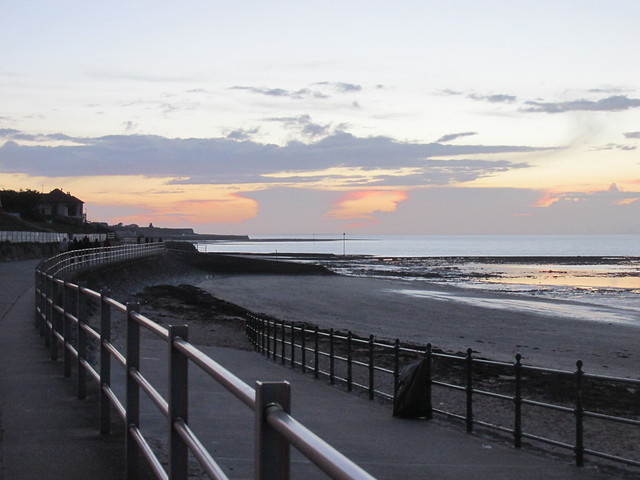
The artist JMW Turner said Margate had the finest skies in all of Europe.  And I have to admit they've been pretty good this week.

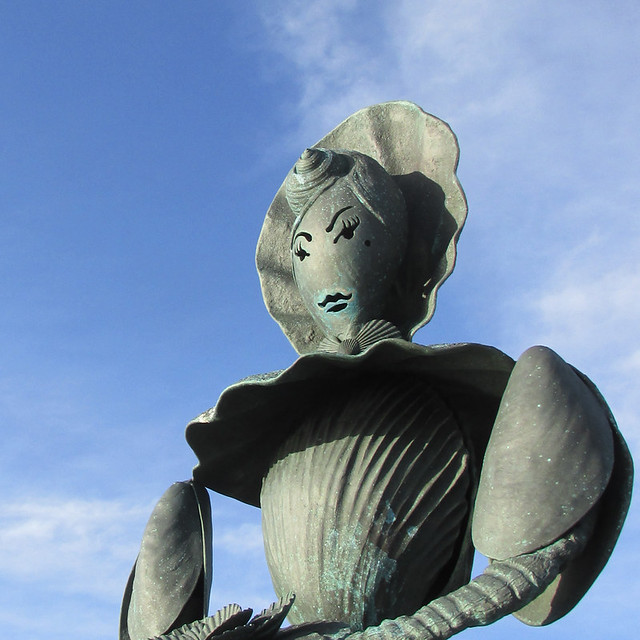
Turner was a bit of a rogue and in later life lived in Margate with a Mrs Booth - seaside landlady. While there he was known as Mr Booth, even though he had a wife and children back home in London.  There's a sculpture on the harbour arm that's called Mrs Booth, and it's shaped like a souvenir shell lady - except it's MUCH bigger.


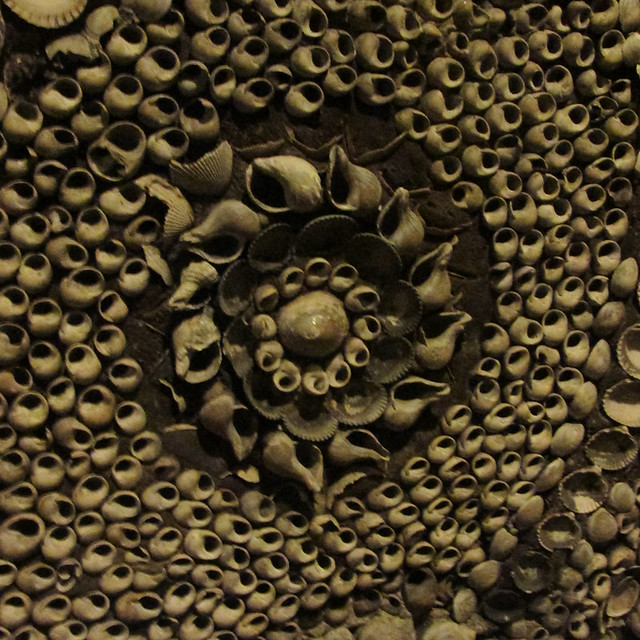
And finally - hidden in a back street away from the town centre is a mysterious cave. 104 feet long and decorated with 4.6 million shells. No-one knows who made it, when or why, but it was discovered in the 1830s and opened as a tourist attraction very shortly after. It deserves a post of its own - so watch out for more about it later.

This has been a very bitty Five on Friday post. Now head over to Tricky's FAST blog to see others that have been put together with much more care than mine!