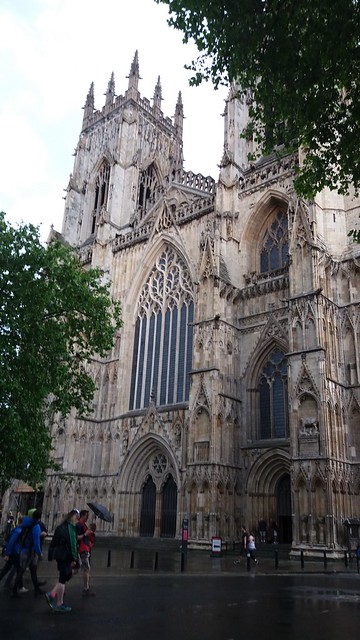
Yorkshire's a funny county. They do things slightly differently there. For example, they eat fruit cake with cheese. (Try it before you sneer!) And where everyone else calls the biggest church in an area a cathedral, York (and other Yorkshire towns) has a Minster. Apparently, according to the Internet, a Minster church is one that was established in Anglo-Saxon times and was attached to a monastery. (But that doesn't explain why Peterborough Cathedral isn't a Minster.) Anyhow, one of the most beautiful sights in York is the Minster. It's a lovely church and really is the heart of Yorkshire - a name they have given to one of the Minster's glorious stained glass windows. Only an outside view, I'm afraid, but you can make out the heart pretty much central to the photo.
Bars and gates
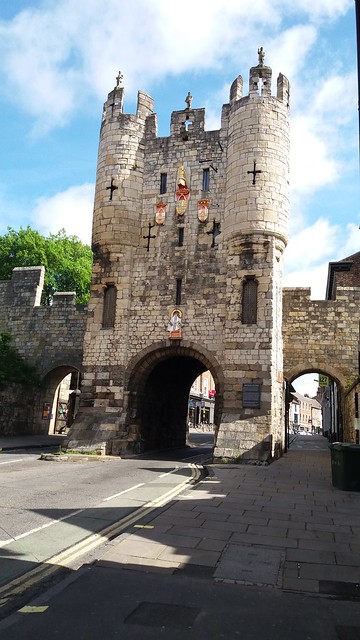
Talking of doing things differently - this is Micklegate Bar. It's one of the ways through the old city walls. (Incidentally, York has one of the most complete, original medieval city walls in the UK.) You might think it's called Micklegate because it's a gate, right? Well it isn't. Gate means street. Bar means gate. And mickle means small. So this is Little Street Gate.
The Shambles
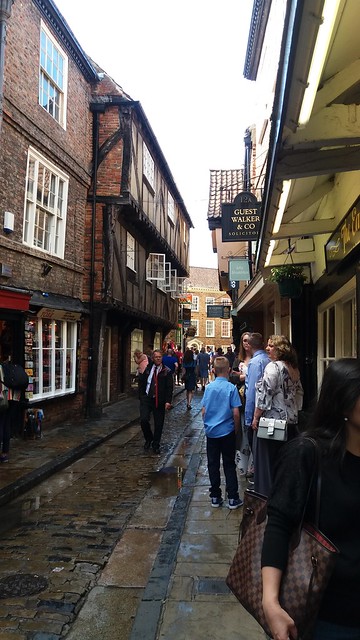
The Shambles is one of York's best known streets. It has lots of claims to fame: Europe's most visited street; Europe's best preserved Medieval street; and most recently, the inspiration for Diagon Alley in the Harry Potter films. In fact you can hear lots of different languages as you walk along the narrow way: you don't understand a word until someone says "Diagon Alley", then continues talking in whatever native tongue they're using.
The word Shambles originates from the Medieval word shamel, which meant booth or bench. The street was the home of the butchers of York and the road has deep channels at each side where water could be sluiced through to wash away the blood and waste.
The street is so narrow, and the buildings overhang so far, that it's possible to shake hands across the road from the upper storeys.
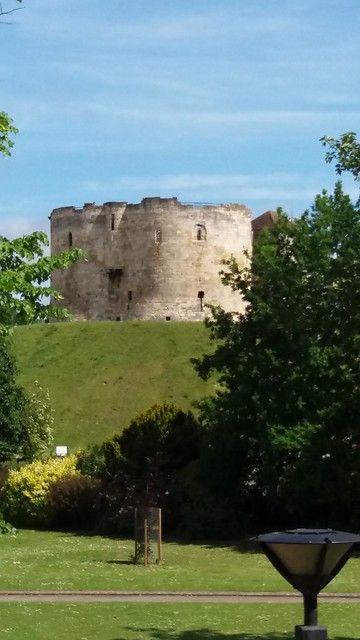
Clifford's Tower
Clifford’s Tower is one of York's best known landmarks. It is part of the old York Castle, once the centre of government for the north of England. It's a motte and bailey structure: the motte being the steep mound and the bailey being the flat area around the mound. Originally there was an 11th-century timber tower on top but it was burned down in 1190, when York’s Jewish community, some 150 strong, was besieged by a mob and forced to seek refuge inside. They committed mass suicide. The present limestone tower dates from the 13th century and was surrounded by a moat
The views from the top are stunning, although tourists don't care about walking in front of you while you're trying to capture it on video. And they seem to ignore the 'one way system' signs on the narrow, spiral staircases. Ho hum.
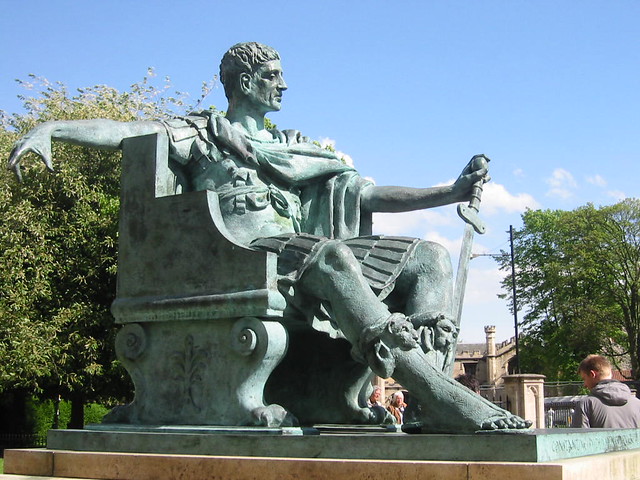
Romans
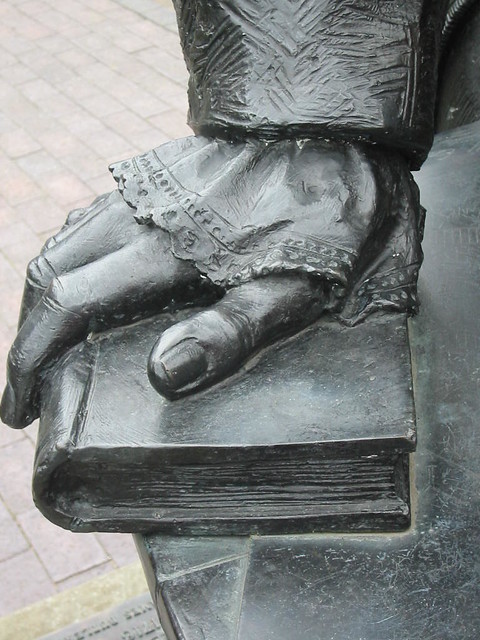
Lastly we're going back in time and forward at the same time. York was, of course, established by the Romans, who called it Eboracum. There are still remnants of the old Roman town. Stonegate, for example, has the original Roman street below it and anyone having to dig up the road soon finds Roman masonry. There's a Roman pillar stands opposite the Minster, marking the site of the basilica. It was found during repair excavations at the Minster in 1969 and erected nearby. Between the pillar and the Minster is one of my favourite public sculptures in the whole country. It's Constantine the Great by Philip Jackson; a life size bronze of the Emperor sitting in an elaborate chair and holding a broken sword. Constantine was declared emperor in York in the year 306.
OK so now you have to go and visit the wonderful Tricky over at FAST blog to see what other fives people have collected this week.
OK so now you have to go and visit the wonderful Tricky over at FAST blog to see what other fives people have collected this week.