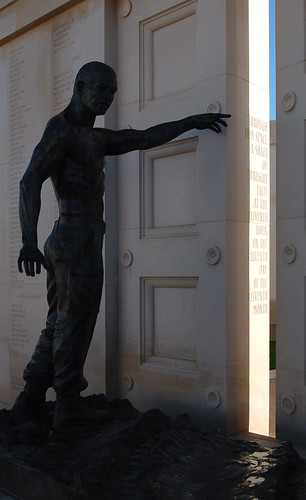
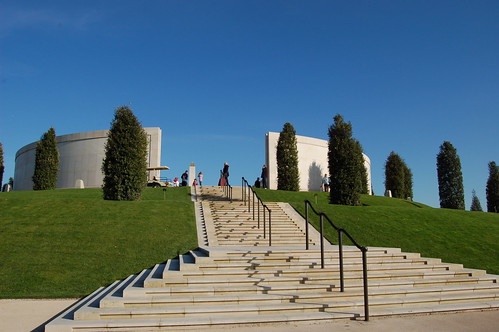
The National Memorial Arboretum at Alrewas in Staffordshire has a monument at its heart, the Armed Forces Memorial, that is still under construction.
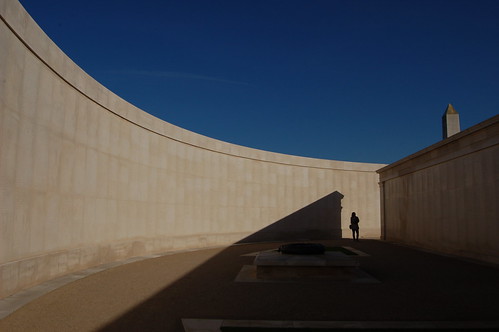
It is a vast enclosed space with sculptures representing the grief and loss that armed conflict causes. It consists of a circular wall with two straight walls across the centre. It is dedicated to the service men and women who have lost their lives in the course of their duty since the end of WWII. There are 224 columns of names with about 80 in each and the list continues to grow.
It is one of the most moving places I have ever been.
The atmosphere within the memorial is added to greatly by the skill of the sculptor - Ian Rank-Broadley. If you're British you are already familiar with his work, since he designed the portrait of the Queen on UK coinage introduced in 1998. He's one of my personal favourites and I first became aware of his work in 2002 when I saw some of his large pieces in a sculpture exhibition.
You probably can't read the words on the lit side of the wall, but it says: "Through this space a shaft of sunlight falls at the eleventh hour of the eleventh day of the eleventh month." And when it does shine through, it falls onto a bronze wreath.
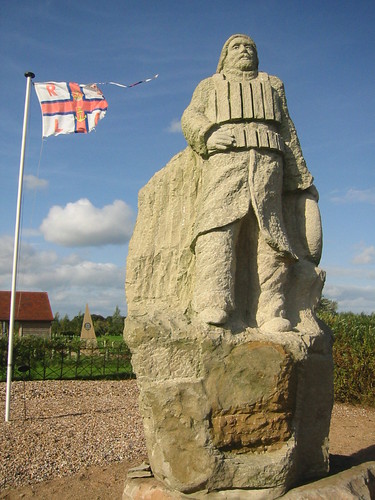
Although the memorial dominates the site, set as it is on top of a large mound, there are other monuments representing various armed forces and voluntary services, like this one commemorating the RNLI.
If you are ever within a sensible distance and you haven't already been, I recommend a visit.
This has been a Five on Friday post.
Some chat about historical things. Some of it is inspired by topics on the associated History Anorak blog.
Showing posts with label Staffordshire. Show all posts
January 27, 2017
September 30, 2016
Kitchenalia
Here we are again on Friday and it's time to join in with Amy at Love Made My Home for Five on Friday. Don't forget to visit when you're done here.
Last weekend we found a delightful place called Middleton Hall near Tamworth in Staffordshire. It's a (partly) Tudor (partly older, partly younger) house that's been restored as an educational base and craft centre. The site is managed by volunteers and I have to say that they do a wonderful job. As well as the various parts of the house, they are restoring the old gardens and orchard, the moat, the outbuildings and the surrounding parkland.
For today's purposes we are visiting the kitchen. It's in the Tudor part, but not displayed as a Tudor kitchen.
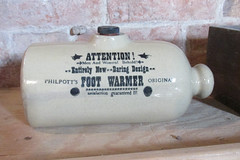
I loved this. I'm not sure of the date,but I'd guess at Edwardian. Just look at that description: "Entirely new"; "Daring Design"; "satisfaction guaranteed". Three exclamation marks!!! The sure sign of a diseased mind, according to Terry Pratchett.
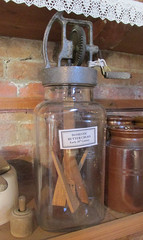
How about this? Early 20th century. In fact I saw something very similar only a couple of weeks ago being marketed by Kilner and I might just have bought it if it weren't for the hefty price tag. (A balloon whip is much cheaper and just as effective, if more tiring.) Have you ever made your own butter? It's very easy. Just whip cream until it 'breaks'. You might have to squeeze it a bit to get the whey out. Add a small amount of salt and spread on toast. Better than anything you can buy.
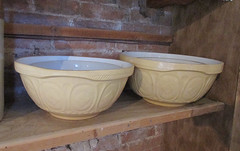
Something else you could have bought last week, except the new ones don't have the same patina somehow. You can always tell an original because it will have the words "Church Gresley" on the bottom. The company that makes them - Mason Cash - was founded there in 1800 but that pottery no longer exists. It's now part of the Liverpool-based Rayware Group which, incidentally, also owns Kilner these days. The thing is, I use original Mason Cash Church Gresley mixing bowls myself. One of them was inherited from my grandmother.
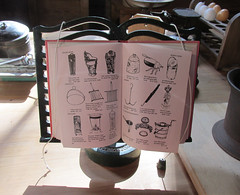
I found this fascinating, not least because those stands are intended for recipe books and that was what I expected to find on it. But this is a collector's guide to kitchen equipment, which explains the prices on it. I couldn't find a date on it so I have no idea what such things would be worth today. I want that bee-shaped silver honey pot though. Not sure what I'd do with a grape hod.
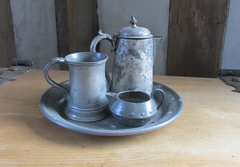
Which brings us to this, slightly cheating, photo. It wasn't in the kitchen, it was in one of the living chambers in the Tudor section of the house. I very much doubt its authenticity. That coffee pot looks distinctly 'distressed' and besides they didn't have coffee in Tudor times. I suspect the little jug belongs to some sort of Tudor revival period, possibly as recently as the 1970s. The jug and plate might be real. (Though they wouldn't leave genuine Tudor items out like that where they could be easily pinched by unscrupulous folk. Victorian, maybe.)
Last weekend we found a delightful place called Middleton Hall near Tamworth in Staffordshire. It's a (partly) Tudor (partly older, partly younger) house that's been restored as an educational base and craft centre. The site is managed by volunteers and I have to say that they do a wonderful job. As well as the various parts of the house, they are restoring the old gardens and orchard, the moat, the outbuildings and the surrounding parkland.
For today's purposes we are visiting the kitchen. It's in the Tudor part, but not displayed as a Tudor kitchen.
I loved this. I'm not sure of the date,but I'd guess at Edwardian. Just look at that description: "Entirely new"; "Daring Design"; "satisfaction guaranteed". Three exclamation marks!!! The sure sign of a diseased mind, according to Terry Pratchett.
How about this? Early 20th century. In fact I saw something very similar only a couple of weeks ago being marketed by Kilner and I might just have bought it if it weren't for the hefty price tag. (A balloon whip is much cheaper and just as effective, if more tiring.) Have you ever made your own butter? It's very easy. Just whip cream until it 'breaks'. You might have to squeeze it a bit to get the whey out. Add a small amount of salt and spread on toast. Better than anything you can buy.
Something else you could have bought last week, except the new ones don't have the same patina somehow. You can always tell an original because it will have the words "Church Gresley" on the bottom. The company that makes them - Mason Cash - was founded there in 1800 but that pottery no longer exists. It's now part of the Liverpool-based Rayware Group which, incidentally, also owns Kilner these days. The thing is, I use original Mason Cash Church Gresley mixing bowls myself. One of them was inherited from my grandmother.
I found this fascinating, not least because those stands are intended for recipe books and that was what I expected to find on it. But this is a collector's guide to kitchen equipment, which explains the prices on it. I couldn't find a date on it so I have no idea what such things would be worth today. I want that bee-shaped silver honey pot though. Not sure what I'd do with a grape hod.
Which brings us to this, slightly cheating, photo. It wasn't in the kitchen, it was in one of the living chambers in the Tudor section of the house. I very much doubt its authenticity. That coffee pot looks distinctly 'distressed' and besides they didn't have coffee in Tudor times. I suspect the little jug belongs to some sort of Tudor revival period, possibly as recently as the 1970s. The jug and plate might be real. (Though they wouldn't leave genuine Tudor items out like that where they could be easily pinched by unscrupulous folk. Victorian, maybe.)
March 18, 2016
Five Pugin details
It's Friday again and time to take part in Amy's Five on Friday meme. Click the image at the bottom of the post to be taken to her site and see other people's entries.
The Catholic Church of St Giles in Cheadle, Staffordshire is a fantasy structure with a richly decorated interior and gothic-esque exterior. The design is the work of one man - Augustus Welby Northmore Pugin. Although he contributed to many well known buildings, including the Houses of Parliament, there are very few places where he had sole control of the final design. It's stunning.
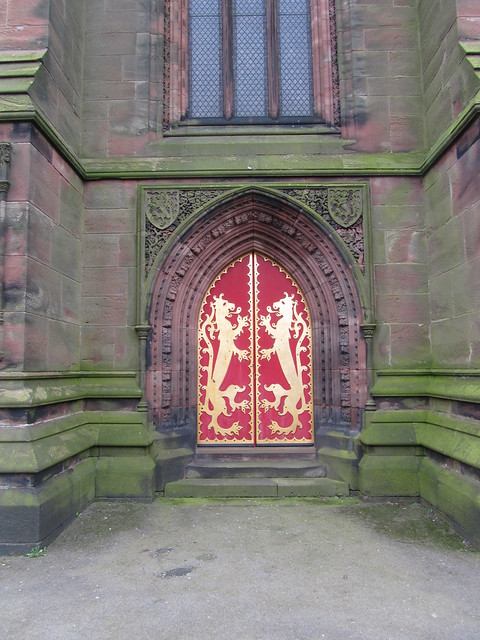
Let's start with the west door, before we go inside. Aren't those rampant lions wonderful? And all that gothic detail around the door is very reminiscent of the Middle Ages, even though St Giles was built in the 1840s.
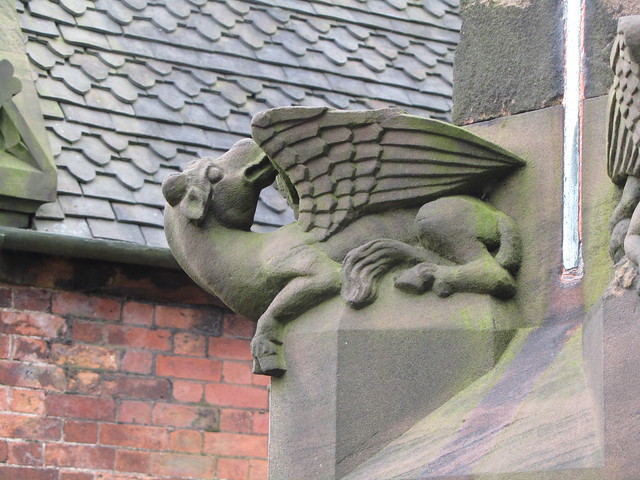
Here's another wonderful gothic detail from the exterior. I'm a sucker for a dragon and this one seems rather splendid to me.
Inside, every surface is covered in detailed decoration. This section of a pillar shows the complex letter Gs (for St Giles) incorporated in the design.
This shot shows just how much decoration the church has. No surface escapes. Every item is highly ornate and brightly coloured; painted and gilded and shaped into fantastic structures. There's a lot to take in.
And here's a part of the wall. showing how complex patterns are put side by side, adding to the myriad, contrasting styles that make up the whole. I love the colour and the cacophony and the impossibly crazy, mind blowing impression the building leaves you with.
Now click on the link below to visit Amy and her Five on Friday supporters.
The Catholic Church of St Giles in Cheadle, Staffordshire is a fantasy structure with a richly decorated interior and gothic-esque exterior. The design is the work of one man - Augustus Welby Northmore Pugin. Although he contributed to many well known buildings, including the Houses of Parliament, there are very few places where he had sole control of the final design. It's stunning.
Let's start with the west door, before we go inside. Aren't those rampant lions wonderful? And all that gothic detail around the door is very reminiscent of the Middle Ages, even though St Giles was built in the 1840s.
Here's another wonderful gothic detail from the exterior. I'm a sucker for a dragon and this one seems rather splendid to me.
Inside, every surface is covered in detailed decoration. This section of a pillar shows the complex letter Gs (for St Giles) incorporated in the design.
This shot shows just how much decoration the church has. No surface escapes. Every item is highly ornate and brightly coloured; painted and gilded and shaped into fantastic structures. There's a lot to take in.
And here's a part of the wall. showing how complex patterns are put side by side, adding to the myriad, contrasting styles that make up the whole. I love the colour and the cacophony and the impossibly crazy, mind blowing impression the building leaves you with.
Now click on the link below to visit Amy and her Five on Friday supporters.
March 11, 2016
Cow Parade
Visitors to my other blog will know that I visited Stoke on Trent a few weeks ago, where I found the wonderful Keiller collection of cow creamers at the Potteries Museum. If you want their history go to the other blog to find out more.
Meanwhile this is for Amy at Love Made My Home and it's a Five on Friday entry. Click on the pic at the bottom to visit other people's blogs who join in with the meme.
So here's a few of my favourites from the cow parade.
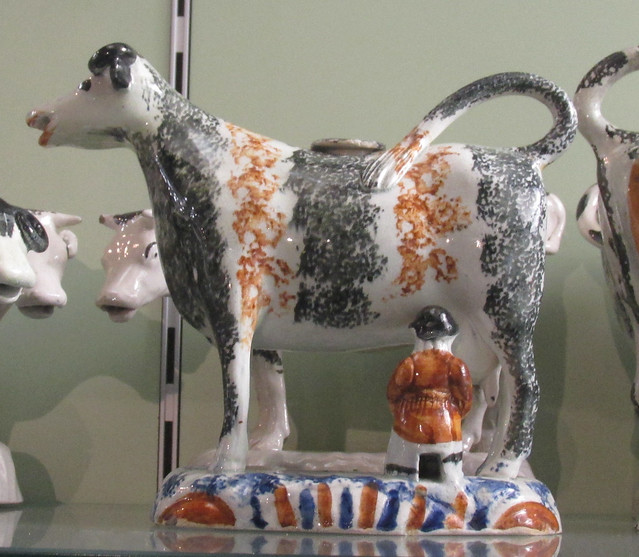
I liked this one because she looks so patient while she's being milked. She's also looking straight ahead. Lots of the creamers have their heads turned one way or the other.
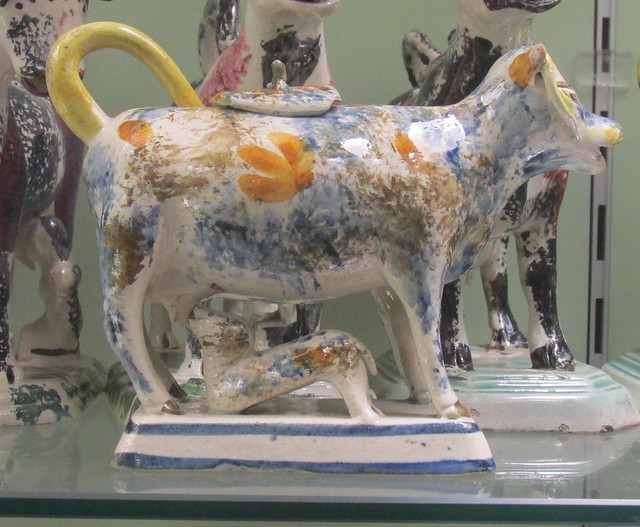
This cutie doesn't look quite so calm about being suckled by her own calf, but you have to admit, her floral pattern is rather sweet. I love the fact that her lid had a knob on top so it's easier to lift up to fill her with cream or milk.
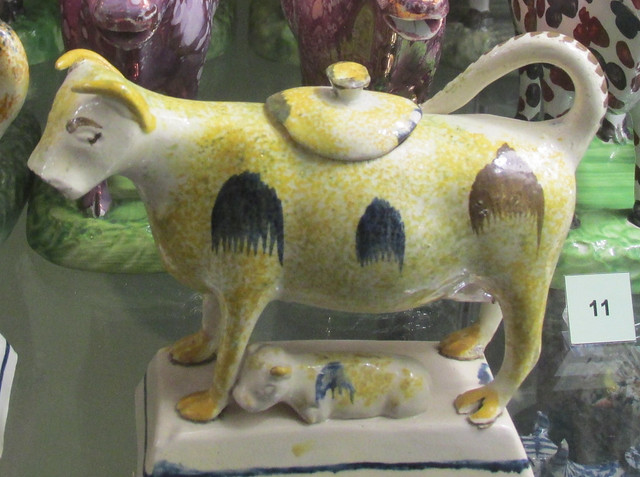
After the feed, this mum is keeping a close eye on her calf - isn't it wonderful how she's looking down at him? She looks a little worried. I hope he's OK.
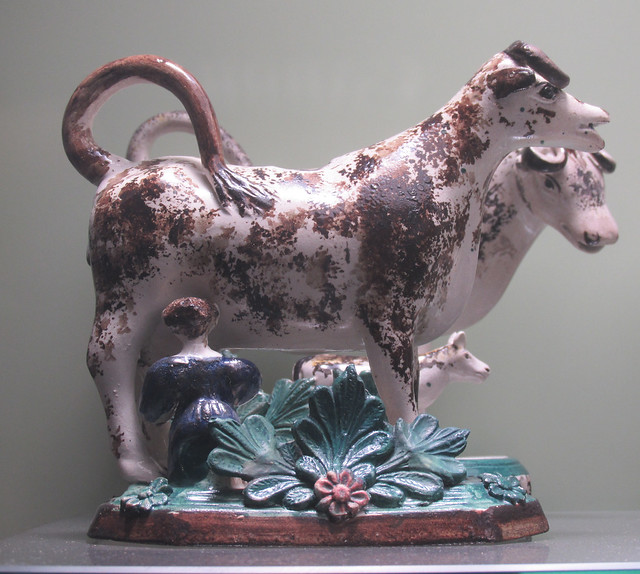
This example shows just how elaborate these creamers can be: two cows, a calf, shrubbery and a milkmaid! I'm not sure it would be easy to pour from though.
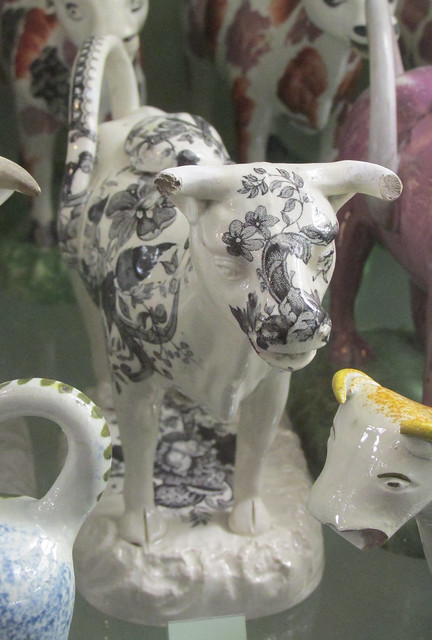
And this is my favourite. The museum runs a fund raising scheme in which you can adopt some of the cows, and this is Garten Bos, one of the potential adoptees. I almost bought an adoption pack, but maybe I'll drop some hints for upcoming birthdays and other celebrations.....
Now click on the link below to visit Amy and her Five on Friday supporters.
Meanwhile this is for Amy at Love Made My Home and it's a Five on Friday entry. Click on the pic at the bottom to visit other people's blogs who join in with the meme.
So here's a few of my favourites from the cow parade.
I liked this one because she looks so patient while she's being milked. She's also looking straight ahead. Lots of the creamers have their heads turned one way or the other.
This cutie doesn't look quite so calm about being suckled by her own calf, but you have to admit, her floral pattern is rather sweet. I love the fact that her lid had a knob on top so it's easier to lift up to fill her with cream or milk.
After the feed, this mum is keeping a close eye on her calf - isn't it wonderful how she's looking down at him? She looks a little worried. I hope he's OK.
This example shows just how elaborate these creamers can be: two cows, a calf, shrubbery and a milkmaid! I'm not sure it would be easy to pour from though.
And this is my favourite. The museum runs a fund raising scheme in which you can adopt some of the cows, and this is Garten Bos, one of the potential adoptees. I almost bought an adoption pack, but maybe I'll drop some hints for upcoming birthdays and other celebrations.....
Now click on the link below to visit Amy and her Five on Friday supporters.
Subscribe to:
Posts (Atom)