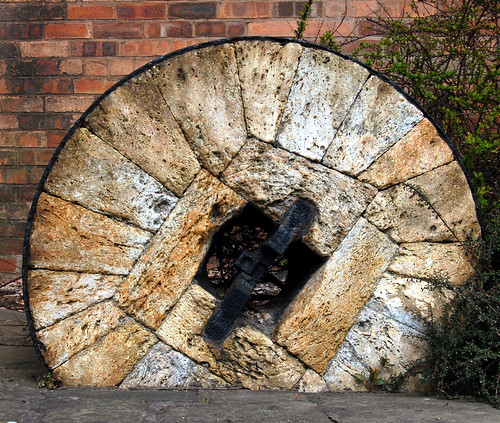
This week I have five wheels for you - or at least, things like wheels. Yes, I know I've done wheels before, but I love them!
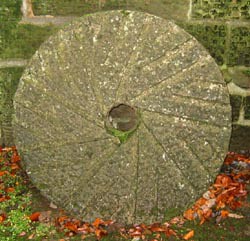 |
| English millstone |
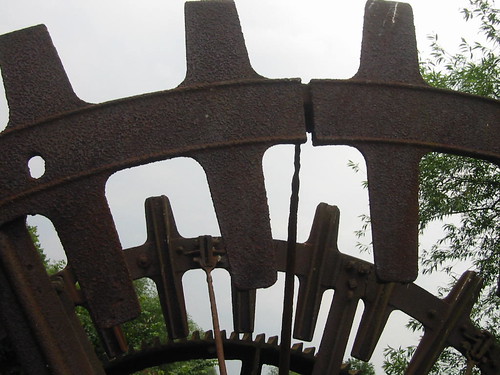
This one's from a different kind of mill. It's all that remains of the old King's Mill in Castle Donington, Leicestershire. It's wlocally rumoured to have been the place where paper for banknotes was made - hence the King's Mill - but in fact it was used to grind flint and plaster for the pottery industry, which were then shipped to the Potteries in Stoke along the nearby River Trent.
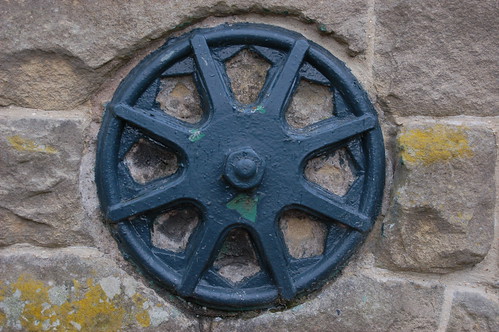
This isn't a wheel at all - because it never turned. In fact it's a support for one of the walls at Caudwell's Mill (bit of a theme going on here) at Rowsley in Derbyshire. Very close to Chatsworth. It's a grade II* listed, steam-powered, roller flour mill.

This isn't a wheel either. It's an ancient symbol of eternity, a spiral, carved onto a very old upright stone in Bakewell Church yard in Derbyshire. Not sure if it's an obelisk or the base of a cross. But it's an impressive piece of carving.
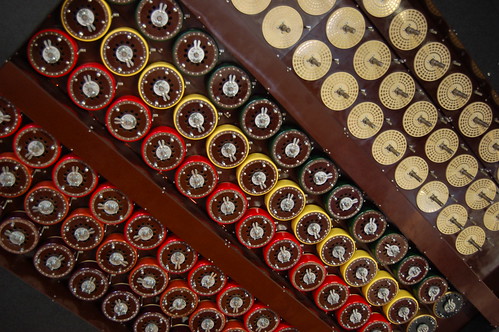
Now this is a lot of wheels that all work together. This is "the bombe", the machine invented by Alan Turing to break the German Enigma code during WWII. Well actually, it's a replica of it at the National Computing Museum in Bletchley, Buckinghamshire. Bletchley was, of course, the home of the GCHQ codebreakers. You can see it working there. What it does (did) is carry out all the different potential combinations of letters by spinning all the dials you can see in the photo. It's a very early form of computer.
