This week I'm doing sundials. I've been sorting out my photo collection and realised I have lots of pictures of them. Let me share a few....
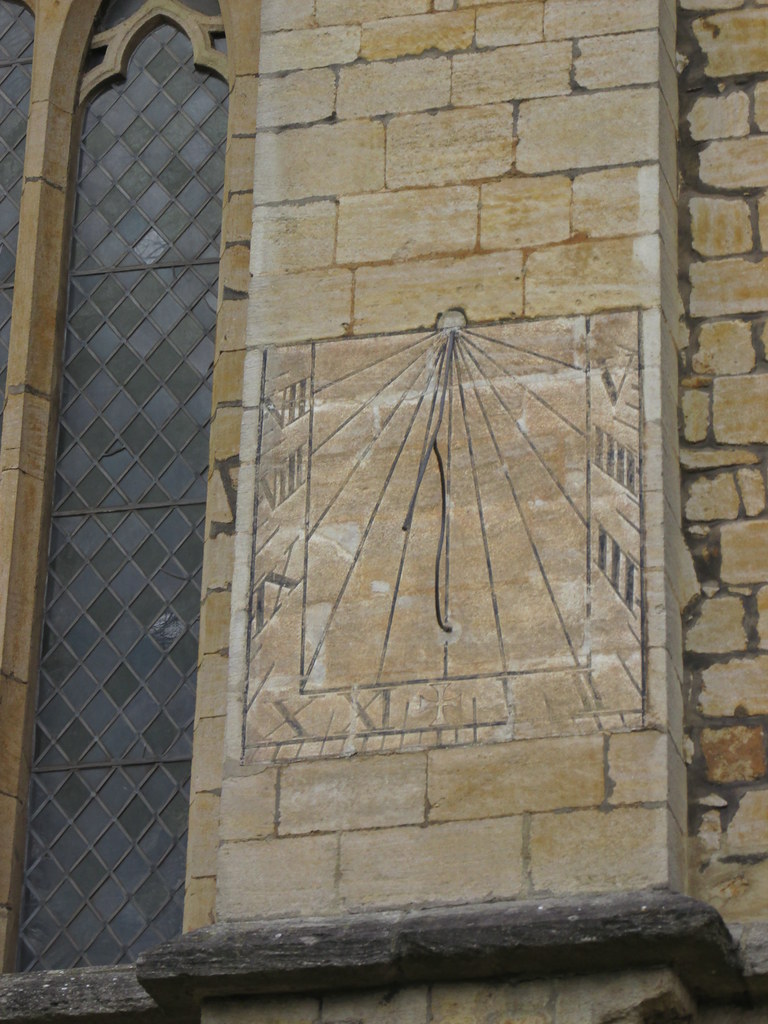
First up is a fine example from Peterborough Cathedral. In this photo you can clearly see that sundials work 'backwards' - noon is at the bottom and the other hours go the opposite way from a clock. The sun that casts the shadow comes from above and moves from east to west, so it's obvious that they have to be that way round, but it makes me wonder why the early clock makers made them go the other way.

Here's one from Whatton Gardens near Loughborough. I love its inscription "I mark no hours but the bright ones". Without sunshine a sundial doesn't work - so dark hours don't count!
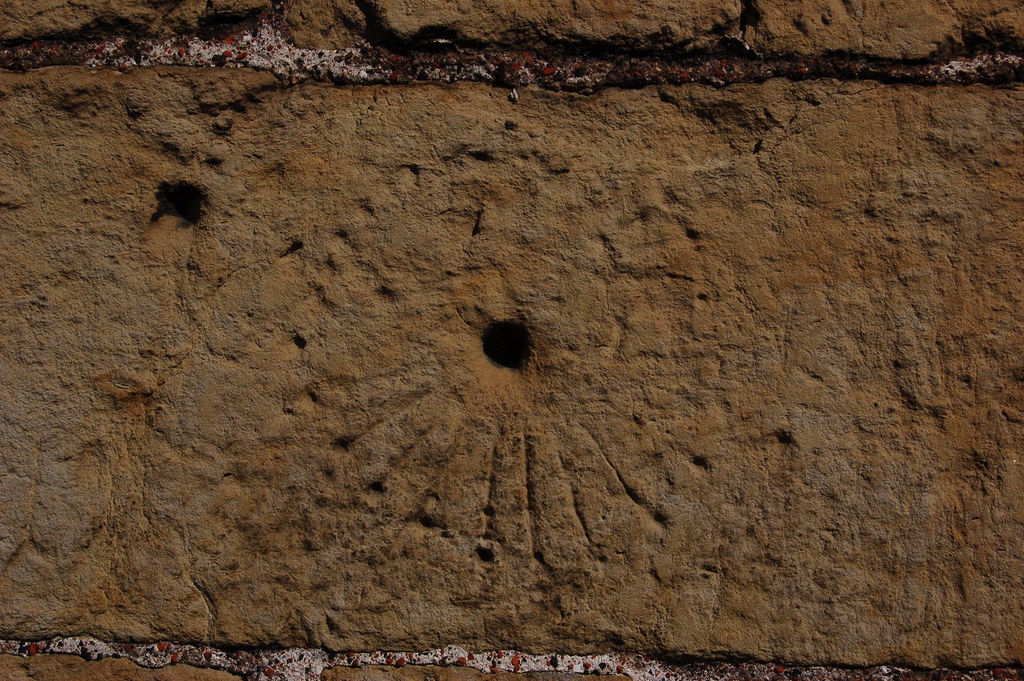
I really like this one. It's one of two on the outer wall of Rudston Church in East Yorkshire. I'm reliably informed that they are called scratch dials, and probably date from the Saxon era. Rudston is a very important village - though it looks rather small and insignificant these days - with a long and varied history. I'll do a long post one day on the other blog. Meanwhile take a look at the sundial. It has no gnomon (the bit that casts the shadow) and would have been worked by putting a stick in the hole.
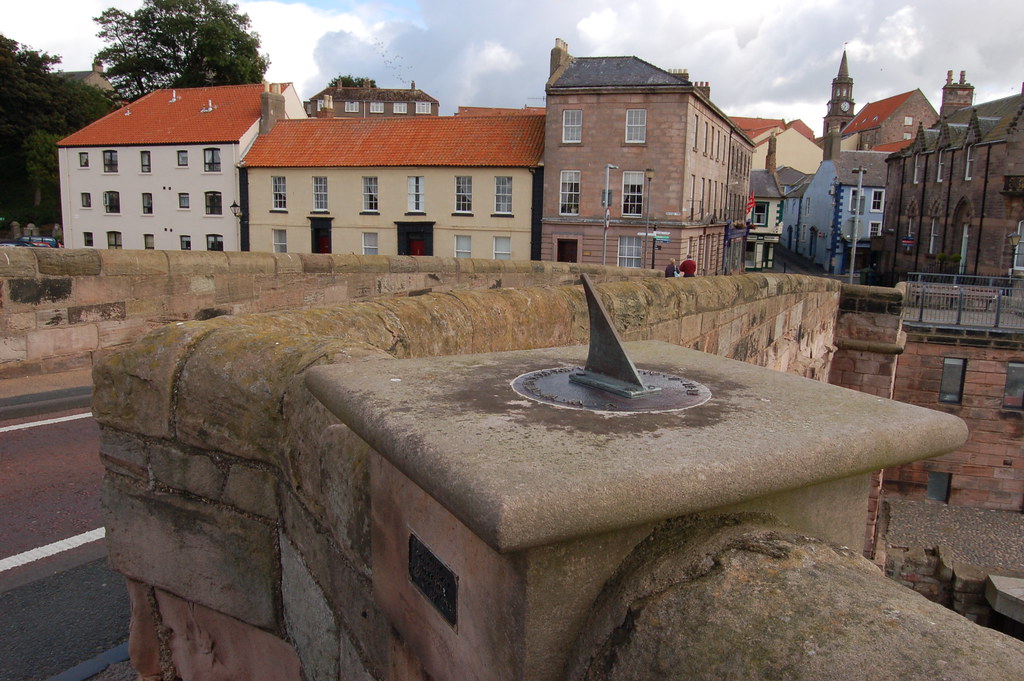
Long before the days of town clocks people still needed to know the time, so the worthies of Berwick Upon Tweed provided this handy piece for their residents on the end of a main thoroughfare bridge.

And here's one of my personal favourites. It's at Norton Priory near Runcorn in Cheshire and was created by Bevis Sale.

