Showing posts with label canals. Show all posts

July 22, 2016

Gongoozling

Well done to anyone who understands the title of this post. It probably means you won't learn much from it - because you're already in the know!

In this week's Five on Friday - to join in with Amy at Love Made My Home - we're going for a wander by the canal. Britain's canal system was the 18th century equivalent of today's motorways. They carried most freight, and often carried people too. Even at four miles an hour (walking pace) it was often faster (and definitely smoother) than travelling by road.

So let's start with some boats.
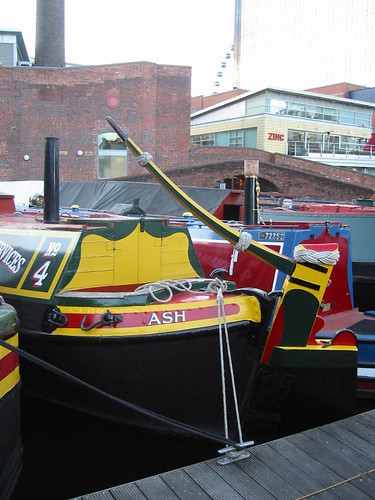
Narrow boats in the heart of Birmingham
Canal boats were also known as narrowboats. There's a reason for that. Most of them were no more than  seven feet wide and the gauge was determined by the earliest engineers who designed the canals to be not much more than 15 - 20 feet wide. Why?  Well, every yard of the 2,000 plus miles had to be dug by hand. And when they were complete they had to be supplied with water. Imagine you make the canal just three feet wider: that's 95,040 cubic feet of soil and rock to remove for each mile; and 592,000 gallons of water to find to fill it back. So they built them narrow.
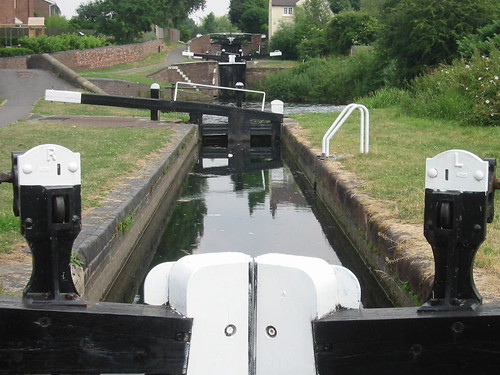
A lock flight at Stourbridge
The engineering involved in getting up and down hill was pretty tough too. That meant building locks; a complex means of raising and lowering a body of water, in a block, with a boat floating on top. The earliest locks, on James Brindley's 1769 stretch of canal, from the coalfields of Wednesbury to the heart of Birmingham, were made to take only one boat at a time - to simplify the required engineering work.
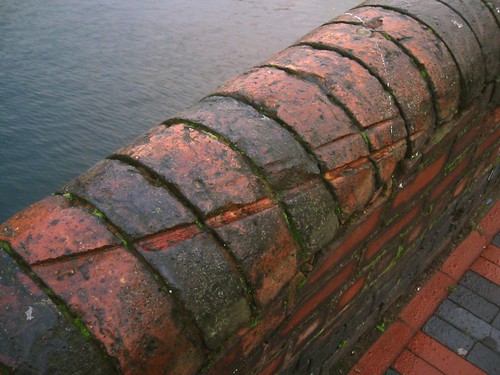
Rope wear
Of course the earliest boats weren't mechanised. They were hauled by heavy horses, by means of long ropes. The ropes were often wet because they had dragged into the water and then they picked up sharp stones and clinker from the towpath as the bargees made their way along. This turned them into very effective rasps, and you can see evidence if you look carefully. The photo above shows rope wear on a bridge parapet where boats turned a corner.  (Think about the horse in front, turning right to cross a bridge to make its way onto a branch canal. As it goes, the rope is pulled across the brickwork, scraping away the top surface. The boat is dragged around the corner and continues along the way.)
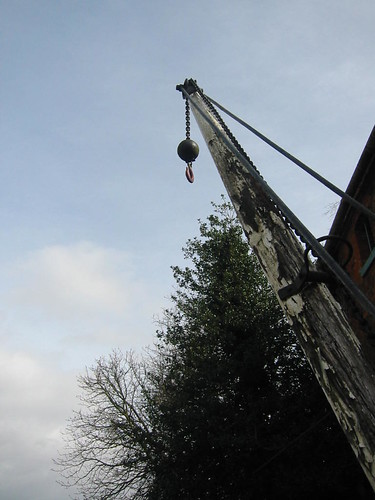
Canal crane
Let's not forget that canal life was tough. The bargees transported goods for hundreds of miles, loading and unloading heavy cargoes at each destination. To help them with the task warehouses had canalside cranes and a very few still exist today. The pictured one, at Shardlow in Derbyshire, sadly doesn't exist any more. The metal work at the bottom (that lifted and turned the arm) is still there, but the woodwork became so rotten that it was removed some years ago for safety's sake.

Measham ware pots

And at the end of the day the boat families were grateful for a pot of tea. Often the bargees owned a magnificent, colourful pot made near the town of Measham in Leicestershire. The decoration often marked an important family event, such as a birth or marriage, and the pots were treasured heirlooms.

So that just leaves the post title. "Gongoozlers" is a canal word for people who stand around watching the boats pass while other people do the work!  It's a pleasant way to spend an afternoon.

Right. Off you go over to see Amy to find out what other Fives have been posted this week.

May 20, 2016

Five on Friday - Wheels

Here we are again at Friday and here I am joining in with Amy at Love Made My Home for her Five on Friday feature. Today I've chosen wheels.


A nice simple one to start with. It's a penny farthing bicycle, which I always think look very impressive but I don't fancy riding one. I don't even fancy trying to get up on one! This is on show at Kelham Island Museum in Sheffield.

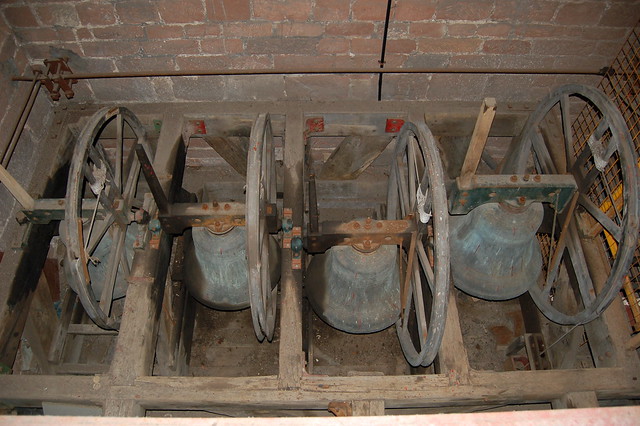
These wheels are what makes church bells ring. In this case at Lichfield Heritage Centre, a converted church that allows guided tours of its tower and the old bell chamber. They're fascinating to see close-up - but you don't want to be in there when they're ringing!

Here's a water wheel. It's on the side of Dyfi Furnace in Mid Wales. Dyfi is a restored 18th century charcoal fired blast furnace that was used for smelting iron ore. The wheel was used to power the bellows that maintained the furnace temperature.


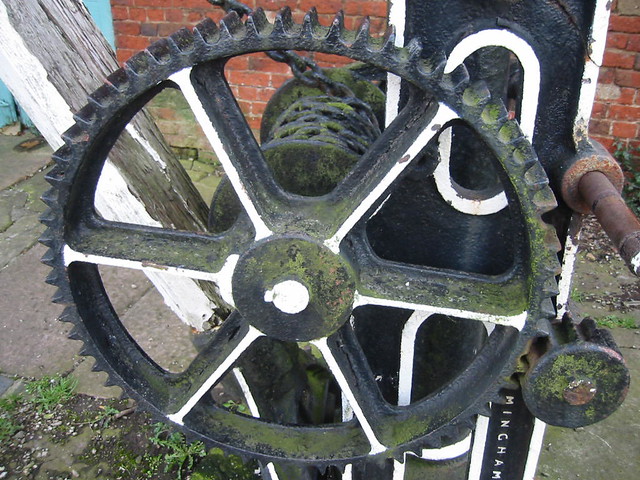
This one was used to raise and lower a crane by the side of the Trent and Mersey Canal at Shardlow in Derbyshire. Canals were, of course, the main method of moving goods before the arrival of railways, and later road transport. This type of crane would have been a common sight along the banks of the Victorian canal system, but sadly very few remain - including the one in the photo. They fall victims to wood rot and vandalism. Even accidental damage can be fatal, since the workings are made from cast iron, which is very brittle, and cracks when it is hit.

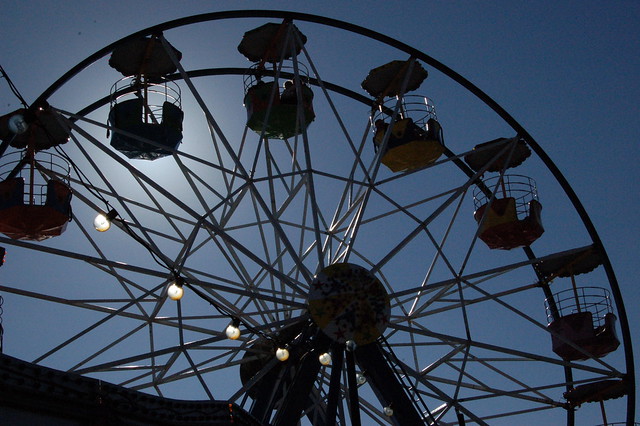
And this one is for fun! It's on the front at Scarborough in an entertainment complex called Luna Park. It's changed a bit over the years, but there's been a big wheel there for as long as I can remember. I've never ridden it. You'll NEVER get me up there!

Now click on the photo below to be taken to Amy's site to see what other Fives are on offer this week.


April 22, 2016

Five on Friday: hands

Welcome to Friday and my contribution to Five on Friday organised by Amy at Love Made My Home.  This week I'm indulging a little hobby of mine. I love to take photos of hands - in particular the hands on sculptures. These five are all from statues of historic or significant figures.

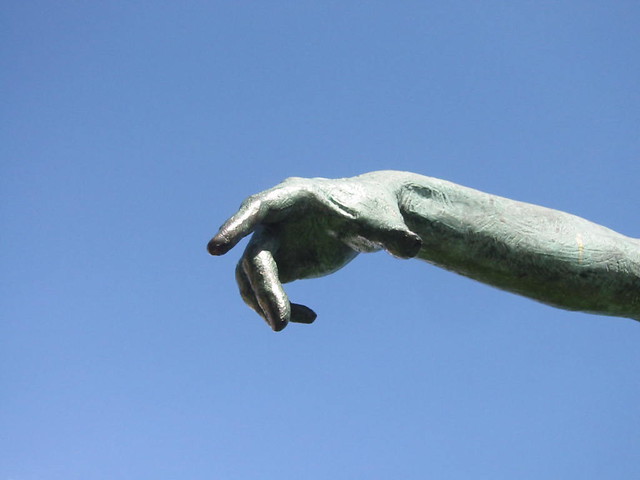
Captain Vancouver
Captain George Vancouver was an English Naval officer, best known for his 1791–95 expedition to explore and chart North America's northwestern Pacific Coast. He was born in 1757 in Kings Lynn, Norfolk, and his statue stands proudly in front of the old Customs House in the town.  He's holding a spyglass in his hand to watch out for new horizons.

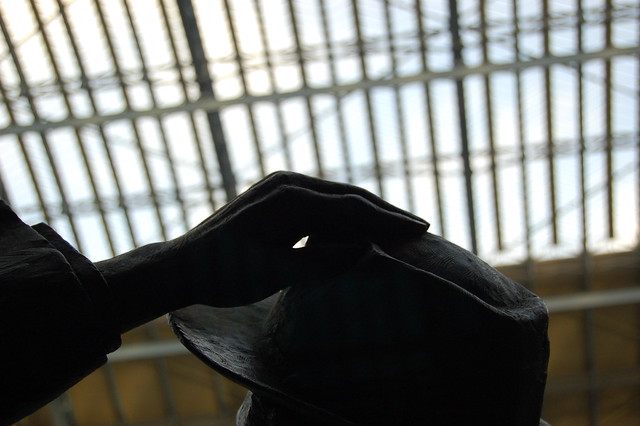
Sir John Betjeman
John Betjeman was a poet, and for many years was the UK's Poet Laureate. This statue of him stands on the upper deck at St Pancras Station in London.  Betjeman was one of the driving forces behind a campaign to save the station when developers wanted to pull it down in the 1960s.


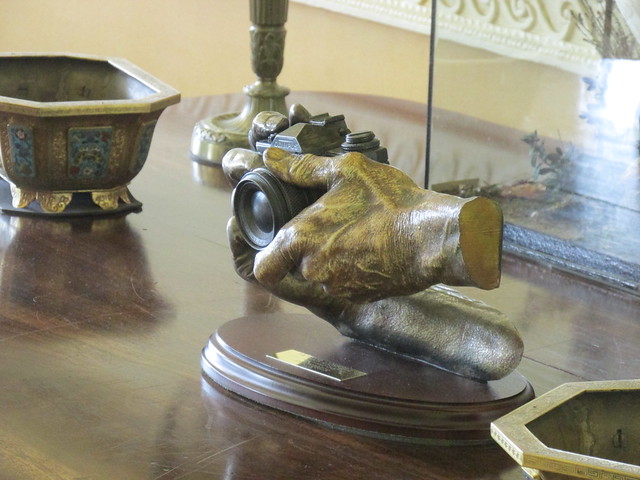
Patrick Lichfield
As you can see this sculpture is all about the hands.  It stands on a desk in the former private apartment of Shugborough in Staffordshire, the ancestral home of Patrick, Earl of Lichfield. He was a well known society photographer and cousin of the Queen. His house was handed over to the National Trust in lieu of death duties after fate killed off both his father and his grandfather within a very short time. He was allowed to stay there in a rather luxurious apartment, which is now part of the house tour.

Constantine the Great
A seated figure of Emperor Constantine the Great reclines outside York Minster. It commemorates the fact that he was the first christian Roman emperor. He was proclaimed emperor at York just a few yards from where the sculpture now stands (on a spot that's now under the Minster building.)
The sculpture is by Philip Jackson, whose work I admire greatly. I realise that this portion doesn't give you much to go on, but trust me, it really sums up the incredible imperial arrogance that the rest of the work illustrates.

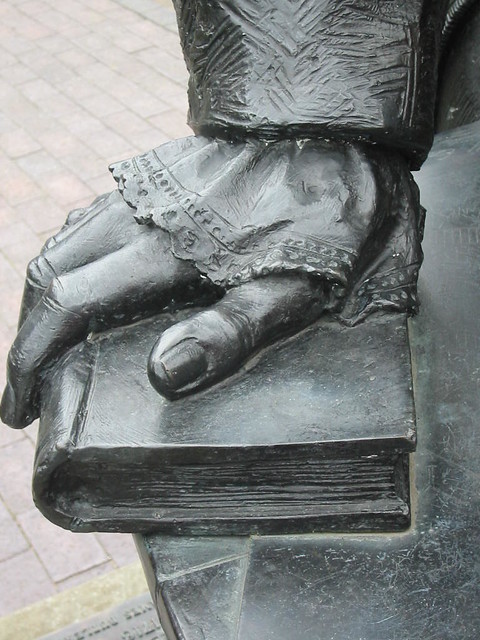
James Brindley
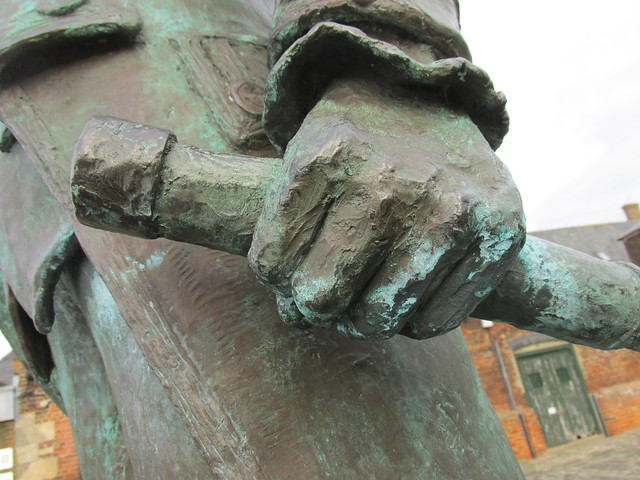
James Brindley was one of the foremost canal engineers of the eighteenth century. He was responsible for the first canal in Birmingham, which eventually led to the development of the complex network that criss-crosses the UK today. A statue of him stands at the terminal of the Coventry Canal, just off the modern-day ring road. It's a life-size bronze by Colin Melbourne and I love this little detail of the lacy cuff of his shirt.

So now there's just one last thing for you to do.  Go visit Amy by clicking on the pic below, and see what everyone else has to offer this week.