Showing posts with label Leicestershire. Show all posts

May 26, 2017

Kirby Muxloe

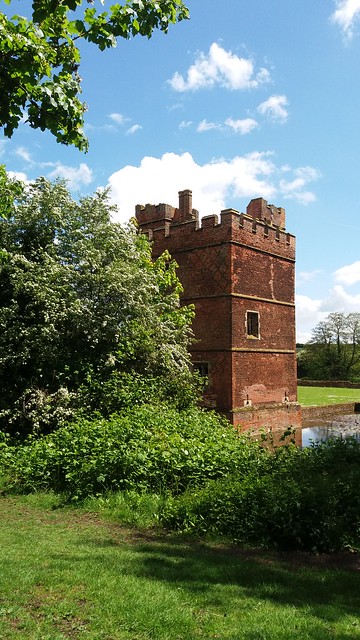
William, Lord Hastings was a favourite of King Edward IV who made a small fortune during the Wars of the Roses and decided to spend it on a very impressive new house at Kirby Muxloe in Leicestershire. The village was the site of an existing manor house belonging to his family, who also owned nearby Ashby de la Zouch Castle.

Unfortunately William's fortunes changed when Richard, Duke of Gloucester - later Richard III - seized the throne and took a dislike to  him. Richard had William's head chopped off, and work on the wonderful house stopped, with just one tower completed, in 1483.

Just one complete tower
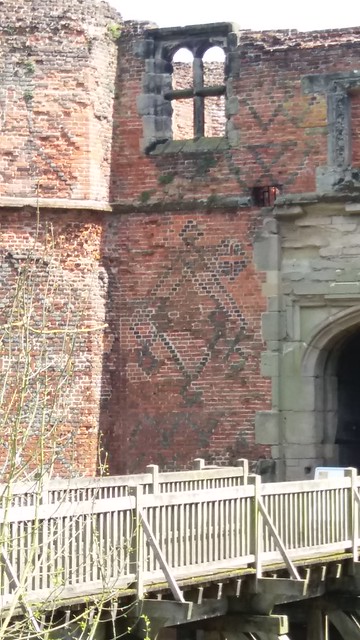
However, what remains of the castle shows what a magnificent structure it was going to be. Built in the wonderful new material - brick - which was the height of fashion and very expensive at that time. The never finished gatehouse is probably the most impressive part still remaining. It has ornate brick work and dark patterns built in to the rich red courses that symbolise William in happier times.

Decorated in darker brick
A few technical terms: course means a horizontal row of bricks; diaper work is a pattern of bricks in a different colour from the main body, particularly in the form of a criss-cross design; bricks have short ends - headers - and long ends - stretchers; bond is the way in which headers and stretchers are mixed to create the overall pattern. Flemish bond has alternate headers and stretchers in a course, English bond has alternate courses of headers and stretchers. (More about bricks here)

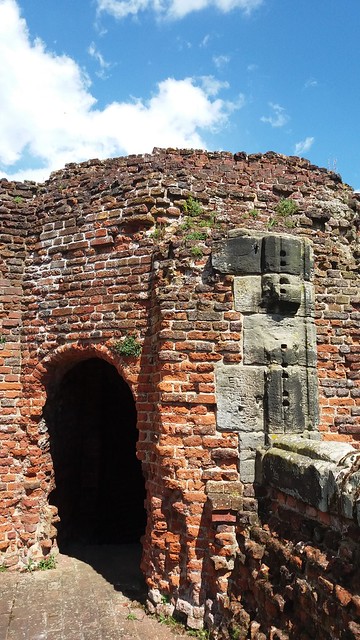
Magnificent spiral stairs
Kirby Muxloe is surrounded by a moat, and there were gun ports built into the gateway. There's no evidence that these were ever planned to be defensive structures, however. They might just have been for show, as a display of William's position and power.

Now off you go over to Tricky's FAST Blog to see other Fives this Friday!

March 31, 2017

Leicester Five

A few weeks ago I had to visit Leicester for a meeting and on my way back to my car I passed the city art gallery in New Walk. I had a spare 20 minutes so I nipped in for a quick look. Here's a selection of what I found. Sorry about the quality of the photos - I took them with my phone.


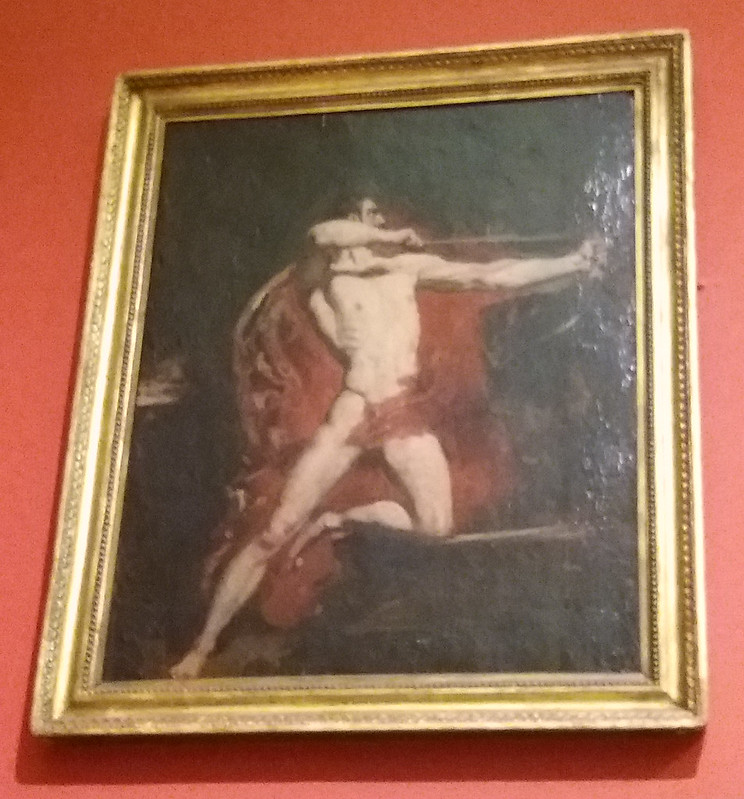
The Bowman, oil on board, painted about 1825-30. It's by William Etty, (1787 - 1849) who was known for his landscapes featuring nudes. There's a larger version of this in York City Art Gallery, that shows more of the landscape, but still doesn't identify what he's aiming at. Etty was born in York and the gallery has a number of Etty's paintings.


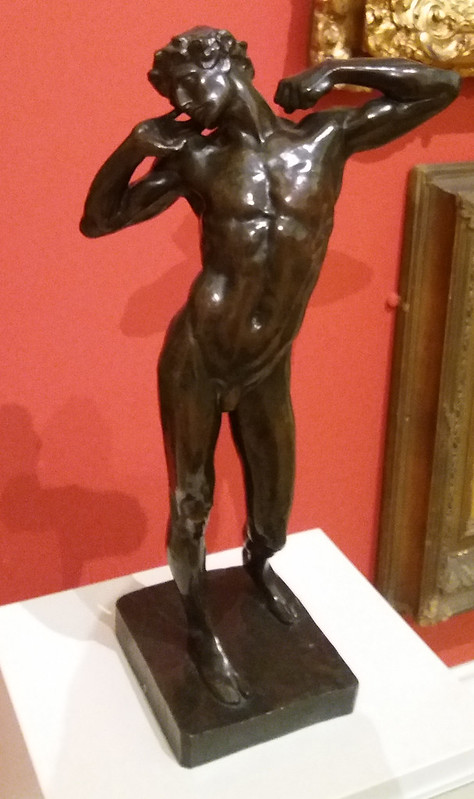
The Sluggard by Frederick, Lord Leighton. Bronze, cast in 1890. Leighton (1830-1896) was a painter and sculptor who became president of the Royal Academy in 1878. This bronze was a small version of a life-sized work that now stands in Tate Britain.


Head of an Arab, oil on canvas, painted 1857. Believed to be a preparatory work, designed to perfect the head before including it in a larger work. Also by Lord Leighton.


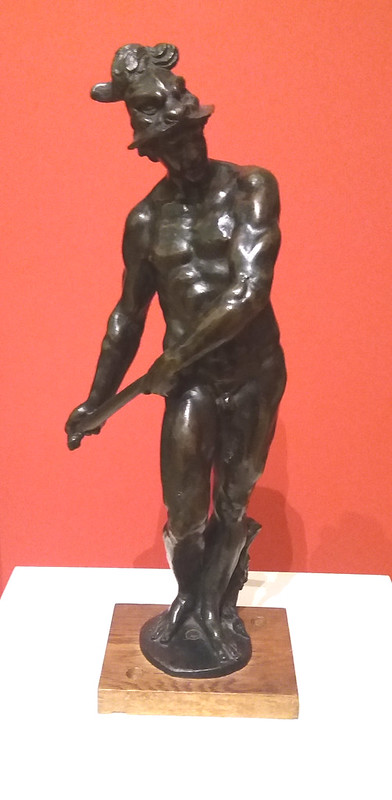
Vulcan - no, it's nothing to do with Mr Spock - a bronze by Tiziano Aspetti (1565 - 1607). Aspetti worked mainly in his native Padua, and Venice. The small figure shows the Roman god of blacksmithing, fire and volcanoes, hence his powerful build and strong arms.


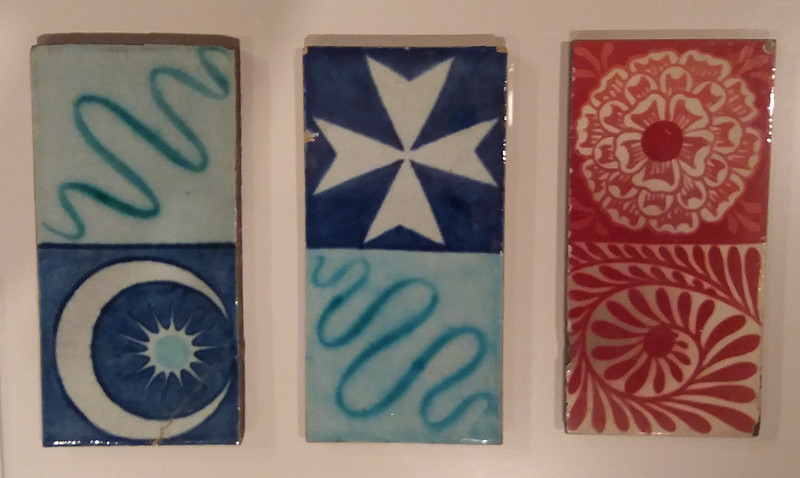
And for something different, I found a small exhibition of works by the artist William De Morgan (1839 - 1917), a lifelong friend of designer William Morris.  These hand-painted, ceramic tiles are believed to have been designed as part of a commission for P&O Ships for interior decor.

Now off you go to Tricky's FAST blog to see what other Five on Friday posts there are.


March 03, 2017

Beeby

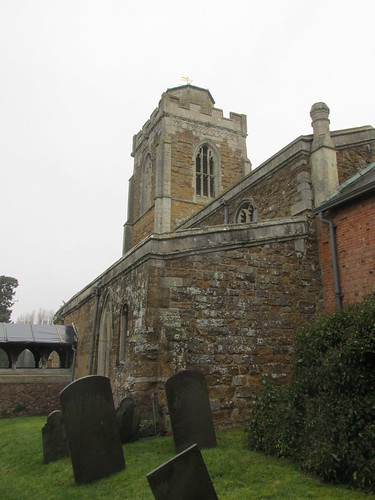
All Saints' Church, Beeby in Leicestershire is in the care of the Churches Conservation Trust. Beeby is mentioned in the Domesday Book, the invading Normans' way of recording what they gained at the Battle of Hastings.

At the time there was no church. The earliest parts of the current building date from the 13th century. The upper level and the tower are from the 15th century.

Built in the local orange ironstone, Beeby stands out from its neighbouring parishes because of its unique stumpy spire that looks as if it was sawn off by some huge hand.

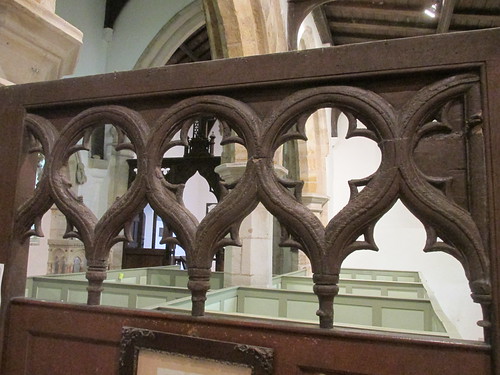
There's a beautifully carved 15th century wooden screen surrounding a chapel in the south aisle.

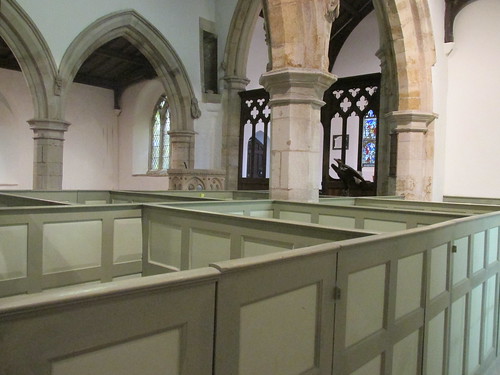
There are also remaining wooden box pews - a rare survival because the Victorians were fond of ripping them out. These are thought to date from the 18th and early 19th century.

But some of the most interesting points date from the era of rector George Calvert who was incumbent from 1818 to 1865. He decided to brighten up the 14th century nave arches by adding carved corbels in various designs, including a serpent, a skull and crossbones, and an angel.

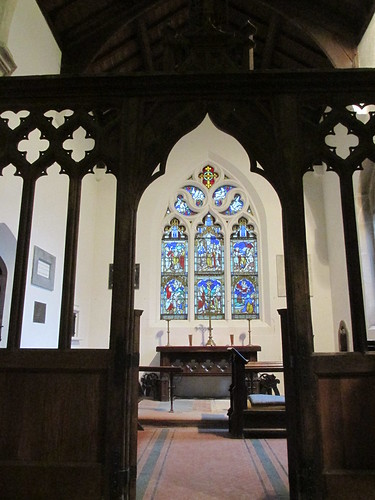
The east window is by Victorian artist Thomas Willement and was commissioned in 1843. The main figures in the window are Noah, Daniel, Job, Abraham, Moses and Elijah, with the
symbols of the Evangelists.

This has been a Five on Friday post. Please visit Amy at Love Made My Home to see more.

July 29, 2016

What's in a name?

Sea+mere =  large lake
What's in a name? Well, despite Juliet's assertion that names don't matter* there can be quite a lot of information in a name - particularly if it's a place name in the UK.

For this week's Five on Friday (to join in with Amy at Love Made My Home) I'm going to take a look at a few place names to show you how to get more out of your travels.  As we drive along even the swiftest motorway we see signs for all kinds of places that we've never been and are never likely to visit. But we can probably glean some information about them - just from those signs.
(Don't assume the photos match the text!)

Streetview snip
Huttons Ambo
Let's start with one of my favourites. Driving along the A64 through North Yorkshire, near Malton, you'll pass a sign for Huttons Ambo. There are lots of places in England called Hutton but, as far as I know, only one Huttons. There's a reason for that. Hutton comes from two Old English words, hoh and tun meaning a hill spur and a farmstead. Hence Hutton is a farmstead near a hill spur. Now, if you drive along the side road that's signposted Huttons Ambo you will find High Hutton and Low Hutton but you'll never find the mythical Huttons Ambo, because it doesn't exist. Ambo is Latin for 'both', so the sign is directing you to 'both Huttons', rather than a single place.


Stiffkey
Of course you can't always tell much from the name as it appears today. Modern place names have been handed down for many years, In the case of some towns that existed in Roman times that can be as long as 2,000 years. One of the earliest written records of English places was the Domesday Book; a survey of towns and villages carried out on the orders of William the Conquerer in 1086, very shortly after he won the Battle of Hastings. He wanted to know exactly how many people he now ruled and exactly what they were worth (for tax purposes). Domesday is a useful, although sometimes misleading, source about place names. On the other hand it can be surprisingly enlightening.

Over the intervening period the pronunciation of place names can have changed dramatically, and their spelling has often changed beyond recognition. Take Stiffkey, for example, on the Norfolk coast. How would you pronounce it?  I'm willing to bet you'd be wrong! Domesday lists it as Stiuekai, which is much more like what the locals call it today - Stukey. On the other hand, the actual word comes from two Old English terms styfic and eg, meaning an island in a marsh, with tree stumps. (Now try the nearby town of Happisburgh and see how long it takes you to come up with the modern pronunciation of Hazebruh. No, I don't understand either!)

Skarthi's Burh
Scarborough
A note for my Transatlantic readers. There are lots of towns that end with the suffix -borough in the UK. Please note, they are not pronounced 'borrow'. Borough (and similar endings like Edin-burgh) are all pronounced 'bruh' like the first syllable of brother. There's a reason for that. It's because all those endings come from an Old English word burh, meaning a stronghold or fortified town. The first half of the name then tells you something else about the place. In Scarborough's case it's the name of the guy who founded it - one Skarthi (sometimes written Skardi because of the nordic rune 'thorn' that looks like d but is pronounced th) who was the Viking lord who turned up in 966 and established a settlement there. Previously it had been the site of a Roman signal station, but Skarthi's Burh was the first town. There are other 'borough' towns, such as Boroughbridge, where the etymology is obvious, but beware. Borough Green, for example, is thought to stem from beorg, meaning hill.

Breedon on the Hill
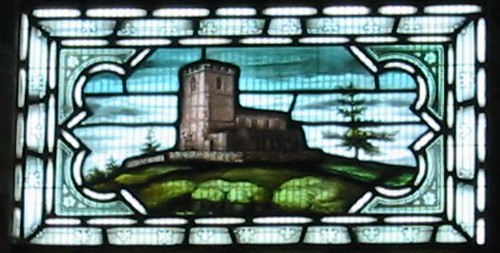
The church, Breedon on the Hill
While we're on the topic of hills let's look at an oddity. The waves of people who settled or conquered Britain over the years all had their own language and all gave their own names to the places they found. But it has led to some strange anomalies. Are you all familiar with the story of the Australian settlers who asked a local the name of the strange, bounding animal they saw in the distance? They received the reply 'kangaroo' and the animal has been known as such in English ever since. Apparently 'kangaroo' is aboriginal for 'I don't know'. (This story is possibly apocryphal. Kangaroo.)

Now imagine a Saxon settler wandering through the land that would later be known as Leicestershire and spotting a high hill that looks like a safe place to set up a village. The conversation possibly went a little like this.
Saxon: "Excuse me good man, what is the name of that fine cliff in the distance?"
Celt: "Bree"
Saxon: "Thank you, my woad-painted friend. I shall settle my village there and I shall call it Bree Hill."
(Or in his language, Bree Don, because that's the old Saxon word for hill.)

Many years later the village has become known as Breedon and map makers, to distinguish it from lots of other Breedons in the country, call it Breedon on the Hill - or Hill Hill on the Hill. You can't miss it. Just drive up the A42 through Leicestershire and you'll see it without any trouble at all. (Of course the village is actually at the BOTTOM of the hill because it's too steep to make living at the top workable. Only the church is at the top.)
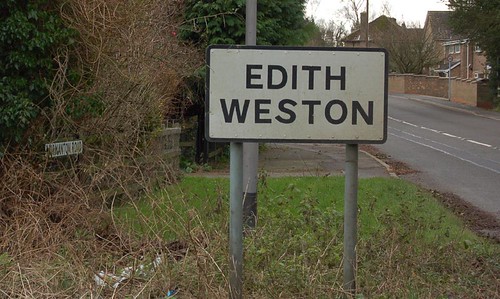

West farmstead owned by Queen Edith. (Wife of Ed the Confessor)
Manorial names
So how can I round this up? There are so many different place names, and so many reasons for those names, that limiting myself to just five is almost impossible.  I could pick another favourite at random. Marsh Gibbon sounds exotic, doesn't it? But actually it just means marshy land owned by the Gibwen family. Higham Ferrers? Main (high) enclosure (ham) belonging to the Ferrers family. You'll find such manorial suffixes all over the country. Many of them are French-sounding. That's because the people who first wrote down the names in any meaningful way were French Normans, remember? Domesday and all that. Of course, the previous names were often possessive too. Goadby Marwood, for example, means farmstead of a man called Goadi, now owned by the Marwood family.

So now you know. Next time you go on a journey take note of any interesting places you spot, then see if you can find out how they got their names. But first go visit Amy at Love Made My Home and see what other fives people have found for you this week.


References
*What's in a name? That which we call a rose. By any other name would smell as sweet. Shakespeare. Romeo and Juliet.
Huttons Ambo Village Website. http://huttonsambo.blogspot.co.uk/p/about-huttons-ambo.html
Mills, A. D. 1998 Dictionary of English Place-Names. Oxford University Press.

April 01, 2016

Five mile posts

Here we are again, having had a week off for Easter. It's Amy's Five on Friday day again. Click on the image at the bottom to see other people's offerings.

Back in the days before GPS systems it wasn't always easy to know where you were or how far you still had to travel on your journeys.  There were lots of ingenious and attractive ways of letting travellers know. Here's five examples.

Theoretically with a bit of geometry and a map you should be able to work out where this is. But I'll be kind to you. It's on the A12 at Yoxall in Suffolk.

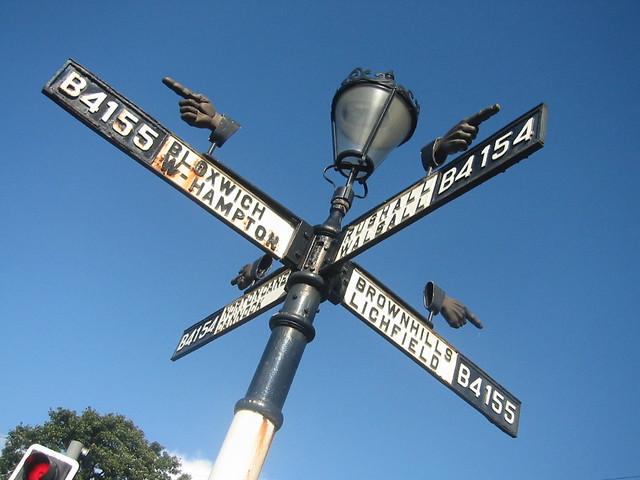
This is a particular favourite of mine. I love those pointing hands (they're called manicules, by the way) and the helpful lamp post on top in case you're travelling at night.

The users of these signs weren't allowed to travel at night. It's a canal marker, and narrowboats had to stop once darkness fell. This one's also a replica. You can tell because of the small plaque dated 1977. It was erected by the Trent and Mersey Canal Society at Derwent Lock to replace a missing original.

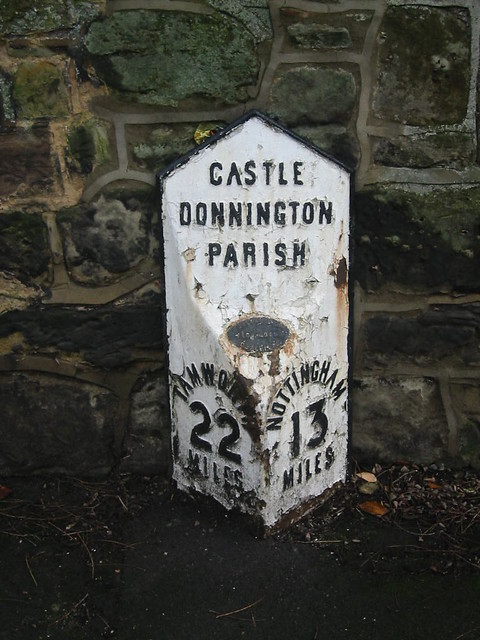
This one tells you where it is - except it's wrong. Castle Donington doesn't have a double N. It also frequently gets accused of being in Derbyshire, even though it isn't. This one's a bit out of the way nowadays, but the road it stands on used to be a turnpike.

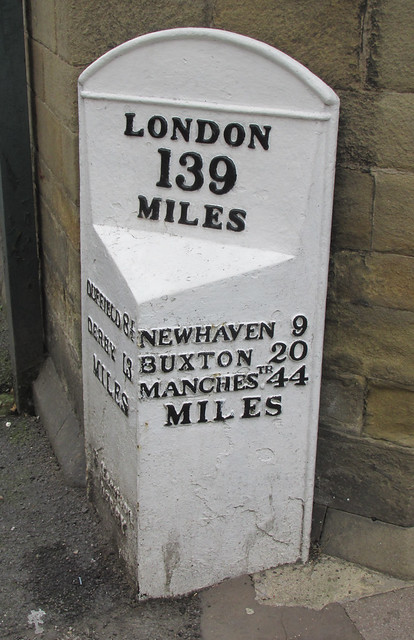
This one assumes you know where you are. You can probably work out that you're in Derbyshire, but this is very similar to one I found last weekend in Ashbourne. London is 139 miles from that one too, though Manchester is 45 miles away. Does that help?  Thought not. This one's in Wirksworth.  

Now click on the link below to visit Amy and her Five on Friday supporters.