Showing posts with label Suffolk. Show all posts

October 14, 2016

What's in a name? Pargeter

Most people are aware that surnames are often derived from an ancestor's job. Coopers made barrels, fletchers made arrows, bowyers made bows, smiths worked with iron, etc. But what do you think of when you hear the name Pargeter?
Green man, Clare, Suffolk. Modern example.
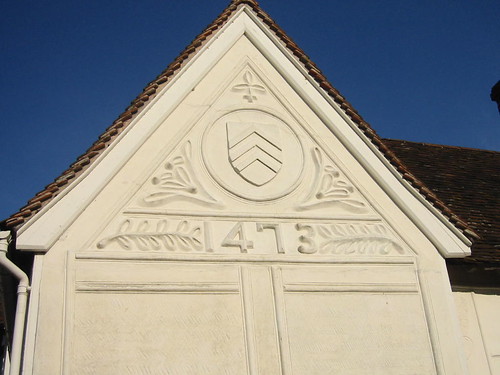
Pargeting is decorative plaster work found mostly on the outside of buildings, and it is skilled work, hence the recognition in the surname. Although it is found throughout the UK pargeting mainly occurs in East Anglia. The first recorded use of the word was as early as 1237 when it was included in a description of work carried out on internal walls.
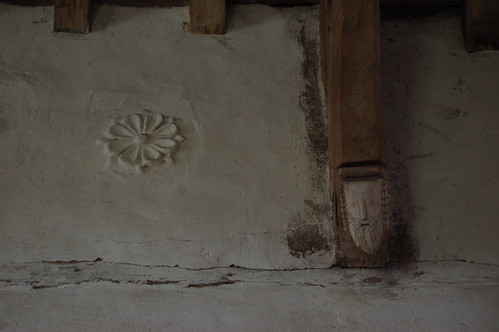

Langley Chapel, Shropshire. 17th century. 
Pargeting ranges from simple incisions to elaborate swags and floral sprays, to geometric designs, to symbolic features such as the Green Man, to figurative work and even full pastoral scenes. It can be either cut into a layer of plaster that has already been applied to a wall, or built up into low reliefs by the addition of some form of fibrous material that acts as a binder.  
The Ancient House, Clare, Suffolk

It mainly features on timber buildings and forms a weatherproof outer skin. Although plaster is not waterproof the application of pargeting prevented draughts and hence made homes warmer.
In the late 19th century there was a revival of the fashion and, in typical Victorian style, pre-moulded motifs could be bought to apply to smooth plaster base coats. The effect is much crisper than traditional work and frequently much simpler. Single motifs in large, blank areas, rather than overall patterning, denote later work.

Simple, early example. Also in Clare, Suffolk.

Internally, the work is often called stucco, and the fashion for such designs was known as early as Roman times. So whenever classical design enjoys a revival it tends to bring decorative plasterwork back with it.  The fine example below is from the 18th century Music Room in Lancaster. 


This has been a post for Five on Friday to join in with Amy at Love Made My Home.
Apologies to my regular readers. I've got a busy weekend coming up and I might not get back to visit your posts for a couple of days.

April 01, 2016

Five mile posts

Here we are again, having had a week off for Easter. It's Amy's Five on Friday day again. Click on the image at the bottom to see other people's offerings.

Back in the days before GPS systems it wasn't always easy to know where you were or how far you still had to travel on your journeys.  There were lots of ingenious and attractive ways of letting travellers know. Here's five examples.

Theoretically with a bit of geometry and a map you should be able to work out where this is. But I'll be kind to you. It's on the A12 at Yoxall in Suffolk.

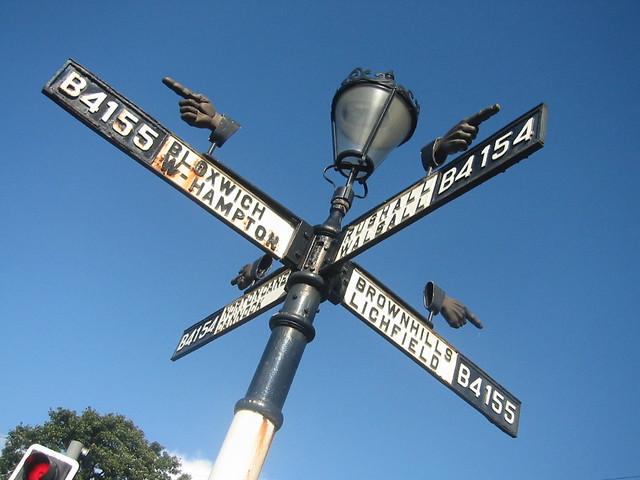
This is a particular favourite of mine. I love those pointing hands (they're called manicules, by the way) and the helpful lamp post on top in case you're travelling at night.

The users of these signs weren't allowed to travel at night. It's a canal marker, and narrowboats had to stop once darkness fell. This one's also a replica. You can tell because of the small plaque dated 1977. It was erected by the Trent and Mersey Canal Society at Derwent Lock to replace a missing original.

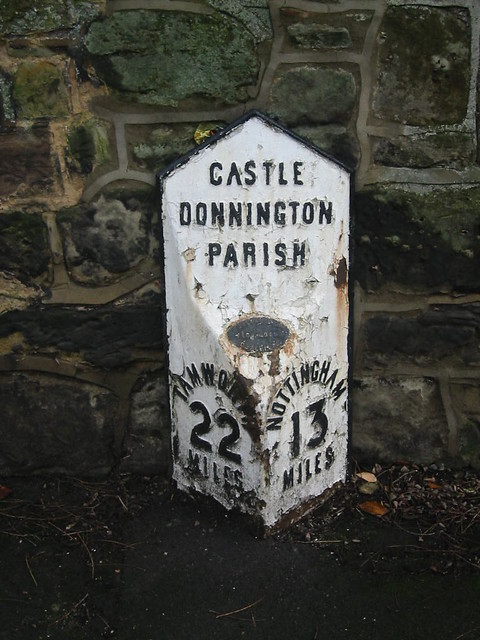
This one tells you where it is - except it's wrong. Castle Donington doesn't have a double N. It also frequently gets accused of being in Derbyshire, even though it isn't. This one's a bit out of the way nowadays, but the road it stands on used to be a turnpike.

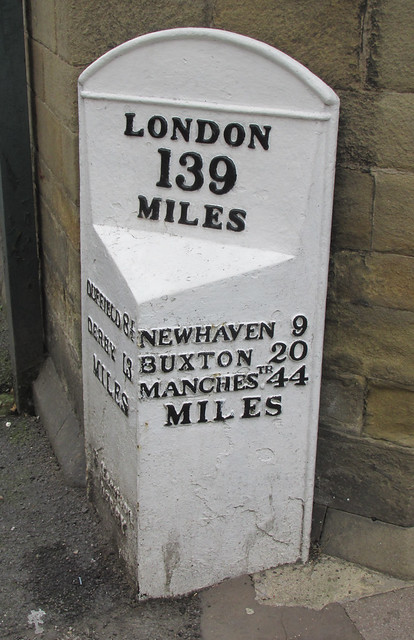
This one assumes you know where you are. You can probably work out that you're in Derbyshire, but this is very similar to one I found last weekend in Ashbourne. London is 139 miles from that one too, though Manchester is 45 miles away. Does that help?  Thought not. This one's in Wirksworth.  

Now click on the link below to visit Amy and her Five on Friday supporters.