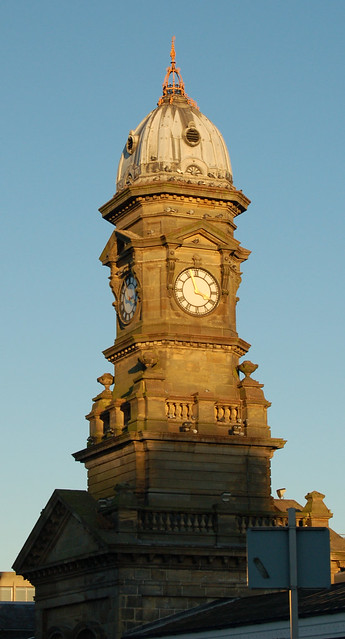
Yes, it's a clock. Specifically it's the clock on the top of Scarborough railway station. It's a symbol from my teen years because it stands opposite the old Odeon Cinema (which is now the Stephen Joseph Theatre where Alan Aykbourn plays are always premiered) and many's the evening or afternoon that I've stood looking at this clock while waiting to meet a date. (You get to know it particularly well on the occasions that said date doesn't turn up. How much longer do I leave it before I accept that I've been stood up?)
Scarborough station opened on Monday 7 July 1845, following the completion of the line from York. The station clock was added in about 1884, and was built by Potts of Leeds costing £110, or around £10,000 at today's prices. The whole building is Grade II listed. Interestingly (and something I didn't know until I began my research) it has the longest station bench in the world, at a staggering 95 yards long.
It was needed to accommodate the hundreds of tourists who flocked to the town to drink the spa waters and enjoy the sea air.
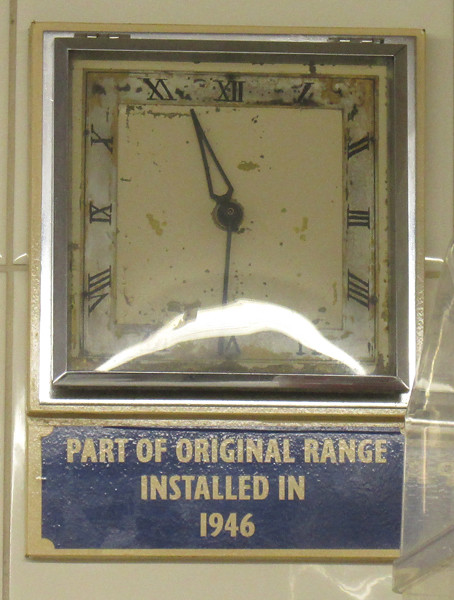
You might have seen this wonderful thing before if you read my blogs regularly. It's clearly labelled with its date and purpose. What's a range you ask? It's the thing you cook fish and chips in, and this was the clock that I used to stare at while waiting for my "six penn'orth of chips and scraps" at my local chippy.
The old range didn't meet modern catering hygiene standards and was replaced by a shining stainless steel construction a few years back. I can still remember the beautiful green and off-white sunray back plate in wonderful art deco style. I'm pleased to say that they kept the clock.
Except it isn't a clock, it's a timepiece. What's the difference? A clock chimes. It has a bell. Indeed the word clock derives from various old Germanic, Celtic and French words for bell - like clocca and glocken.
Here's one for my transatlantic friends. It is, of course, the clock in the heart of Grand Central Station in New York. Grand Central is a rapid transit railroad station and you can find it at 42nd and Park. They use the word 'iconic' a lot these days but this thing truly is. Wikipedia says: "The four-faced brass clock on top of the information booth was designed by Henry Edward Bedford (1860–1932) and cast in Waterbury, Connecticut. Each of the four clock faces is made from opalescent glass, though urban legend has it that the faces are made of opal and that Sotheby's and Christie's have estimated their value to be between $10 million and $20 million."
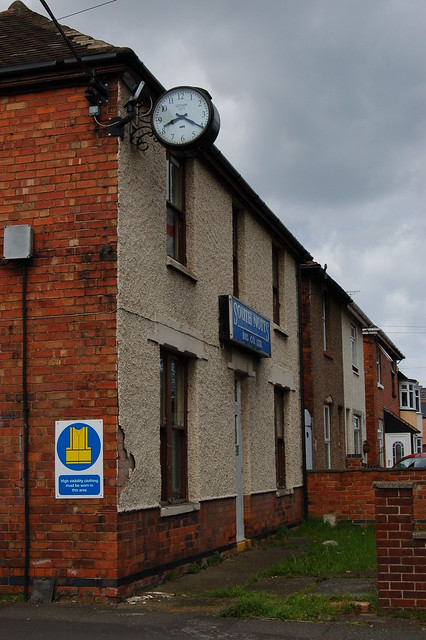
You'll need to look very closely at this one even to spot the clock, let alone see why it's important. It's in the Nottinghamshire village of Gotham (pronounced Goat-um. Sorry to disappoint you.) and it's on the side of the bus depot. Look really closely though......
Yes - it does say Gotham City and that is the bat symbol above the six!
Which brings us to five.
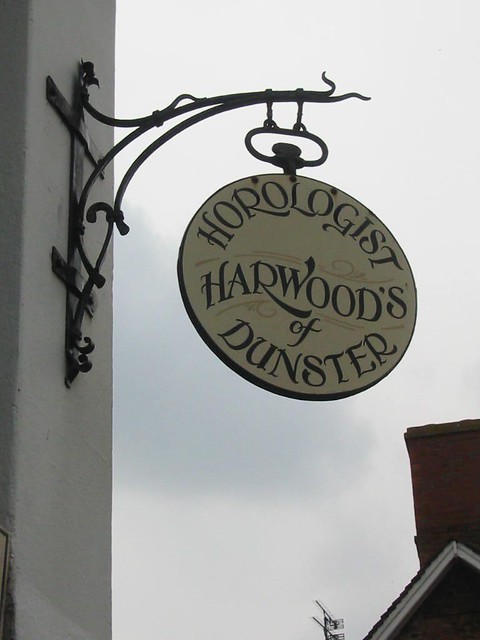
This one is self-explanatory. A horologist is a clock maker and repairer. Literally 'one who studies the hours'. I've always loved this sign. It's in the gorgeous Somerset village of Dunster and it's just so perfect for the shop. A huge pocket-watch hanging over the door.
So there you are. Now the clocks are saying it's time for you to travel over to Tricky's FAST Blog to see other Fives this Friday.
Some chat about historical things. Some of it is inspired by topics on the associated History Anorak blog.
Showing posts with label Yorkshire. Show all posts
June 09, 2017
June 02, 2017
Five from York
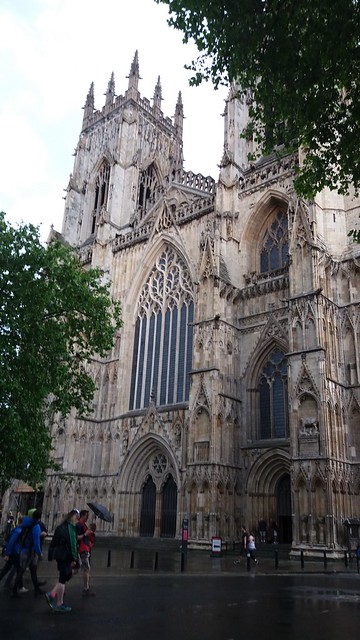
Yorkshire's a funny county. They do things slightly differently there. For example, they eat fruit cake with cheese. (Try it before you sneer!) And where everyone else calls the biggest church in an area a cathedral, York (and other Yorkshire towns) has a Minster. Apparently, according to the Internet, a Minster church is one that was established in Anglo-Saxon times and was attached to a monastery. (But that doesn't explain why Peterborough Cathedral isn't a Minster.) Anyhow, one of the most beautiful sights in York is the Minster. It's a lovely church and really is the heart of Yorkshire - a name they have given to one of the Minster's glorious stained glass windows. Only an outside view, I'm afraid, but you can make out the heart pretty much central to the photo.
Bars and gates
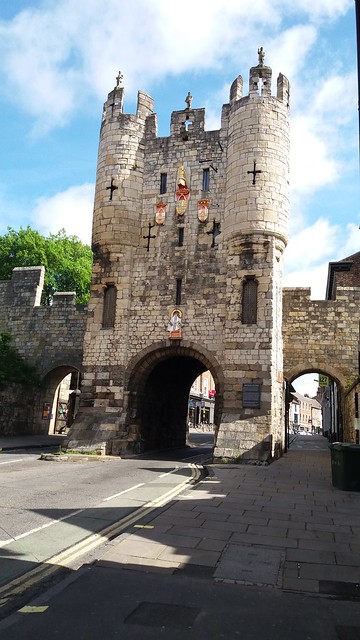
Talking of doing things differently - this is Micklegate Bar. It's one of the ways through the old city walls. (Incidentally, York has one of the most complete, original medieval city walls in the UK.) You might think it's called Micklegate because it's a gate, right? Well it isn't. Gate means street. Bar means gate. And mickle means small. So this is Little Street Gate.
The Shambles
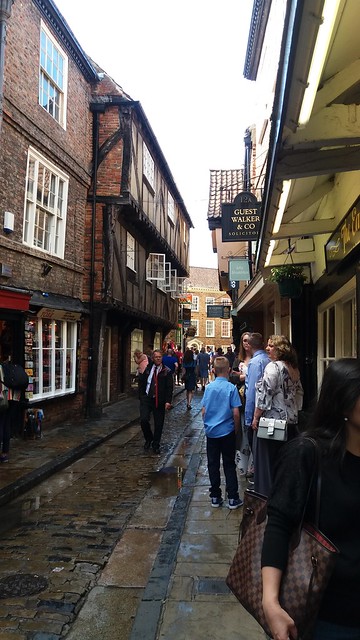
The Shambles is one of York's best known streets. It has lots of claims to fame: Europe's most visited street; Europe's best preserved Medieval street; and most recently, the inspiration for Diagon Alley in the Harry Potter films. In fact you can hear lots of different languages as you walk along the narrow way: you don't understand a word until someone says "Diagon Alley", then continues talking in whatever native tongue they're using.
The word Shambles originates from the Medieval word shamel, which meant booth or bench. The street was the home of the butchers of York and the road has deep channels at each side where water could be sluiced through to wash away the blood and waste.
The street is so narrow, and the buildings overhang so far, that it's possible to shake hands across the road from the upper storeys.
Clifford's Tower
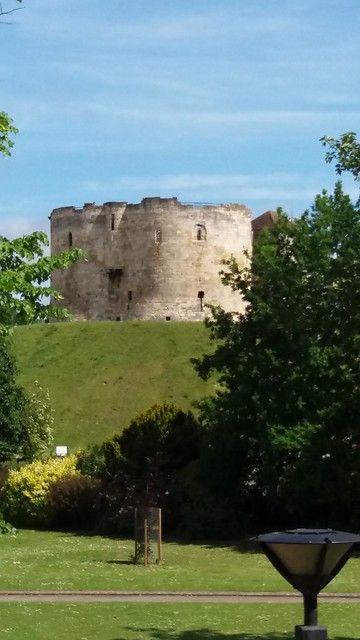
Clifford’s Tower is one of York's best known landmarks. It is part of the old York Castle, once the centre of government for the north of England. It's a motte and bailey structure: the motte being the steep mound and the bailey being the flat area around the mound. Originally there was an 11th-century timber tower on top but it was burned down in 1190, when York’s Jewish community, some 150 strong, was besieged by a mob and forced to seek refuge inside. They committed mass suicide. The present limestone tower dates from the 13th century and was surrounded by a moat
The views from the top are stunning, although tourists don't care about walking in front of you while you're trying to capture it on video. And they seem to ignore the 'one way system' signs on the narrow, spiral staircases. Ho hum.
Romans
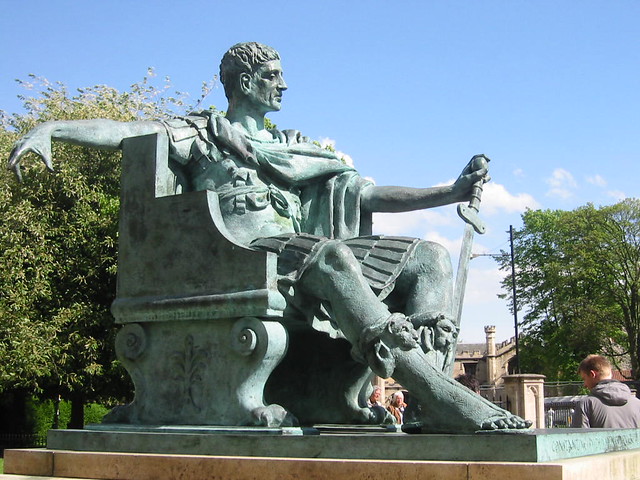
Lastly we're going back in time and forward at the same time. York was, of course, established by the Romans, who called it Eboracum. There are still remnants of the old Roman town. Stonegate, for example, has the original Roman street below it and anyone having to dig up the road soon finds Roman masonry. There's a Roman pillar stands opposite the Minster, marking the site of the basilica. It was found during repair excavations at the Minster in 1969 and erected nearby. Between the pillar and the Minster is one of my favourite public sculptures in the whole country. It's Constantine the Great by Philip Jackson; a life size bronze of the Emperor sitting in an elaborate chair and holding a broken sword. Constantine was declared emperor in York in the year 306.
OK so now you have to go and visit the wonderful Tricky over at FAST blog to see what other fives people have collected this week.
April 28, 2017
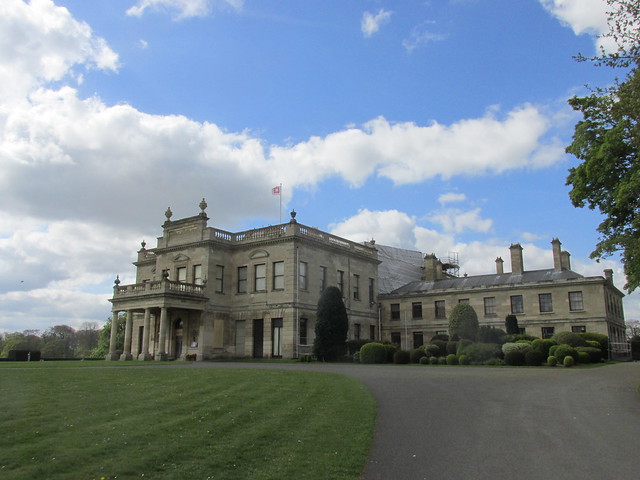
Brodsworth
![]() |
| Brodsworth Hall - note the scaffolding |
In opposition to how most heritage organisation behave, EH decided to consolidate it 'as found' rather than restoring it. Today it's in the middle of a massive project to make it safe and suitable for visitors. It's wrapped in scaffolding and largely sheathed in plastic.
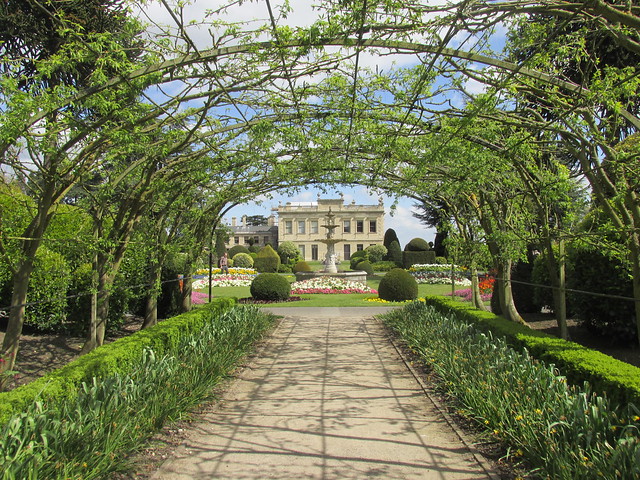
The gardens, however, are magnificent. Glorious sunshine gave me the chance to wander round and see them in their full wonder. Here's some photos:
View to the hall across the fountain garden from under the laburnum arch. I'm determined to go back and see it when it's in flower. End of May should do it.
Round the back of the hall is a sweet little pet cemetery with carved headstones for the various animals. One says simply 'Polly parrot' while others give hints such as 'good boy', so I'm assuming that was a dog. There are no clues as to the species of Binkie Pippy, however. Sounds like a bunny to me!
The grounds are scattered with statuary and ghostly white figures in various degrees of dress stand around looking classical. I kind of liked this young lady feeding the pigeons.
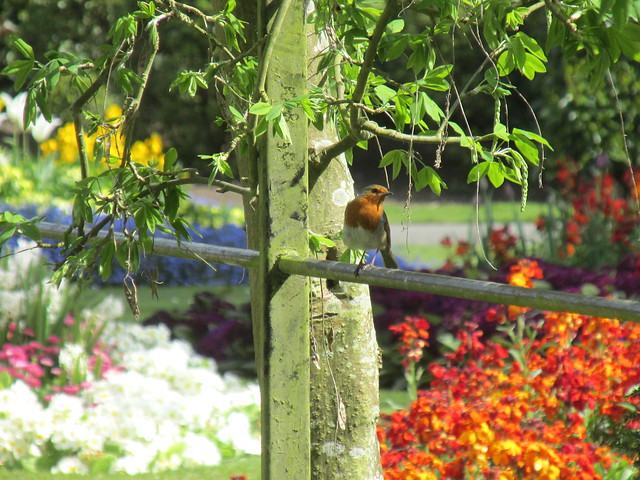
And then there was the real wildlife. You get a hint of the colour from the fountain garden in this shot so the delightful robin isn't easy to spot, but he sat there singing his heart out for a while and seemed happy to have his photo taken.
Now off you go over to Tricky's FAST blog to see the other Five on Friday posts. Happy weekend all.
October 21, 2016
Five from Leeds
Last weekend went went to Leeds to see a concert by the magnificent Bad Company, fronted by the voice of rock, Paul Rodgers. Of course I thought about Amy and Love Made My Home while I was there and took some photos.
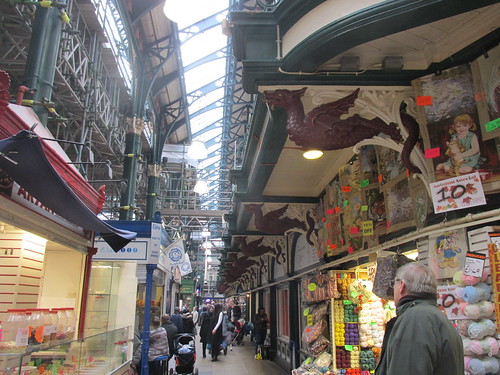
The magnificent Kirkgate Market stands on the site of an earlier market. Originally it was the home of Leeds vicarage but a fruit, vegetable and cattle market was begun there. In 1857 the city erected a covered market but it was swept away in 1904 to make way for the spectacular building you see today. If anyone happens to be in the area, the wool shop on the right offers very good value!
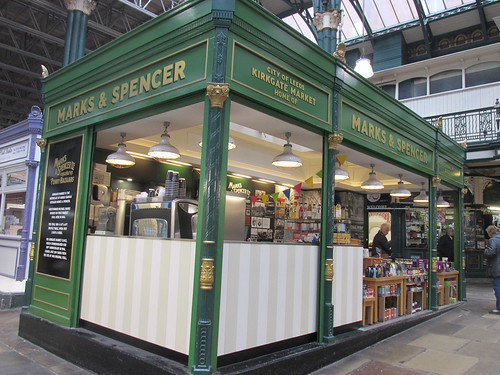
While you're in the market you might spot this, because Kirkgate is where Mr Marks and Mr Spencer first got together to launch their now internationally-regarded chain of stores. This isn't just any market..........
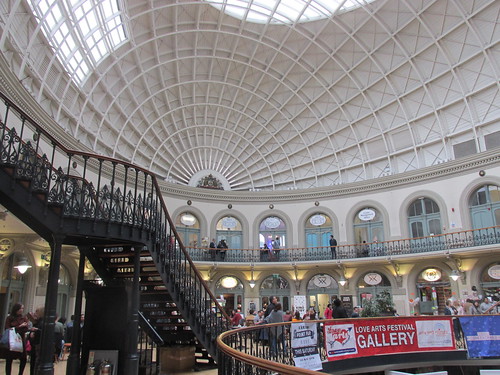
Just down the road you'll find the magnificent Corn Exchange, now a collection of little independent shops and a gallery space, but once the place where merchants gathered to agree the price of grain. The domed roof was designed to allow in as much as possible of the clean, northern light, because it gave a true image of the goods being traded. Built in 1861 and in use until the 1950s.
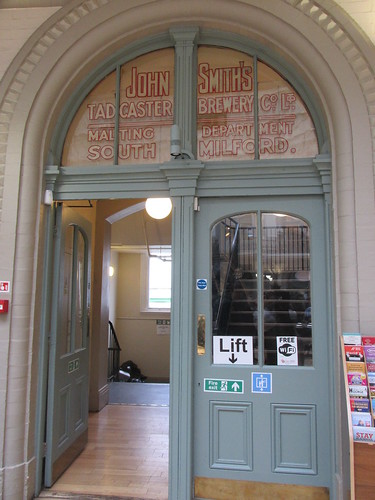
It wasn't just pure grain that was traded. Local (ish) brewer John Smith needed malt to produce his fine ales and so had an office in the Leeds Corn Exchange where experts could assess and buy what was required.
If you look very carefully at the photo of the Corn Exchange roof you will see a coat of arms, and if you have extremely good eyesight you might be able to make out a pair of owls that flank it. There are owls all over the city. This one is outside the town hall. (And I admit I took the picture on an earlier trip to Leeds a couple of years ago.)
Now please drop by at Amy's blog to see what other fives have been featured there this week.
The magnificent Kirkgate Market stands on the site of an earlier market. Originally it was the home of Leeds vicarage but a fruit, vegetable and cattle market was begun there. In 1857 the city erected a covered market but it was swept away in 1904 to make way for the spectacular building you see today. If anyone happens to be in the area, the wool shop on the right offers very good value!
While you're in the market you might spot this, because Kirkgate is where Mr Marks and Mr Spencer first got together to launch their now internationally-regarded chain of stores. This isn't just any market..........
Just down the road you'll find the magnificent Corn Exchange, now a collection of little independent shops and a gallery space, but once the place where merchants gathered to agree the price of grain. The domed roof was designed to allow in as much as possible of the clean, northern light, because it gave a true image of the goods being traded. Built in 1861 and in use until the 1950s.
It wasn't just pure grain that was traded. Local (ish) brewer John Smith needed malt to produce his fine ales and so had an office in the Leeds Corn Exchange where experts could assess and buy what was required.
If you look very carefully at the photo of the Corn Exchange roof you will see a coat of arms, and if you have extremely good eyesight you might be able to make out a pair of owls that flank it. There are owls all over the city. This one is outside the town hall. (And I admit I took the picture on an earlier trip to Leeds a couple of years ago.)
Now please drop by at Amy's blog to see what other fives have been featured there this week.
June 10, 2016
Five more from Hull
Here we are again on a a Friday and it's time to join in with Amy at Love Made My Home to discuss five things that have some relevance to us. As you know we recently went to Hull and I've done a number of posts on both blogs about the visit and the city.
This week I'm taking a look around the Marina, which used to be Hull's heart and the centre of the port. It's still a busy harbour, but the kind of large pleasure craft it handles today don't need the heavyweight support systems that were in regular use when heavy shipping paid call.
As you walk around the area look down at your feet and you'll find plenty of these. Back in the days when cargo ships brought in and took out heavy loads many goods were transported by rail - right to the harbourside. The rails are still in place in many of the cobbled streets leading to the old dock.
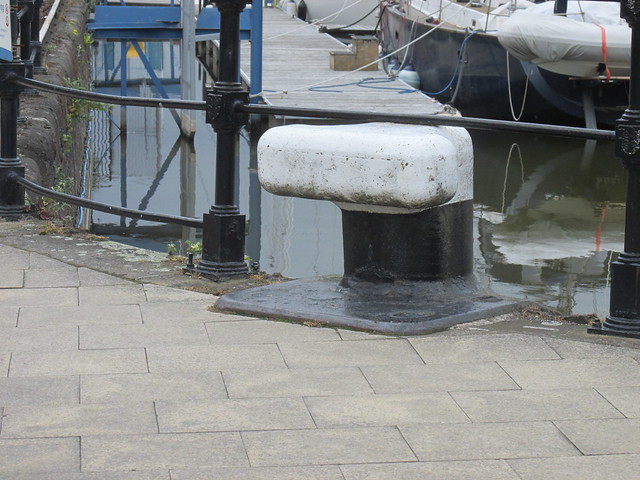
This mooring post gives you some idea of the size of ship that used to call in to Hull. There's not a lot of clues for size until you realise that's a fence post. So yes, the bollard is about 18" to 2ft high.
Then there's this amazing bit of kit that stands inside a glass shelter by the quay. I apologise for the reflections. It's a horizontal steam engine that used to stand by the slipway leading to the Victoria Dock half tide basin. It was used to haul ships out of the river when they needed bringing in for repair.
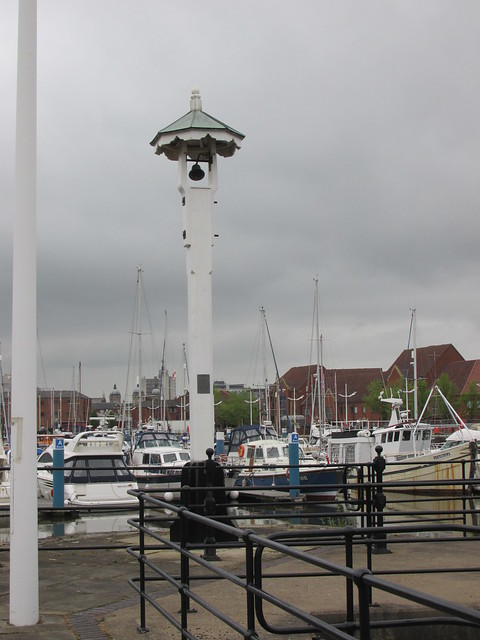
This bell stood close by Victoria Dock too. It was used to warn people when the swing bridge over the lock (where ships gained entry to the dock) was about to open. It's silent now, which is a shame.
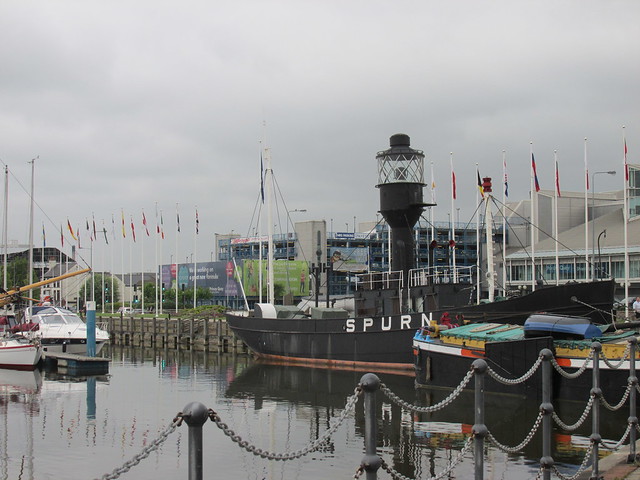
And finally we have the Spurn light ship. Spurn point is the end of the land spit that separates the Humber from the North Sea. One of the problems with a tidal river is that silt, mud and sand gets moved around by the flow of water coming in and out of the estuary. Consequently the channel can be difficult to navigate because of the constantly changing hazards. The Spurn light ship was one of several fixed lights and moveable beacons that helped ships find safe passage to and from the sea.
So now you've had a wander around Hull Marina, pop over to Love Made My Home to see other Friday fives!
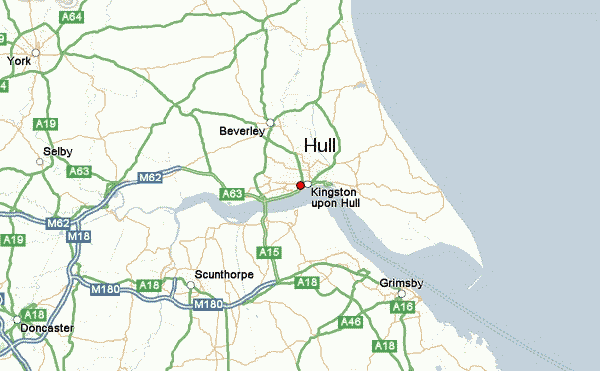
* Map borrowed from http://www.weather-forecast.com/ with thanks.
June 03, 2016
Five instances of Wilberforce
As you know if you read last week's post, Mr Anorak and I went to Hull last weekend to celebrate his birthday. You might think it's an odd place to go, but it's where he comes from. Actually it's also a fascinating old city and has been named as next year's Capital of Culture. Not without reason. You're probably going to be inflicted with several Hull posts over the next few weeks because there's lots to see there. And I spent a lot of my "tourist time" thinking about Amy at Love Made My Home and potential posts for her Five on Friday challenge.
Now you might or might not have heard of William Wilberforce, but unless you're a native of Hull (or very close to someone who is) you probably don't know that he was born there. If you don't know who he was you can find out more on my other blog. But a brief explanation is that he was England's leading anti-slavery campaigner who dedicated his life to bringing an end to the cruel trade.
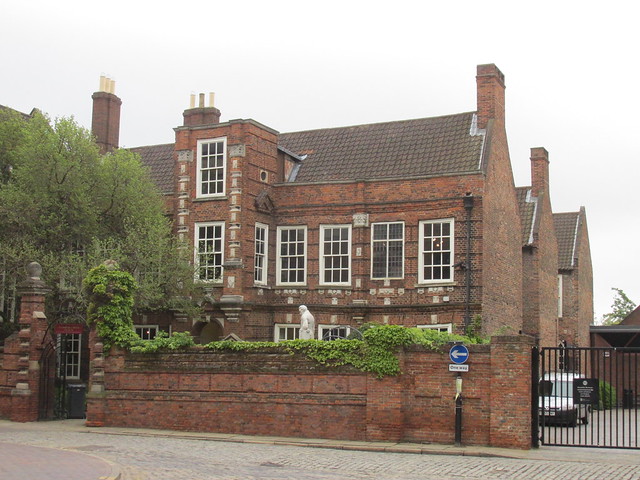
Hull is very proud of him. Once you visit the city you can't avoid him.
He has his own museum (in the house where he was born).
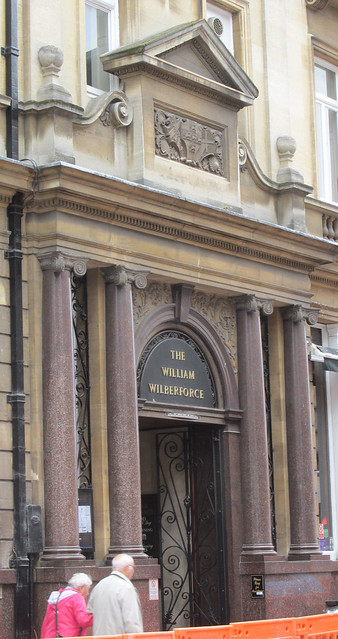
There's a William Wilberforce pub.
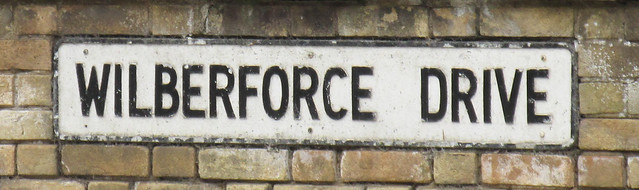
They name streets after him.
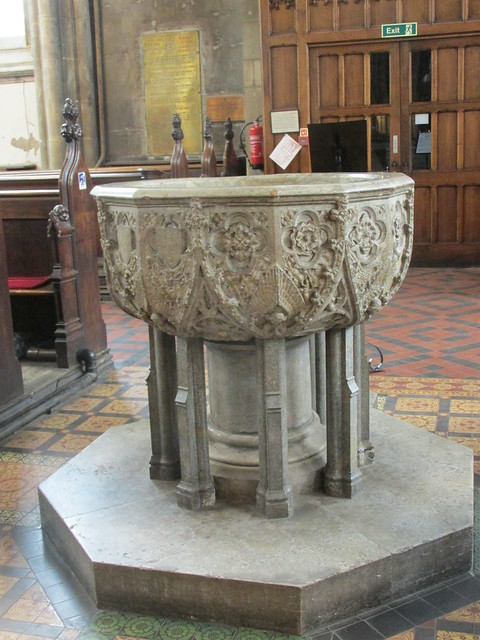
If you visit Holy Trinity Church they show you the font where he was baptised.
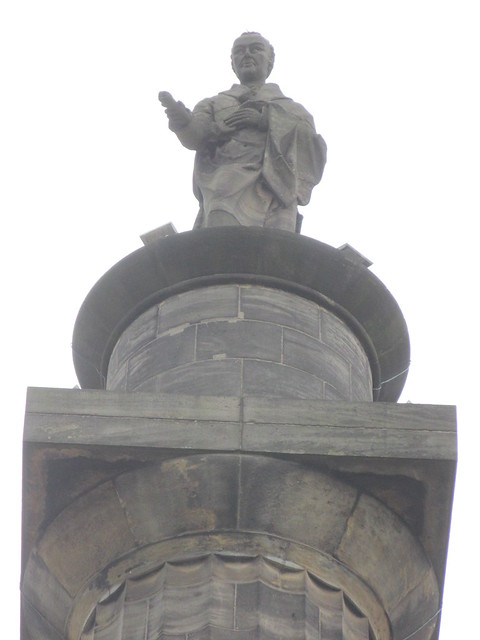
And if you walk past Hull College you'll find him standing at the top of a very high column.
Now I'd like you to hop over to Amy blog and check out other Friday Fives. Click here.
Now you might or might not have heard of William Wilberforce, but unless you're a native of Hull (or very close to someone who is) you probably don't know that he was born there. If you don't know who he was you can find out more on my other blog. But a brief explanation is that he was England's leading anti-slavery campaigner who dedicated his life to bringing an end to the cruel trade.
Hull is very proud of him. Once you visit the city you can't avoid him.
He has his own museum (in the house where he was born).
There's a William Wilberforce pub.
They name streets after him.
If you visit Holy Trinity Church they show you the font where he was baptised.
And if you walk past Hull College you'll find him standing at the top of a very high column.
Now I'd like you to hop over to Amy blog and check out other Friday Fives. Click here.
Subscribe to:
Posts (Atom)