Showing posts with label Margate. Show all posts

April 14, 2017

Shell Grotto

As promised last week we're paying another visit to Margate Shell Grotto. Here are five photos of the mysterious structure.
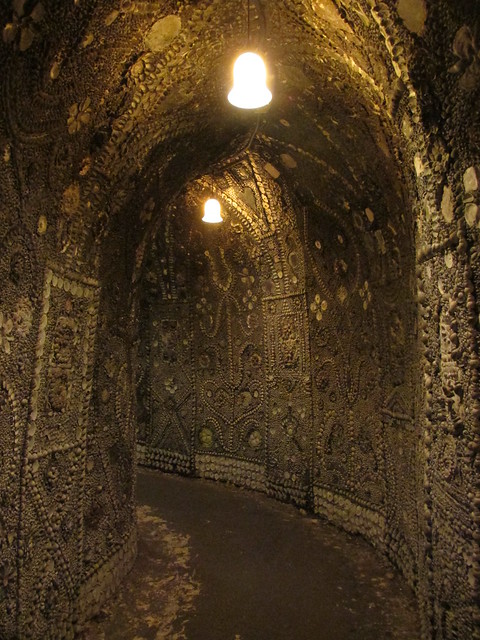
A view down the tunnel
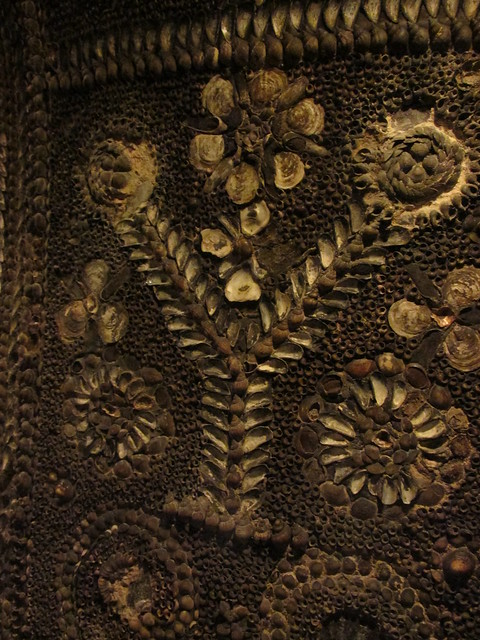
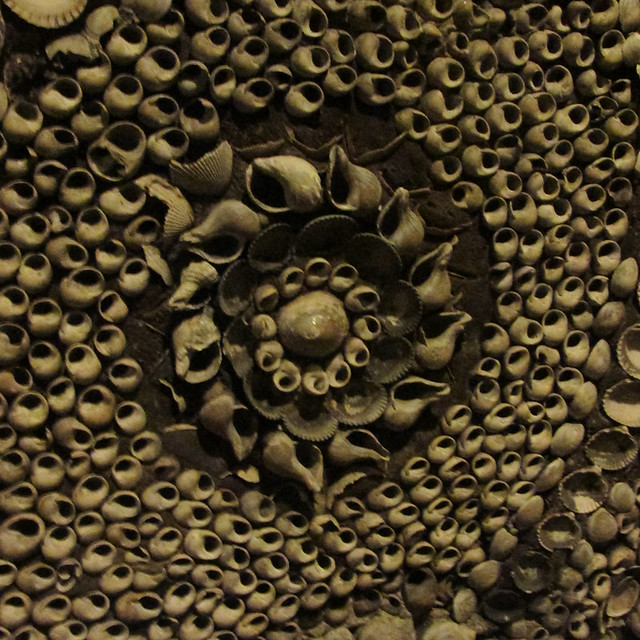
There are a number of shell-decorated follies and grottoes in the UK but, unlike the majority, the grotto in Margate was created using native species - mainly mussels, cockles, whelks, limpets, scallops and oysters. Only four shells among the 4.6 million are exotic: two Caribbean queen conches and two Pacific giant clams.

This is just one of the weird things about the 104 feet long tunnel in Grotto Hill. The grotto takes the form of a winding passage that splits into two, forming a circle, then ending with a square space called the altar room. At the point where the path splits the ceiling rises to a dome with a gap at the top that allows some natural light to enter.
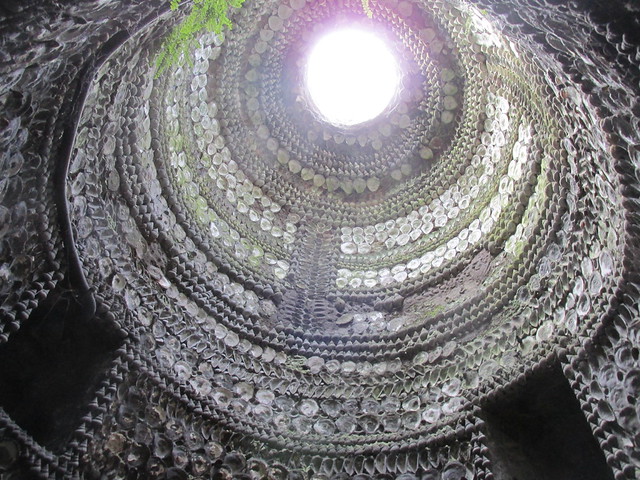
Looking up into the dome
The shells form a series of panels along the walls, each with complicated designs incorporating symbols and  pictograms that have been interpreted in several ways. Some people see little but attractive patterns, others have identified astrological signs, representations of ancient gods, phallic designs, and other mystical themes.

Detail from the Aries panel

According to local legend the grotto was discovered in 1835 when local landowner James Newlove decided to dig a duck pond. His son Joshua found a strange hole in the ground and James lowered him through it to see what lay beneath. The boy reported seeing pictures and a cave.  Estimates of its age vary from several thousand years, to Victorian folly.
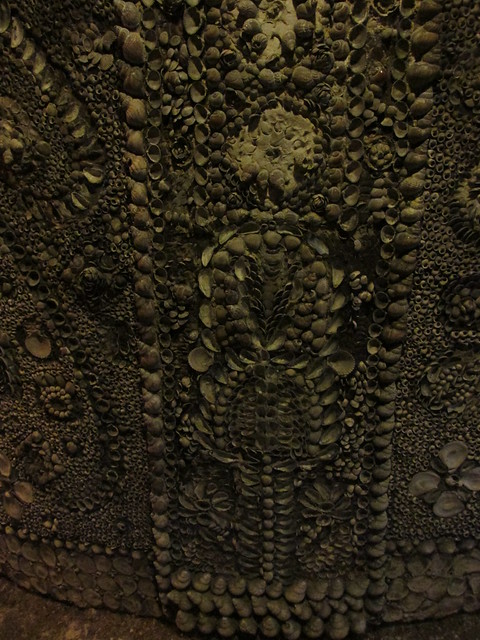
Part of the 'skeleton' panel

Other ideas have included the suggestion that the site was prehistoric; it might have been a Templar Chapel; or Newlove built the tunnels himself. Whatever the truth, the grotto became a tourist attraction within a couple of years, earning Newlove a considerable income.
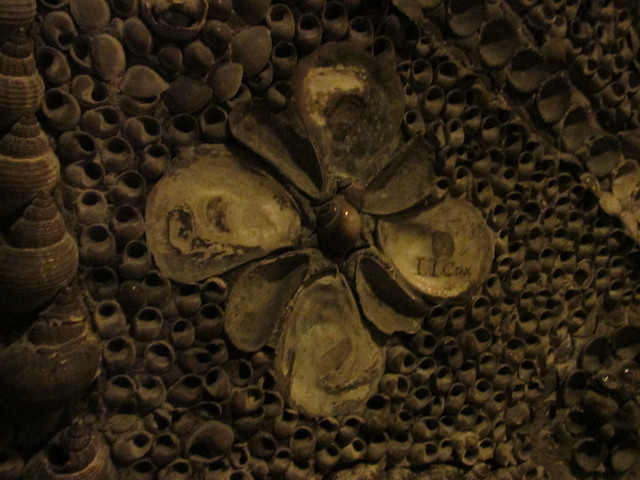
Detail of a pattern - with old graffiti!

It's been open to the public ever since, and it recently underwent a programme of restoration to prevent water damage. A new project was launched in 2012 to replace missing 'roundels'. Some parts of the patterns were created by fixing them to circles of slate, which have since fallen away. Those slates are now being repaired.

Now drop by Tricky's FAST blog to see other Five on Friday posts.

April 07, 2017

Margate 5

Sorry for a very brief Five this week. We've been away for my birthday.  Where?  Margate. (It's in Kent.) So here's five things from there.


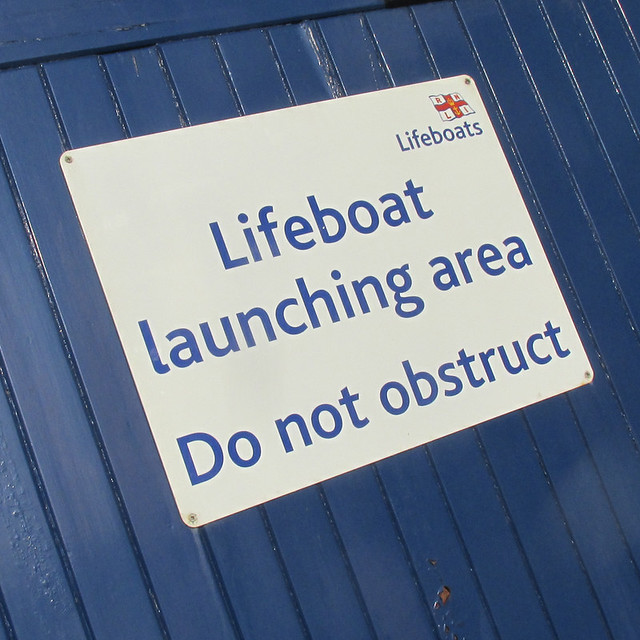
The RNLI is the charity that saves lives at sea.  Hundreds of men and women up and down the country risk their lives regularly in rough and hazardous seas to go to the help of others. There's a rescue boat near the harbour arm in Margate.

This clock is on the tower of the tourist information office, known as the Droit House, a building which used to act as the customs house and also the place where ships paid fees to enter the harbour.


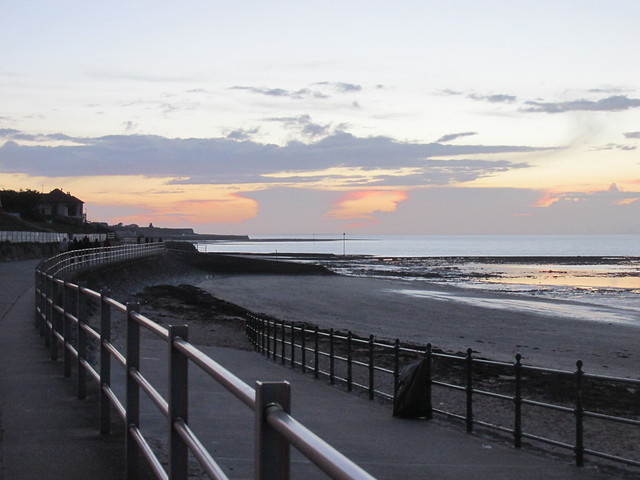
The artist JMW Turner said Margate had the finest skies in all of Europe.  And I have to admit they've been pretty good this week.

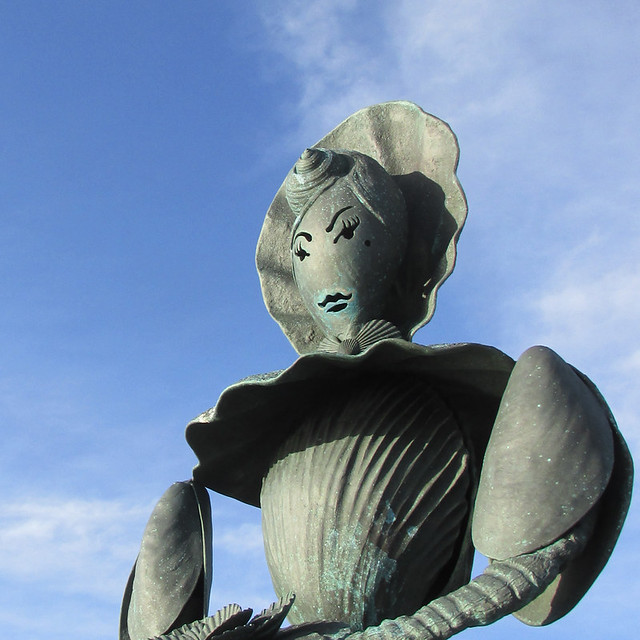
Turner was a bit of a rogue and in later life lived in Margate with a Mrs Booth - seaside landlady. While there he was known as Mr Booth, even though he had a wife and children back home in London.  There's a sculpture on the harbour arm that's called Mrs Booth, and it's shaped like a souvenir shell lady - except it's MUCH bigger.


And finally - hidden in a back street away from the town centre is a mysterious cave. 104 feet long and decorated with 4.6 million shells. No-one knows who made it, when or why, but it was discovered in the 1830s and opened as a tourist attraction very shortly after. It deserves a post of its own - so watch out for more about it later.

This has been a very bitty Five on Friday post. Now head over to Tricky's FAST blog to see others that have been put together with much more care than mine!

March 17, 2017

More Place Names

Roman remains in Wall.

Yes, I know I've done place names before but I've had a particularly hectic week and I'm pushed for time. I wanted to take part in Five on Friday this week because it's the last one to be hosted by Amy at Love Made My home. I wanted to say thank you to her for looking after us for so long and being such a welcoming host. It's been fun, and I've learned lots from my fellow Fivers.

But please bear with me if this is short and sweet.  I've chosen five places that have meant something to me for some reason, either that I've lived close to them, or passed through them regularly.

Irthlingborough, Northamptonshire. First recorded in 780 as Yrtlingaburg, which means "fortified manor belonging to the ploughmen" in Old English. The Domesday Book* (1086) called it Erdinburne, These days the locals call it Artleknock. I have no idea why!

Margate, Kent. First recorded as Meregate in 1254. From the Old English meaning "gap leading to the sea".  Now known as the original seaside. (Though Northern coastal folk would disagree!)

Meriden, West Midlands. First mentioned in 1230. It means "pleasant valley" or "where merrymaking takes place" in Old English. In spite of what some people believe, its nothing to do with 'meridian' and absolutely not related to the fact that the village is as close to the centre of England as makes no difference.

Wall, Staffordshire. Originally listed as Wal in manorial documents from 1166. Want to guess what's there?  Correct - it's a wall. In fact it's several walls dating from the Roman era when Letocetum was an important place on Watling Street.  The old Roman road still runs through the village but its 'modern' replacement (The A5, brought 'up to date' by Thomas Telford in the 1820s.) runs past the village now.

Wetwang, North Yorkshire
Mentioned in the Domesday Book* (1086).  From the Old Scandinavian for "a place for trial of legal actions". We go past this place regularly on the way to see Mr Anorak's mother.  We always laugh at the sound of it.


Notes
*The Domesday Book (pronounced 'doomsday') was a record of the settlements in England after its defeat by the Normans in 1066.  One of the first things William ordered was an extensive survey of what he now owned, and it was published 20 years later.  It's a valuable historic source for researchers.

Much of the information in this post has been gathered from the Oxford Dictionary of English Place Names, (1998 Past Times edition)