Showing posts with label English Heritage. Show all posts

May 26, 2017

Kirby Muxloe

William, Lord Hastings was a favourite of King Edward IV who made a small fortune during the Wars of the Roses and decided to spend it on a very impressive new house at Kirby Muxloe in Leicestershire. The village was the site of an existing manor house belonging to his family, who also owned nearby Ashby de la Zouch Castle.
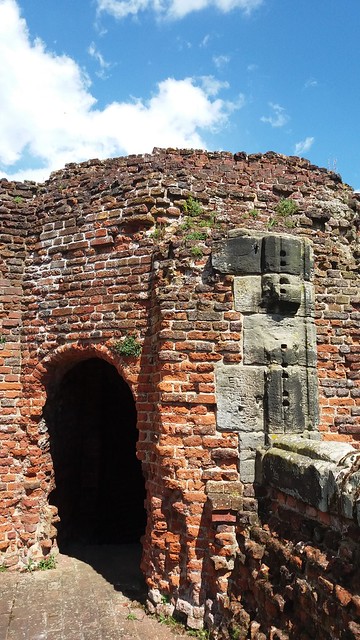
Unfortunately William's fortunes changed when Richard, Duke of Gloucester - later Richard III - seized the throne and took a dislike to  him. Richard had William's head chopped off, and work on the wonderful house stopped, with just one tower completed, in 1483.
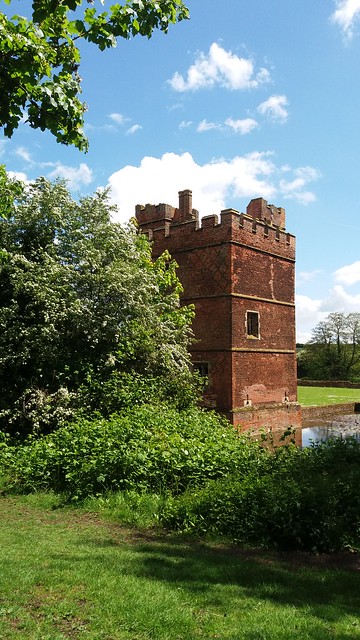
Just one complete tower
However, what remains of the castle shows what a magnificent structure it was going to be. Built in the wonderful new material - brick - which was the height of fashion and very expensive at that time. The never finished gatehouse is probably the most impressive part still remaining. It has ornate brick work and dark patterns built in to the rich red courses that symbolise William in happier times.
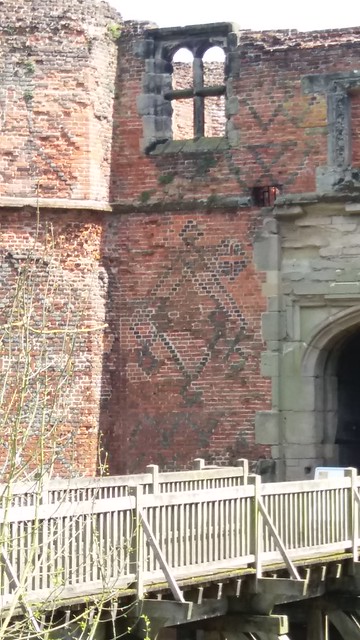
Decorated in darker brick
A few technical terms: course means a horizontal row of bricks; diaper work is a pattern of bricks in a different colour from the main body, particularly in the form of a criss-cross design; bricks have short ends - headers - and long ends - stretchers; bond is the way in which headers and stretchers are mixed to create the overall pattern. Flemish bond has alternate headers and stretchers in a course, English bond has alternate courses of headers and stretchers. (More about bricks here)

Magnificent spiral stairs
Kirby Muxloe is surrounded by a moat, and there were gun ports built into the gateway. There's no evidence that these were ever planned to be defensive structures, however. They might just have been for show, as a display of William's position and power.

Now off you go over to Tricky's FAST Blog to see other Fives this Friday!

May 19, 2017

Five little challenges

A couple of weeks ago we visited Brodsworth Hall and I shared the garden with you. At the time I promised a return to take a look at the inside.  It's a fascinating place and I can't possibly do it justice in a single post, so I thought I'd approach it from a different angle. Let's take a look at the challenges of looking after a house of such an age and in such a dilapidated state. You'll be surprised how much it has in common with your own housekeeping - and how much is different.

Brodsworth has a unique way of pointing out the problems it faces in conserving the furniture and fabrics. Rather than making you squirm with tales of nastiness they have introduced wonderful, fluffy toy models of the pests living around the house. Like this "woolly bear", for example,which represents the larva of the carpet moth. As you can see from the photo within the photo - the real thing isn't quite so cute!


Let's face it, nobody enjoys dusting but leaving it in place in a historic house is not an option. Dust is not an innocuous substance that can be easily swept away with the wipe of a cloth. In fact, if it's been in place long enough its chemical properties change and it starts to stick. Meanwhile, those chemical changes can affect the object the dust lies on, damaging the surface. Cleaning is a careful process, because rough handling can cause more damage than the dust! You can see some of the tools they use in the photo.

Most of us, particularly those in older homes, have at some point suffered the arrival of the small, grey intruder Mus domesticus - the house mouse. They cause two sorts of damage - basically one from each end. Firstly, they gnaw. They'll eat their way through anything that poses a barrier for them. Their sharp teeth will go through most things and nothing is really safe. This includes cables, so there's an increased risk of fire. The other end, of course, produces some disgusting stuff. Did you know, for example, that mice pee constantly?  It's partly so they can tell where they are. When in doubt, follow the smelly trail home. But they also leave nasty little black packages. which aren't just dirty, they're corrosive.

One problem a large house faces is needing a lot of fireplaces. And a lot of fires means a lot of chimneys. But once the house starts to close down the chimneys aren't maintained and fall victim to bird nests.Then, when the nests are abandoned, the pests move in. One such is the golden spider beetle, and once it gets bored with nest material it is partial to wool, with ensuing damage to the house's carpets!

Then there's a problem you might not have expected. You might remember from the previous post that the last resident of the house, Sylvia Grant-Dalton, was fond of pets. You might also remember that we discussed the possible identity of Binkie Pippy, named on a headstone in the pet cemetery. Well, Binkie and Pippy were actually two animals, spaniels, and for a lot of their lives they were never allowed outside. So when English Heritage took over the house and began the programme of conservation they found a lot of 'evidence' of the dogs' presence. Dog urine is acidic, and there were many holes in curtains and carpets as well as extensive staining.

So, on that fragrant note, I suggest you drop by Tricky's FAST blog to see what more pleasant topics people have found this week!

April 28, 2017

Brodsworth

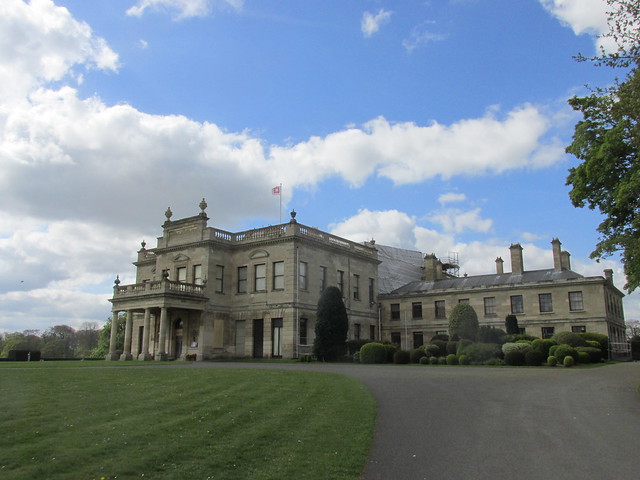
Brodsworth Hall - note the scaffolding
Just outside Doncaster there's a magnificent Victorian pile called Brodsworth Hall. To cut a long story short it fell on hard times after WWI and began to crumble gradually away so that, by the time English Heritage took it over in the 1990s, it was a faded remnant of its former glory.

In opposition to how most heritage organisation behave, EH decided to consolidate it 'as found' rather than restoring it. Today it's in the middle of a massive project to make it safe and suitable for visitors. It's wrapped in scaffolding and largely sheathed in plastic.

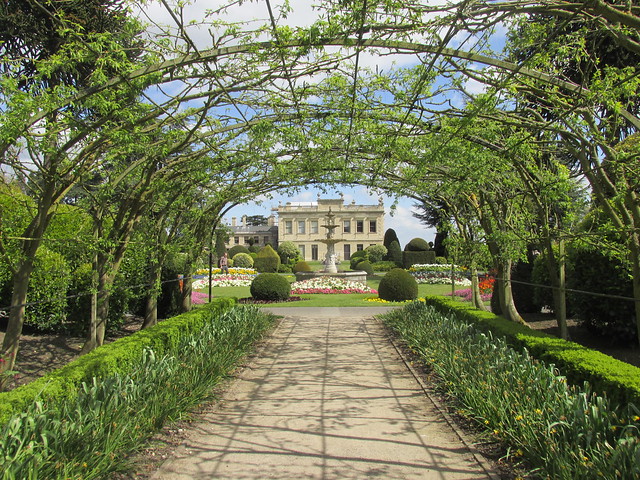
The gardens, however, are magnificent. Glorious sunshine gave me the chance to wander round and see them in their full wonder.  Here's some photos:
View to the hall across the fountain garden from under the laburnum arch. I'm determined to go back and see it when it's in flower. End of May should do it.
Round the back of the hall is a sweet little pet cemetery with carved headstones for the various animals. One says simply 'Polly parrot' while others give hints such as 'good boy', so I'm assuming that was a dog. There are no clues as to the species of Binkie Pippy, however. Sounds like a bunny to me!

The grounds are scattered with statuary and ghostly white figures in various degrees of dress stand around looking classical. I kind of liked this young lady feeding the pigeons. 

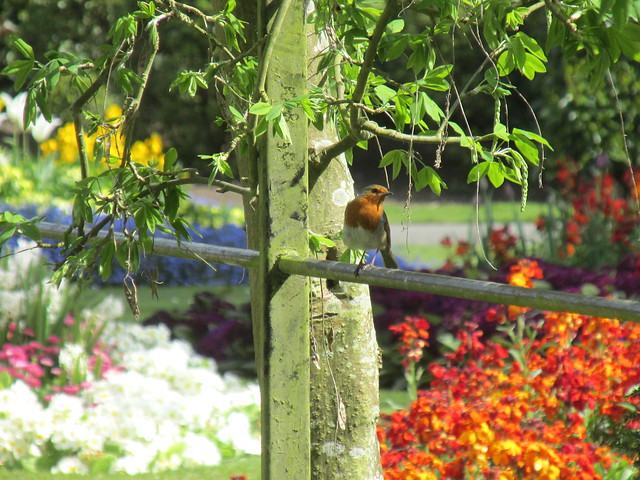
And then there was the real wildlife.  You get a hint of the colour from the fountain garden in this shot so the delightful robin isn't easy to spot, but he sat there singing his heart out for a while and seemed happy to have his photo taken. 

Now off you go over to Tricky's FAST blog to see the other Five on Friday posts. Happy weekend all.