Showing posts with label Derbyshire. Show all posts

March 24, 2017

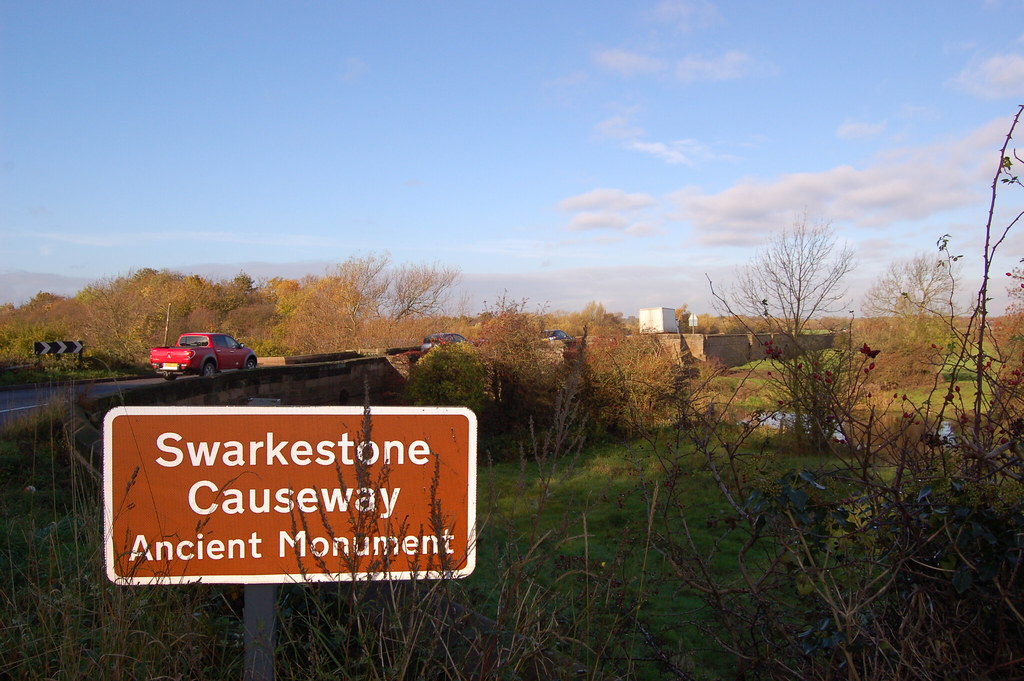
Swarkestone Bridge

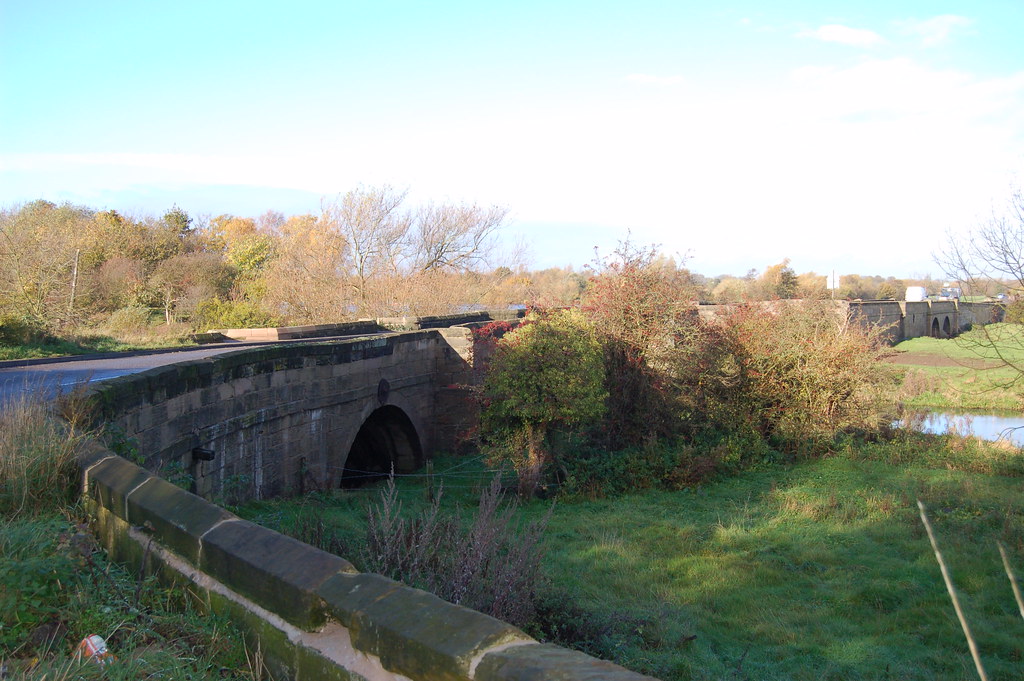
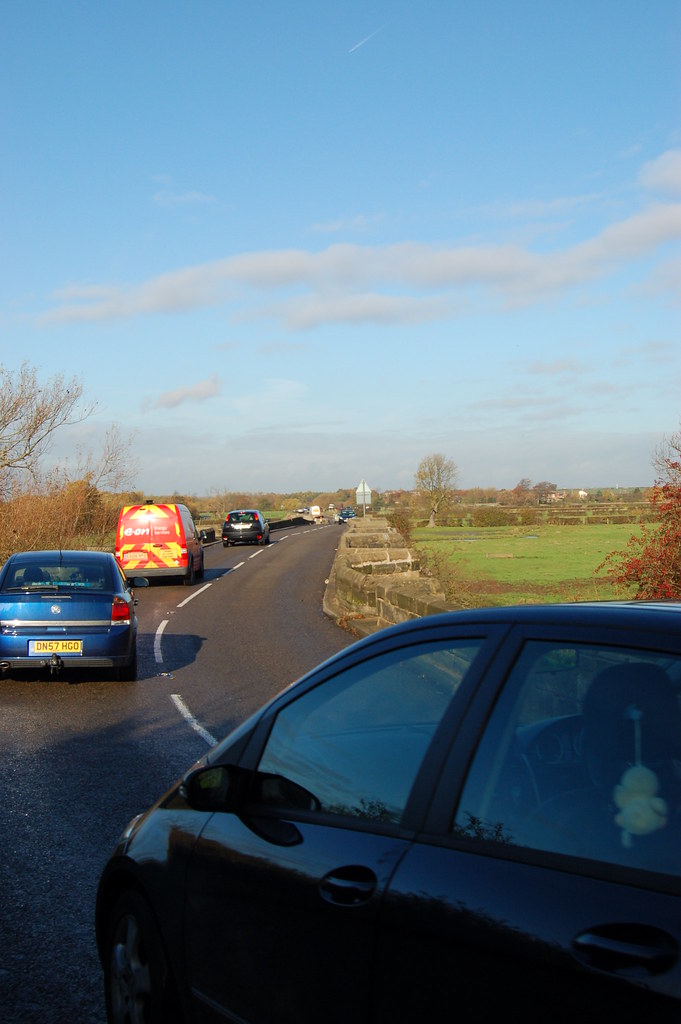
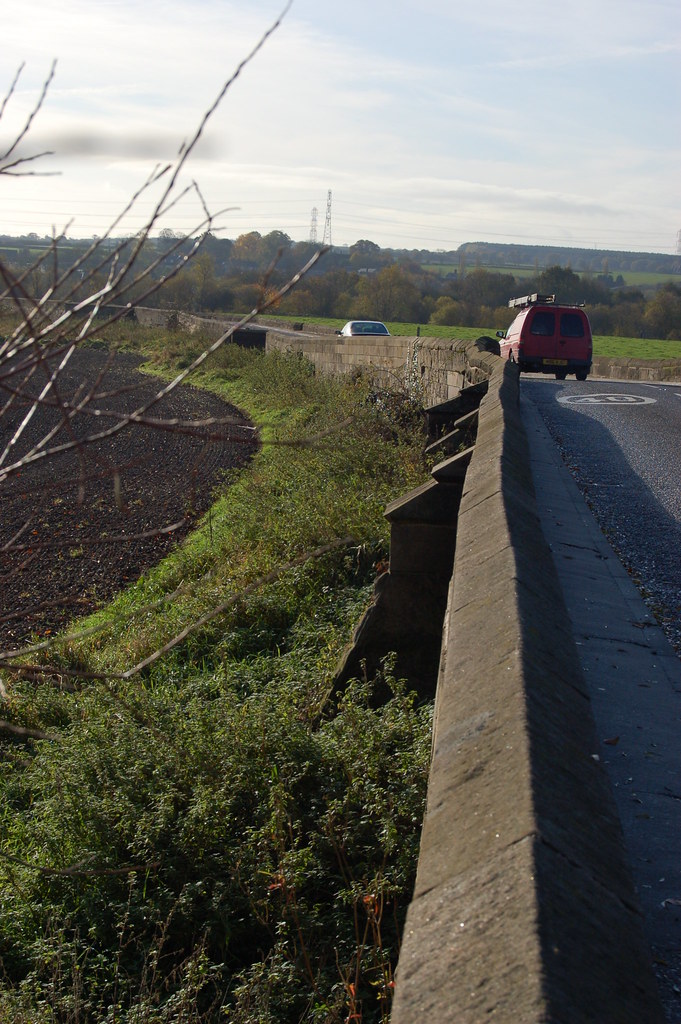
This week is the first time of hosting Five on Friday by Tricky at FAST blog. So to welcome him and start things well, here's five views of a rather impressive structure close to where I live. Sorry about the photos. It's not the easier thing to capture on film. (Don't forget to visit Tricky's blog to see what other people have written.)

The Grade I listed Swarkestone Bridge and Causeway, at almost a mile in length, is the longest stone bridge in England. At one time a bridge chapel and toll house stood on the causeway but there is little sign of them now. The structure crosses the River Trent flood plain between Swarkestone and Stanton-by-Bridge and is still a significant crossing for travellers passing from Derby to Melbourne.

It carries a bus route and it's quite creative driving when you meet one coming the other way. As you can see, it's narrow, and the photo shows one of the wider bits!

Built in the 13th century, the causeway is reputed to be the work of two local sisters whose lovers drowned while trying to cross the flood plain in high water. The horrified sisters saw the men swept away by the river and vowed that no-one else would suffer the same fate.  They spent the rest of their lives building and maintaining the causeway and bridge and so were penniless when they died.

September 02, 2016

Five at random

Here we are back at Five on Friday after the summer break. Don't forget when you've read this post to go to visit Amy at Love Made My Home and see what others have for you.

This week we have five random objects from Derby Museum and Art Gallery.  In date order:

1
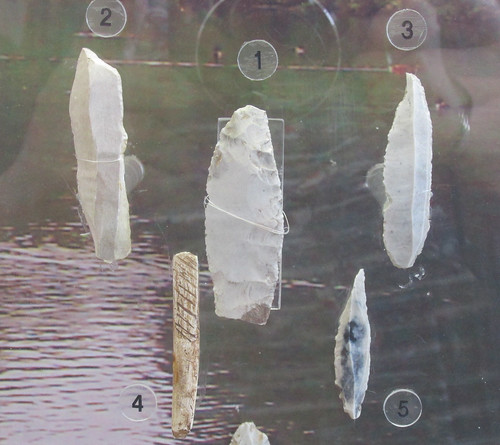
Prehistoric points from Creswell Crags caves in Derbyshire.
1. Leaf point, probably a spear head,made from worked flint and possibly 35-38,000 years old.
2. Another flint, possibly a hafted knife blade. A type of point found only at Creswell.
3. Scraper/burin. A tool for scraping and piercing bone and hide. Around 14-15,000 years old.
4. Mammoth ivory spear tip around 12,500 years old.
5.Very early arrowhead, 14-15,000 years old.


2
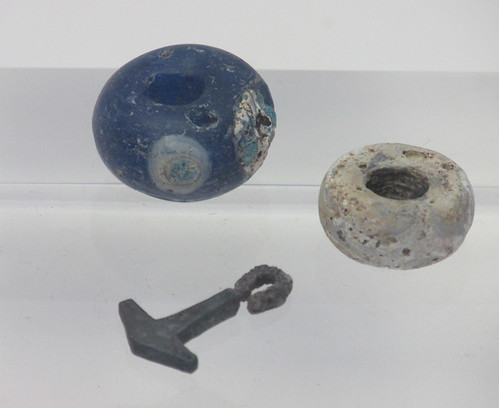
Two glass beads and a Thor's hammer, forming part of a necklace found in the grave of a viking at Repton in Derbyshire.


3
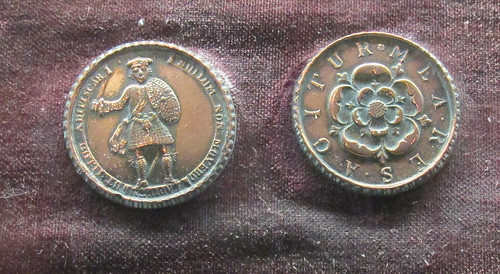
Medal issued to supporters of Bonnie Prince Charlie during the campaign to establish him on the British throne. Known as the Young Pretender, Charles Edward Stuart was believed by his family and supporters to be the rightful king of England. A year long campaign - the Jacobite Rebellion - failed to secure the throne for him and he fled to France to live out the remainder of his life.


4
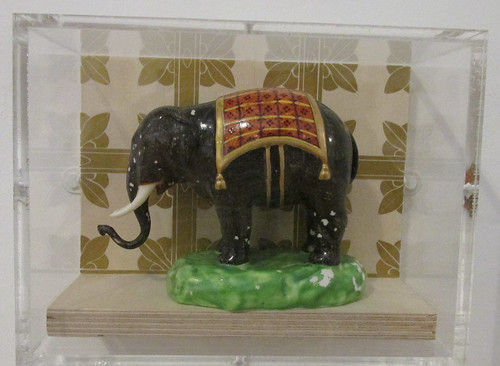
Elephant figurine in Derby porcelain made approximately 1830 at the Nottingham Road factory.


5
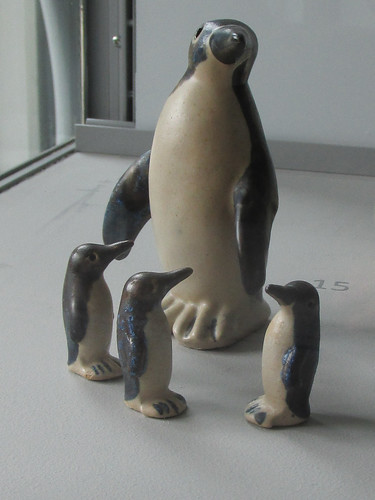
Penguin family dating from 1930s - 40s and made at the Denby factory.

July 15, 2016

Melbourne

Bit of a lazy Five this Friday. If you read my other blog you'll know I did a post about a beautiful wrought iron arbour in the garden of Melbourne Hall in Derbyshire. It, and several other garden structures, are listed Grade I because of their historic importance. (Read the History Anorak post if you want to know why they're important.)

So anyway, I thought you might like a look at some of the other garden ornaments at Melbourne and that's this week's post. But I can't be bothered re-writing the information on them, so I've just cut and pasted the official listing from Historic England.


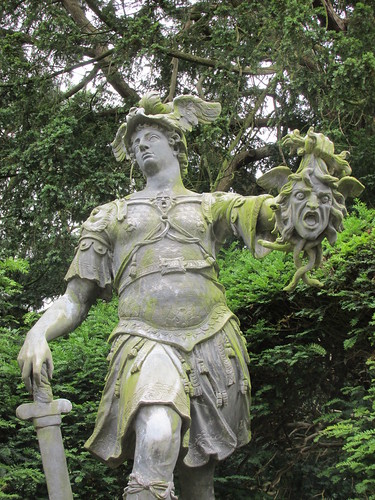
Perseus
Pedestal with Statue of Perseus in Melbourne Hall Gardens. Pedestal with statue of Perseus, c.1700 by Jan van Nost. Erected as part of a French-style garden, designed by Royal Gardeners to Queen Anne, London and Wise, for Thomas Coke of Melbourne Hall. Stone and lead. Panelled stone pedestal on wide square plinth with life-size figure of Perseus holding Medusa's head, clad in Roman style armour with winged sandals and helmet.

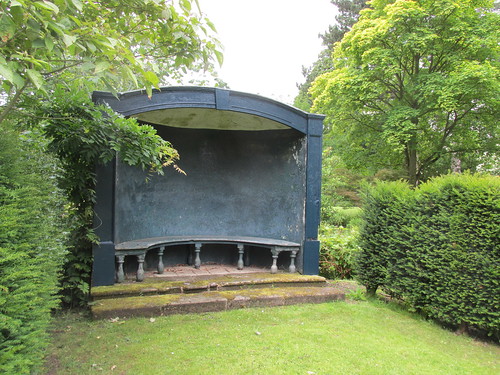
Covered seat
Covered Seat to East of Fountain Pond in Melbourne Hall Gardens (formerly listed with the matching seat as 'Two Alcoves in grounds of Melbourne Hall') Covered garden seat  c.1704 with later repairs. Work carried out by William Cooke of Walcot. Stuccoed brick and timber. Curved timber bench on turned legs fitted into an apsidal structure with stuccoed segmental brick wall covered by domed lead roof, with simple panelled timber jambs and segmental cornice with raised keystone. Built as a pair to similar seat to west.

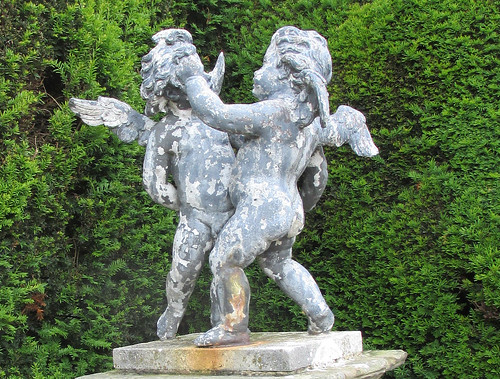
Fighting cherubs

Two Pairs of Cherubs to South-West of the Grand Basin in Melbourne Hall Gardens (formerly listed as 'Pair of pedestals with figures of fighting cupids on south side of garden, Melbourne Hall') Two pairs of cherubs, c.1700 by Jan van Nost. Stone and lead. Each pair of cherubs stands on a panelled stone pedestal with moulded base and cornice. Western pair are kissing and eastern pair are fighting. These form a group with another two pairs of cherubs on the opposite side of the basin and tell the tale of Castor and his brother Pollux fighting over a bunch of flowers and their eventual reconciliation.

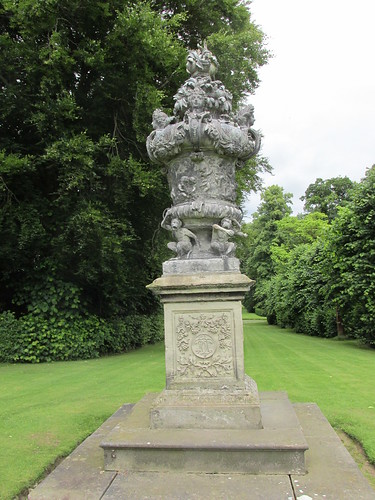
Four Seasons Vase

Pedestal and Four Seasons Vase in Melbourne Hall Gardens. Pedestal with vase, 1705, vase by Jan van Nost and pedestal by Devigne. Stone and lead. Panelled pedestal with moulded base and cornice on stepped square plinth, each panel carved with foliage and swags and with central roundels inscribed 'TC'. Magnificent baroque lead vase over supported by four seated lead monkeys, with gadrooned base to bowl and stem of bowl decorated with frieze of putti and foliage swags. Lid with bulbous base has four scrolled handles, each topped by the head of a Season, with panels between and more swags. The top is surmounted by a lattice work basket bursting with fruit and flowers. The vase was presented by Queen Anne to Thomas Coke.

Sets of steps

Five Flights of Steps between terraces at Melbourne Hall Gardens . Five flights of steps c.1704 with later urns. Work carried out by William Cooke of Walcot. Stone. Two flights of steps to either side of terrace and one central flight. Each flight has ten steps with moulded nosings and low retaining walls to either side terminating in low square piers to either end. The piers are now topped by later gadrooned urns. Each top step is wide and has diamond patterned paving.


Now take a trip over to see Amy at Love Made My Home and find out what other Friday Fives have been submitted this week.
April 01, 2016

Five mile posts

Here we are again, having had a week off for Easter. It's Amy's Five on Friday day again. Click on the image at the bottom to see other people's offerings.

Back in the days before GPS systems it wasn't always easy to know where you were or how far you still had to travel on your journeys.  There were lots of ingenious and attractive ways of letting travellers know. Here's five examples.

Theoretically with a bit of geometry and a map you should be able to work out where this is. But I'll be kind to you. It's on the A12 at Yoxall in Suffolk.

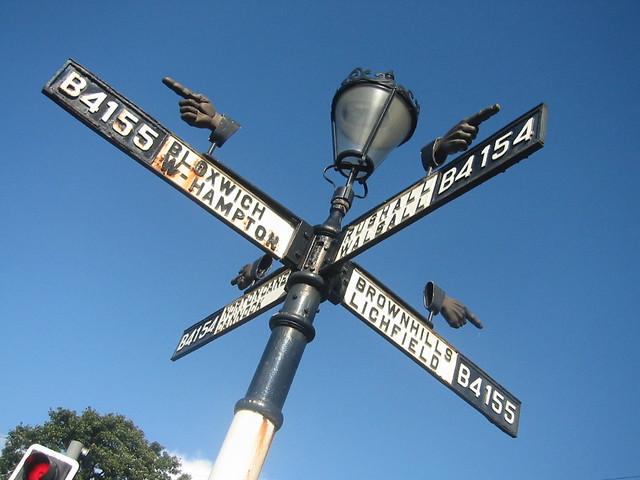
This is a particular favourite of mine. I love those pointing hands (they're called manicules, by the way) and the helpful lamp post on top in case you're travelling at night.

The users of these signs weren't allowed to travel at night. It's a canal marker, and narrowboats had to stop once darkness fell. This one's also a replica. You can tell because of the small plaque dated 1977. It was erected by the Trent and Mersey Canal Society at Derwent Lock to replace a missing original.

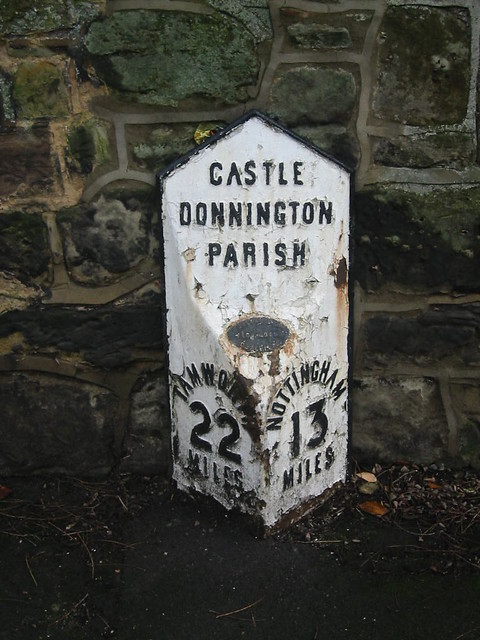
This one tells you where it is - except it's wrong. Castle Donington doesn't have a double N. It also frequently gets accused of being in Derbyshire, even though it isn't. This one's a bit out of the way nowadays, but the road it stands on used to be a turnpike.

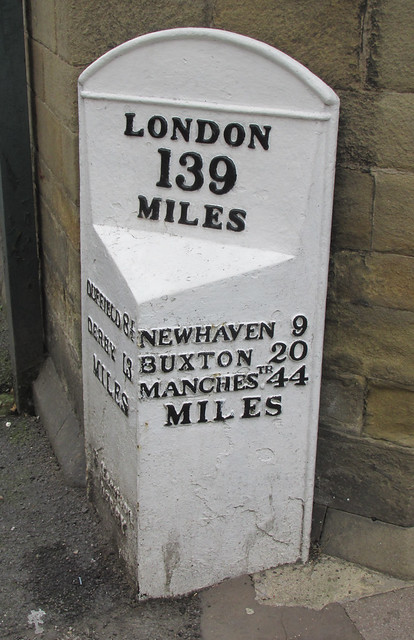
This one assumes you know where you are. You can probably work out that you're in Derbyshire, but this is very similar to one I found last weekend in Ashbourne. London is 139 miles from that one too, though Manchester is 45 miles away. Does that help?  Thought not. This one's in Wirksworth.  

Now click on the link below to visit Amy and her Five on Friday supporters.


March 04, 2016

Five stiles for Friday

Here I am again with Five on Friday for Amy's meme. This week I'm taking a look at stiles - those wonderful contraptions that let you cross fences, walls and other boundaries. It's to link in to a post I've done this week on my other blog.
Don't forget to click the link at the bottom to visit other people's entries.

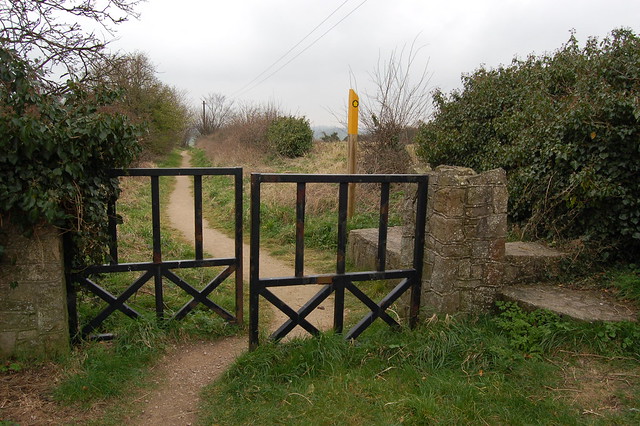
OK, so here's the first example. It might look like a gate, but those decorative ironwork pieces are fixed so you have to go around them and squeeze through the gap. It's a way of ensuring that livestock can't get out of a field, but humans have no trouble passing through. This one leads to the churchyard at Breedon on the Hill. (That's the one you can see as you drive up the M(A)42 through Leicestershire.)

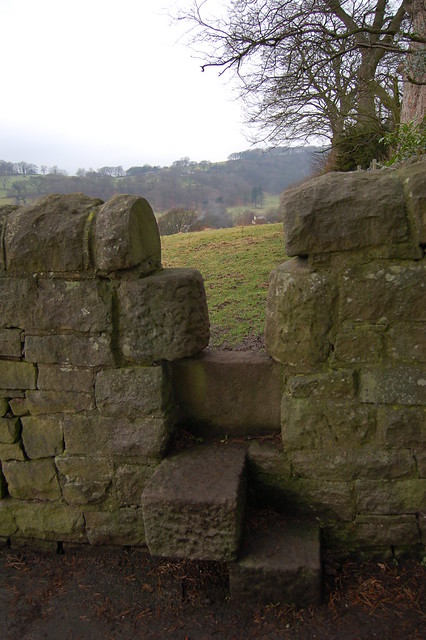
Here's a nice stone one from Hathersage in Derbyshire. There's plenty of millstone grit around that area to build sturdy examples like this. They're firm under the feet and easy to cross.

Here's a complex design from the National Trust property Calke Abbey (yes - Derbyshire again). That extra bit on the left with the three uprights is a lift-up section so dog walkers can let their pets pass underneath rather than trying to get them over the top. (Have you ever tried to get a dog to cross a stile?  It's why I have cats these days.)

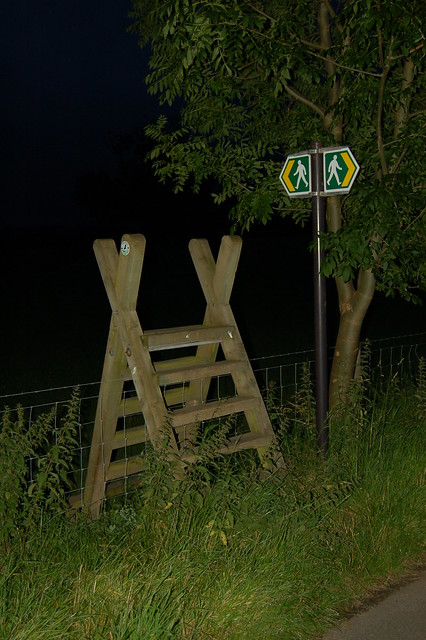
And this one's in Wales. Probably the tallest stile I ever saw! Those cross pieces at the top make it easy to climb though, because you have something to hold on to. It's near Ruthin

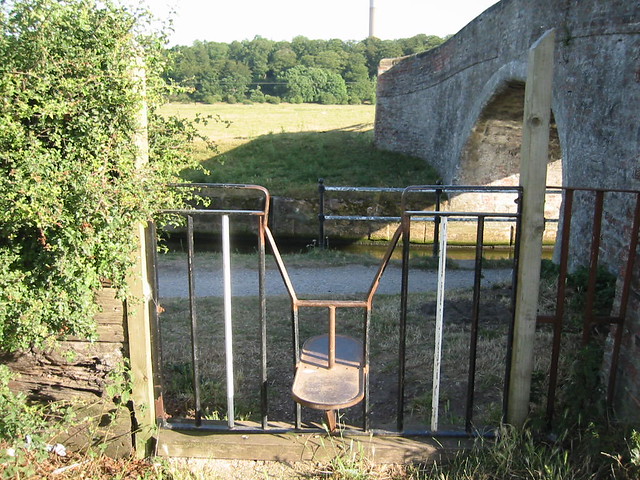
And this complex little number is, as you can see, next to a canal. The Trent and Mersey, to be exact, close to Trent Lock.  I'm not entirely sure whether it's Derbyshire or Nottinghamshire. The Trent is the boundary between three counties (including Leicestershire) at various places along this stretch and it's always hard to tell exactly where you are. The river is behind you at this point.