Showing posts with label history. Show all posts

December 28, 2020

White Rabbit


The church of St Mary in Beverley, East Riding of Yorkshire, is known for its wonderful carvings.  It also has literary connections. Perhaps the most famous is the link to Lewis Carroll, who is believed to have visited the church and seen a carving in the north choir aisle.

The depiction of a hare dates from medieval times, when it would have represented purity. However it's shown with a satchel and a scallop shell, so it could be a symbol of St James, and pilgrimage. St James’s shrine, at Santiago de Compostella in Spain, has been a destination for pilgrimage since the Middle Ages.

Whatever the reason for its inclusion, the hare bears a remarkable resemblance to the white rabbit as drawn by John Tenniel for his illustrations of Carroll's Alice in Wonderland, published in 1865. 

In keeping with the literary theme, new stonework in early 2021 restorations will have characters from C S Lewis's books, including The Lion the Witch and the Wardrobe


June 02, 2017

Five from York

The Minster
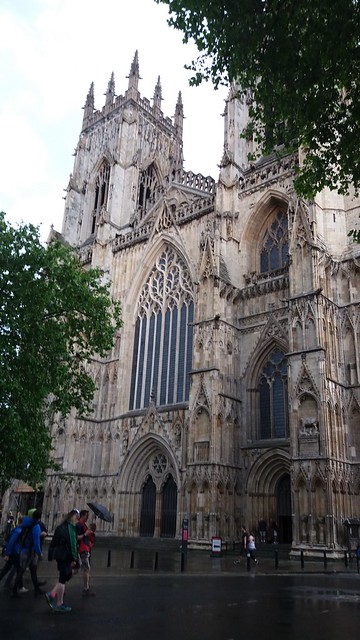
 Yorkshire's a funny county. They do things slightly differently there. For example, they eat fruit cake with cheese. (Try it before you sneer!) And where everyone else calls the biggest church in an area a cathedral, York (and other Yorkshire towns) has a Minster. Apparently, according to the Internet, a Minster church is one that was established in Anglo-Saxon times and was attached to a monastery. (But that doesn't explain why Peterborough Cathedral isn't a Minster.) Anyhow, one of the most beautiful sights in York is the Minster. It's a lovely church and really is the heart of Yorkshire - a name they have given to one of the Minster's glorious stained glass windows. Only an outside view, I'm afraid, but you can make out the heart pretty much central to the photo.

Bars and gates
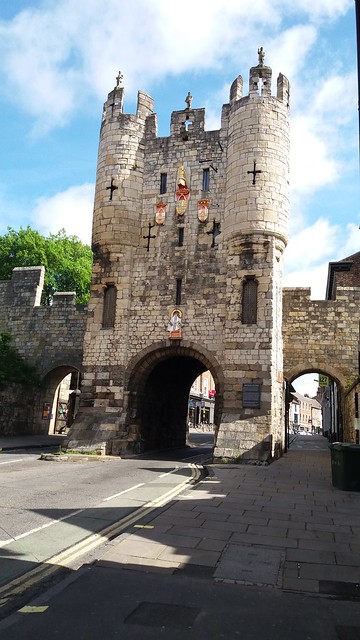
Talking of doing things differently - this is Micklegate Bar. It's one of the ways through the old city walls. (Incidentally, York has one of the most complete, original medieval city walls in the UK.) You might think it's called Micklegate because it's a gate, right? Well it isn't. Gate means street. Bar means gate. And mickle means small. So this is Little Street Gate. 


The Shambles
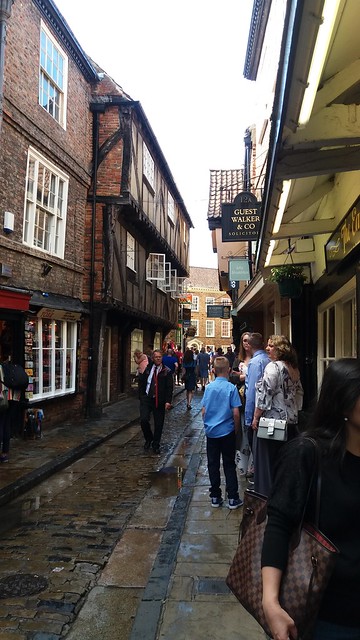
 The Shambles is one of York's best known streets. It has lots of claims to fame: Europe's most visited street; Europe's best preserved Medieval street; and most recently, the inspiration for Diagon Alley in the Harry Potter films. In fact you can hear lots of different languages as you walk along the narrow way: you don't understand a word until someone says "Diagon Alley", then continues talking in whatever native tongue they're using.

The word Shambles originates from the Medieval word shamel, which meant booth or bench. The street was the home of the butchers of York and the road has deep channels at each side where water could be sluiced through to wash away the blood and waste.

The street is so narrow, and the buildings overhang so far, that it's possible to shake hands across the road from the upper storeys.


Clifford's Tower
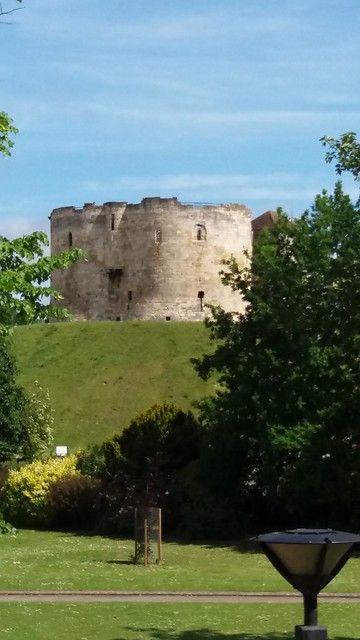
Clifford’s Tower is one of York's best known landmarks. It is part of the old York Castle, once the centre of government for the north of England. It's a motte and bailey structure: the motte being the steep mound and the bailey being the flat area around the mound. Originally there was an 11th-century timber tower on top but it was burned down in 1190, when York’s Jewish community, some 150 strong, was besieged by a mob and forced to seek refuge inside. They committed mass suicide. The present limestone tower dates from the 13th century and was surrounded by a moat

The views from the top are stunning, although tourists don't care about walking in front of you while you're trying to capture it on video. And they seem to ignore the 'one way system' signs on the narrow, spiral staircases. Ho hum.

Romans
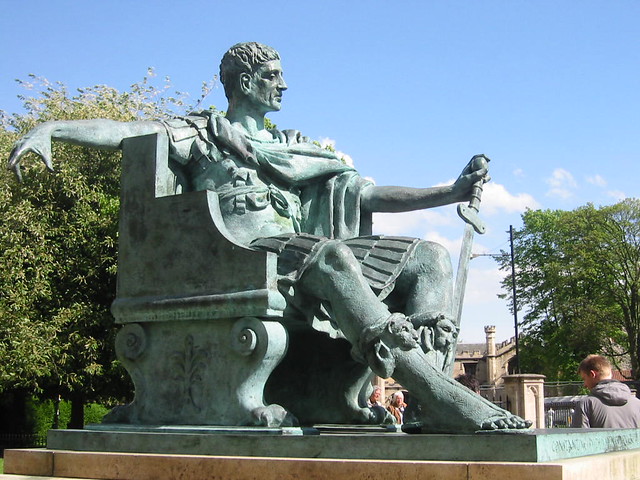
Lastly we're going back in time and forward at the same time. York was, of course, established by the Romans, who called it Eboracum. There are still remnants of the old Roman town. Stonegate, for example, has the original Roman street below it and anyone having to dig up the road soon finds Roman masonry. There's a Roman pillar stands opposite the Minster, marking the site of the basilica. It was found during repair excavations at the Minster in 1969 and erected nearby. Between the pillar and the Minster is one of my favourite public sculptures in the whole country. It's Constantine the Great by Philip Jackson; a life size bronze of the Emperor sitting in an elaborate chair and holding a broken sword. Constantine was declared emperor in York in the year 306.

OK so now you have to go and visit the wonderful Tricky over at FAST blog to see what other fives people have collected this week. 

May 26, 2017

Kirby Muxloe

William, Lord Hastings was a favourite of King Edward IV who made a small fortune during the Wars of the Roses and decided to spend it on a very impressive new house at Kirby Muxloe in Leicestershire. The village was the site of an existing manor house belonging to his family, who also owned nearby Ashby de la Zouch Castle.

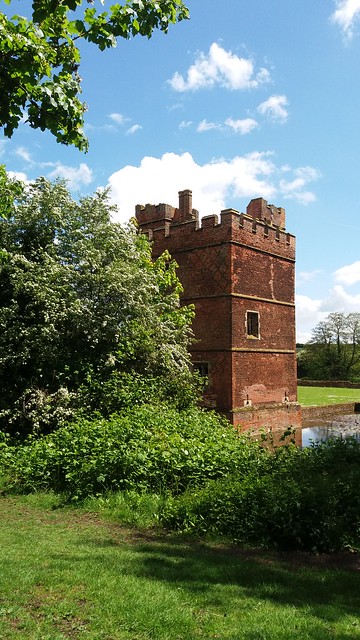
Unfortunately William's fortunes changed when Richard, Duke of Gloucester - later Richard III - seized the throne and took a dislike to  him. Richard had William's head chopped off, and work on the wonderful house stopped, with just one tower completed, in 1483.

Just one complete tower
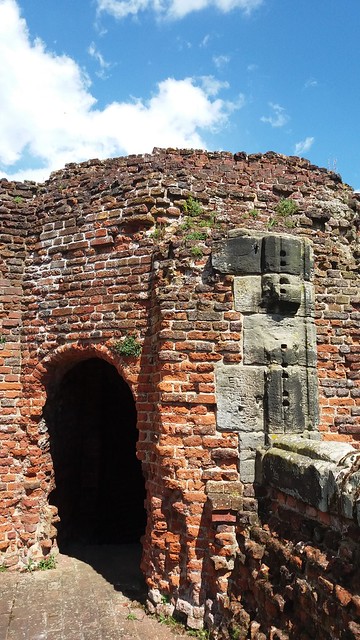
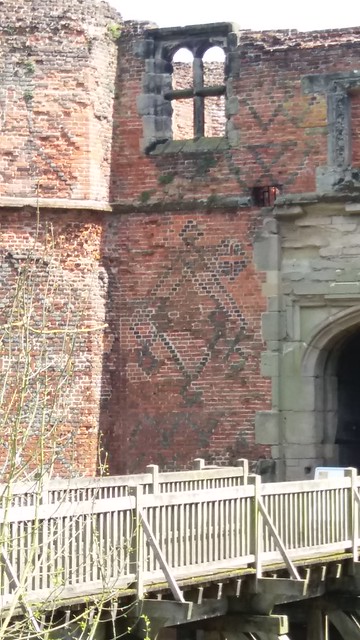
However, what remains of the castle shows what a magnificent structure it was going to be. Built in the wonderful new material - brick - which was the height of fashion and very expensive at that time. The never finished gatehouse is probably the most impressive part still remaining. It has ornate brick work and dark patterns built in to the rich red courses that symbolise William in happier times.

Decorated in darker brick
A few technical terms: course means a horizontal row of bricks; diaper work is a pattern of bricks in a different colour from the main body, particularly in the form of a criss-cross design; bricks have short ends - headers - and long ends - stretchers; bond is the way in which headers and stretchers are mixed to create the overall pattern. Flemish bond has alternate headers and stretchers in a course, English bond has alternate courses of headers and stretchers. (More about bricks here)

Magnificent spiral stairs
Kirby Muxloe is surrounded by a moat, and there were gun ports built into the gateway. There's no evidence that these were ever planned to be defensive structures, however. They might just have been for show, as a display of William's position and power.

Now off you go over to Tricky's FAST Blog to see other Fives this Friday!

April 28, 2017

Brodsworth

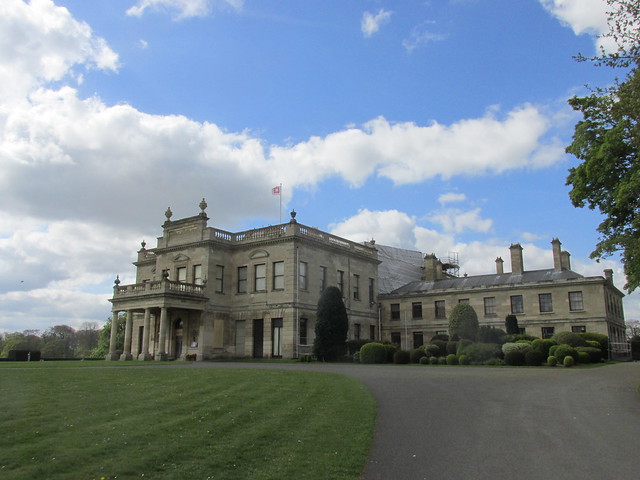
Brodsworth Hall - note the scaffolding
Just outside Doncaster there's a magnificent Victorian pile called Brodsworth Hall. To cut a long story short it fell on hard times after WWI and began to crumble gradually away so that, by the time English Heritage took it over in the 1990s, it was a faded remnant of its former glory.

In opposition to how most heritage organisation behave, EH decided to consolidate it 'as found' rather than restoring it. Today it's in the middle of a massive project to make it safe and suitable for visitors. It's wrapped in scaffolding and largely sheathed in plastic.

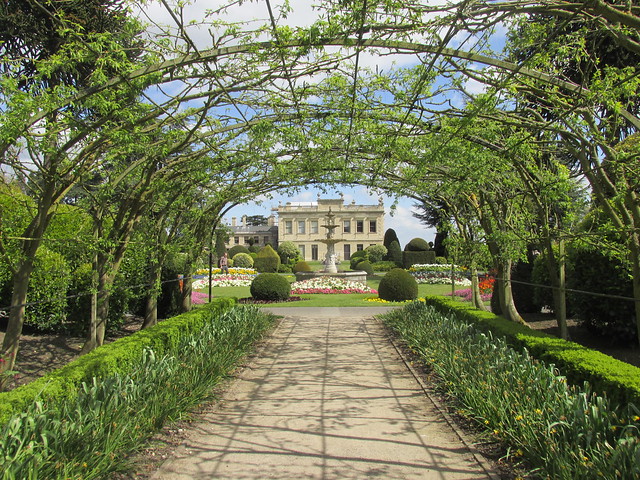
The gardens, however, are magnificent. Glorious sunshine gave me the chance to wander round and see them in their full wonder.  Here's some photos:
View to the hall across the fountain garden from under the laburnum arch. I'm determined to go back and see it when it's in flower. End of May should do it.
Round the back of the hall is a sweet little pet cemetery with carved headstones for the various animals. One says simply 'Polly parrot' while others give hints such as 'good boy', so I'm assuming that was a dog. There are no clues as to the species of Binkie Pippy, however. Sounds like a bunny to me!

The grounds are scattered with statuary and ghostly white figures in various degrees of dress stand around looking classical. I kind of liked this young lady feeding the pigeons. 

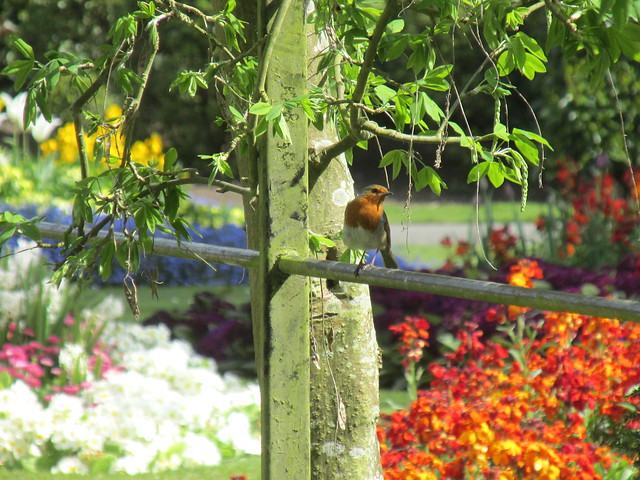
And then there was the real wildlife.  You get a hint of the colour from the fountain garden in this shot so the delightful robin isn't easy to spot, but he sat there singing his heart out for a while and seemed happy to have his photo taken. 

Now off you go over to Tricky's FAST blog to see the other Five on Friday posts. Happy weekend all. 

April 21, 2017

Tanner or Barker

Samples of leather
The Anorak made a recent trip to a wonderful museum in the West Midands town of Walsall, dedicated to one of its traditional trades - leather making. There's a fascinating display there about the surnames that have developed from various skills involved in producing and using leather. Were any of your ancestors employed in leather making and use?

1 Leather production
There are lots of processes required in the production of leather and each one has resulted in surnames to identify the jobs. Such as:
Skinner - who skins the beasts
Tanner - who tans leather
Barker - another word for tanner
Currier - a leather dresser

2 Boots and shoes
Footwear is probably one of the commonest uses for leather, even today. It's given rise to a few names too.
Boot - one who made boots
Chaucer - a shoe maker: from the French word chaussure, meaning shoe

3 Other leather goods
And there are lots of other leather goods that all had their own specialist skills. For example:
Glover - who made gloves
Gant or Gaunt - another name for a glover, from the French gant
Bracegirdle - a belt maker
Purser - who made purses
Badger - a bag maker (and nothing to do with black and white animals at all!)

4 Saddlery
Making saddles and associated horse harness and tack was a very skilled job with lots of different styles for racing, hunting, and even side-saddles for the ladies.
Sadler - obviously one who made saddles
Burrell - less obviously a saddler, from the French bourrelier
Sellers - also from the French, sellier, or saddler

5 Associated metalwork
And to hold all the leather harness bits together you need lots of specially shaped metalwork, collectively known as lorinery. Walsall had plenty of associated lorinery factories that supplied the leather workers. Their skills also gave us some associated surnames.
Lorimer - a maker or dealer in lorinery
Buckler - made buckles
Sperrin - made spurs

And there you have it. Lots of hidden information in your name!  Now go across to Tricky's FAST blog to see other fives this Friday.

April 14, 2017

Shell Grotto

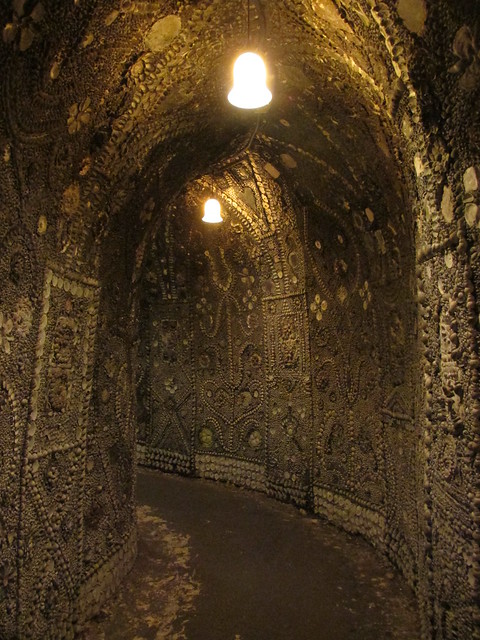
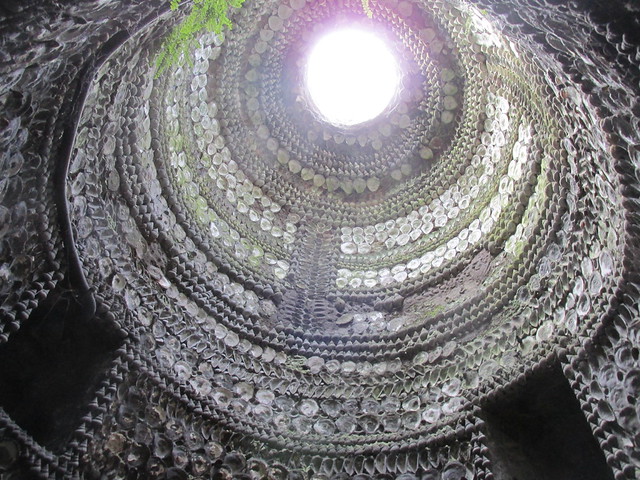
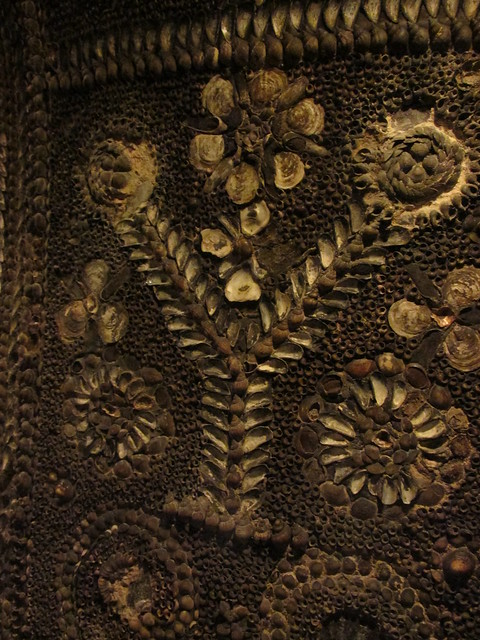
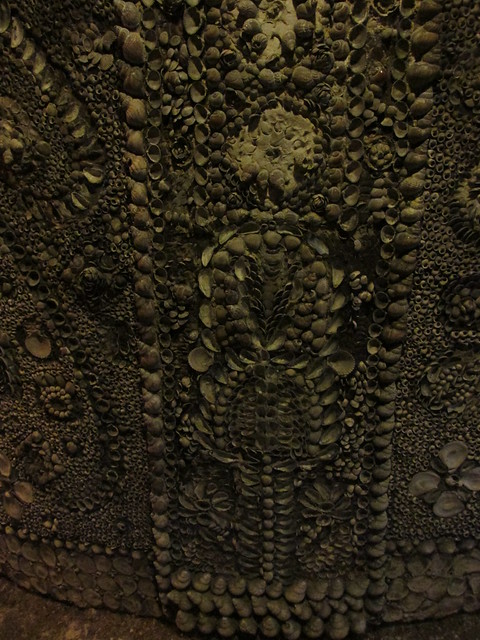
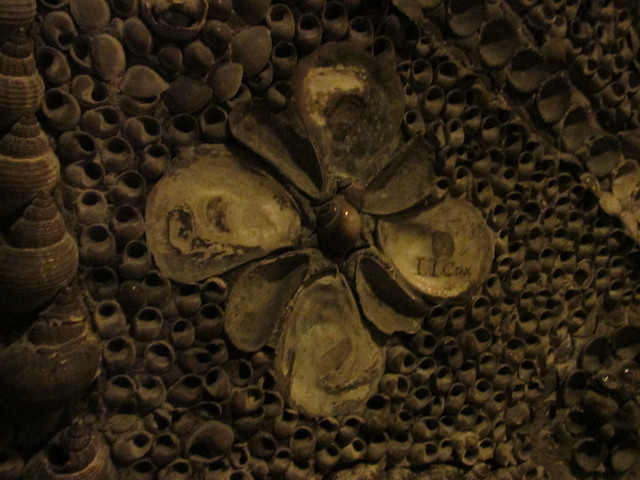
As promised last week we're paying another visit to Margate Shell Grotto. Here are five photos of the mysterious structure.
A view down the tunnel
There are a number of shell-decorated follies and grottoes in the UK but, unlike the majority, the grotto in Margate was created using native species - mainly mussels, cockles, whelks, limpets, scallops and oysters. Only four shells among the 4.6 million are exotic: two Caribbean queen conches and two Pacific giant clams.

This is just one of the weird things about the 104 feet long tunnel in Grotto Hill. The grotto takes the form of a winding passage that splits into two, forming a circle, then ending with a square space called the altar room. At the point where the path splits the ceiling rises to a dome with a gap at the top that allows some natural light to enter.

Looking up into the dome
The shells form a series of panels along the walls, each with complicated designs incorporating symbols and  pictograms that have been interpreted in several ways. Some people see little but attractive patterns, others have identified astrological signs, representations of ancient gods, phallic designs, and other mystical themes.

Detail from the Aries panel

According to local legend the grotto was discovered in 1835 when local landowner James Newlove decided to dig a duck pond. His son Joshua found a strange hole in the ground and James lowered him through it to see what lay beneath. The boy reported seeing pictures and a cave.  Estimates of its age vary from several thousand years, to Victorian folly.

Part of the 'skeleton' panel

Other ideas have included the suggestion that the site was prehistoric; it might have been a Templar Chapel; or Newlove built the tunnels himself. Whatever the truth, the grotto became a tourist attraction within a couple of years, earning Newlove a considerable income.

Detail of a pattern - with old graffiti!

It's been open to the public ever since, and it recently underwent a programme of restoration to prevent water damage. A new project was launched in 2012 to replace missing 'roundels'. Some parts of the patterns were created by fixing them to circles of slate, which have since fallen away. Those slates are now being repaired.

Now drop by Tricky's FAST blog to see other Five on Friday posts.

March 10, 2017

Scarborough Five

For Five on Friday (which is still hosted by Amy at Love Made My Home, for the next couple of weeks) we have five historic-ish things to be found in and around Scarborough, North Yorkshire. It was,of course, The Anorak's home town and is still regularly visited by us when we hear the call of the sea.


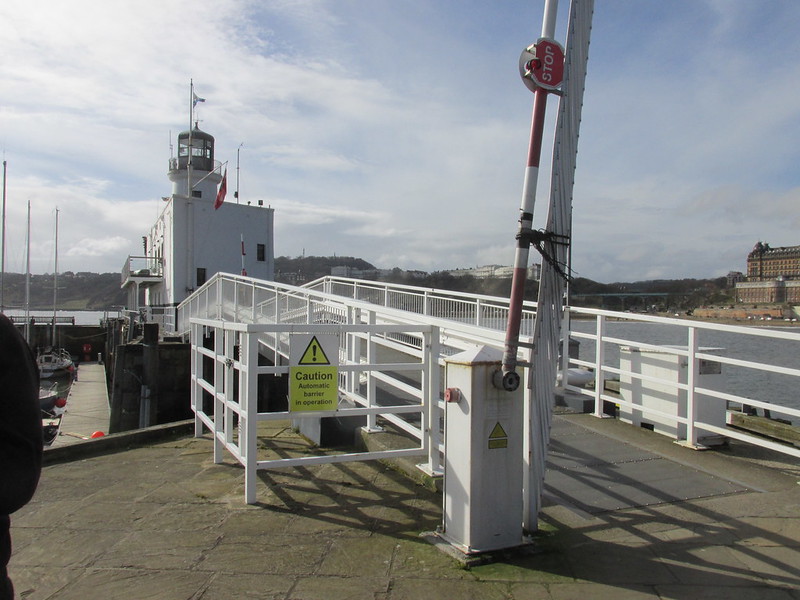
Captain Sydney Smith Bridge
Named after a former Deputy Harbour Master who was also editor of Olsen's Fishermen's Nautical Almanac. He was decorated for his daring during WWII. The bridge, which lifts to allow craft in and out of the harbour, was erected in 2000.


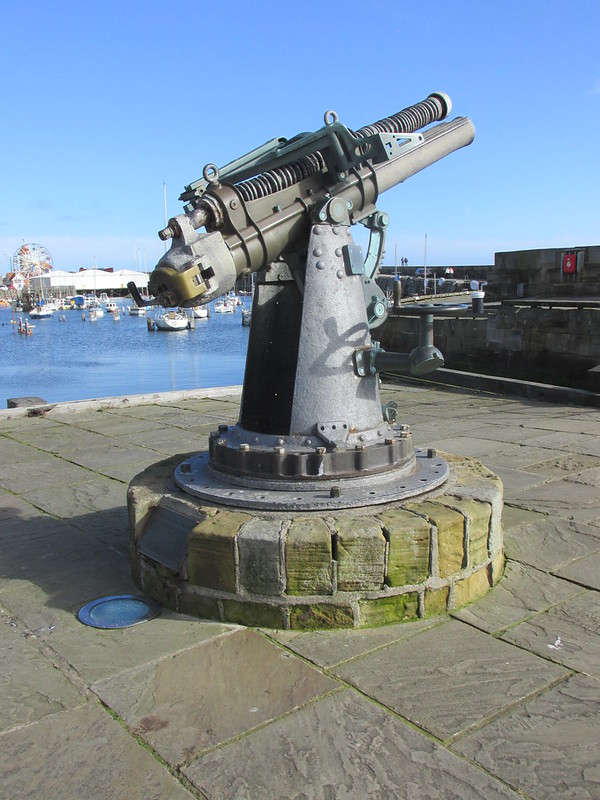
The Vickers gun
In 1914 Scarborough was the target of a German attack from the sea when a huge number of shells fell on the town causing extensive damage. While this gun dates from the time it was not involved in defending Scarborough then. It was sited on the cargo ship SS Hornsund, which was sunk by torpedo in 1917 about two miles off shore. The gun was recovered by the local sub aqua club in 1982 and now stands close to the lighthouse.


The horse trough
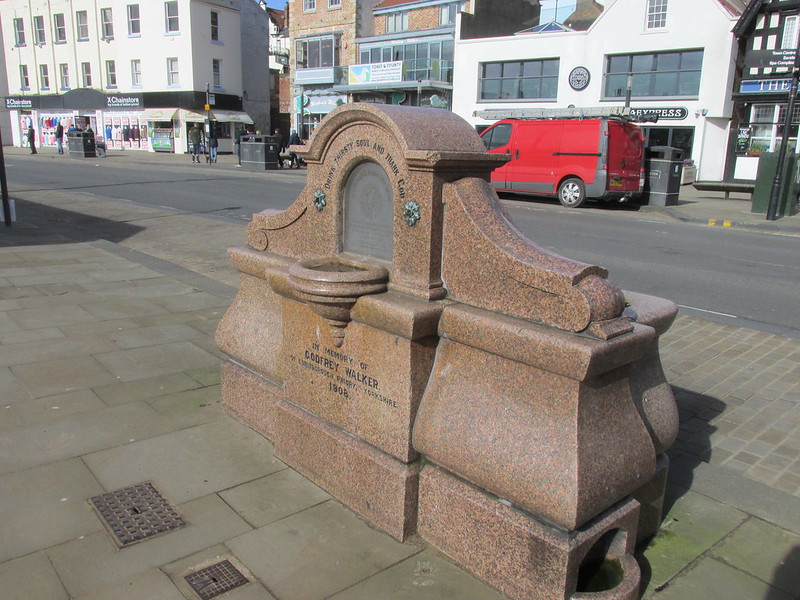
This granite trough has stood on the harbour road since 1908, erected in memory of Godfrey Walker of Conisborough Priory, Yorkshire. One side was a drinking fountain for humans and the other side was a trough for horses. These days it's a flower pot.


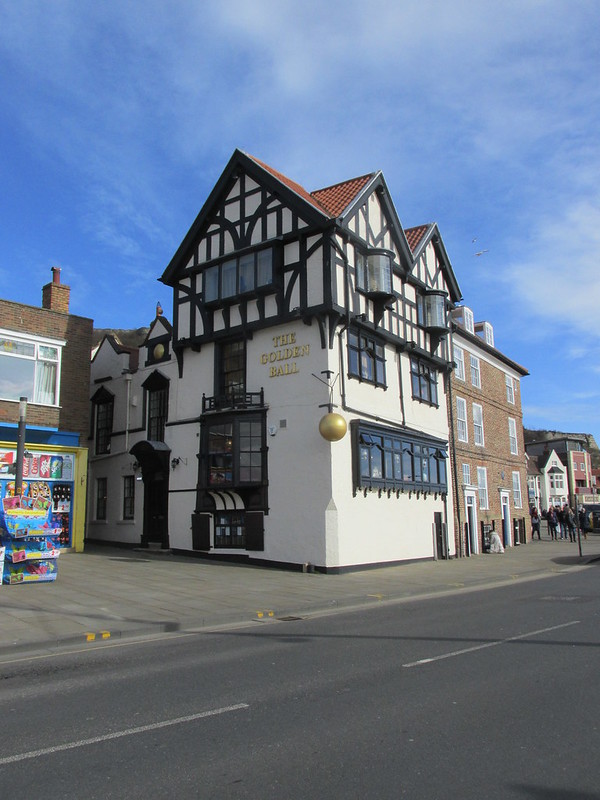
The Golden Ball Inn, Quay Street
According to the Scarborough Maritime History Centre website: "The Golden Ball, in Quay Street, was one of the better known inns. Of great age, it was noted for the "prime old ales" produced on the 30th September every year, St Jerome's Day, and the occasion for the election of new bailiffs at the nearby town hall. A brewery adjoined the house, where in 1821, Mark Coates fell into the mash tub."

More recently I'm prepared to admit it was the site of The History Anorak's early forays into pub attendance. I'm even prepared to admit that it might have been the site of some underage drinking!  When my mother found out she was appalled - not because I'd been breaking the law by imbibing alcohol at 16, but by the fact that the pub was by the harbour and I must have been in close proximity to riff-raff mariners!


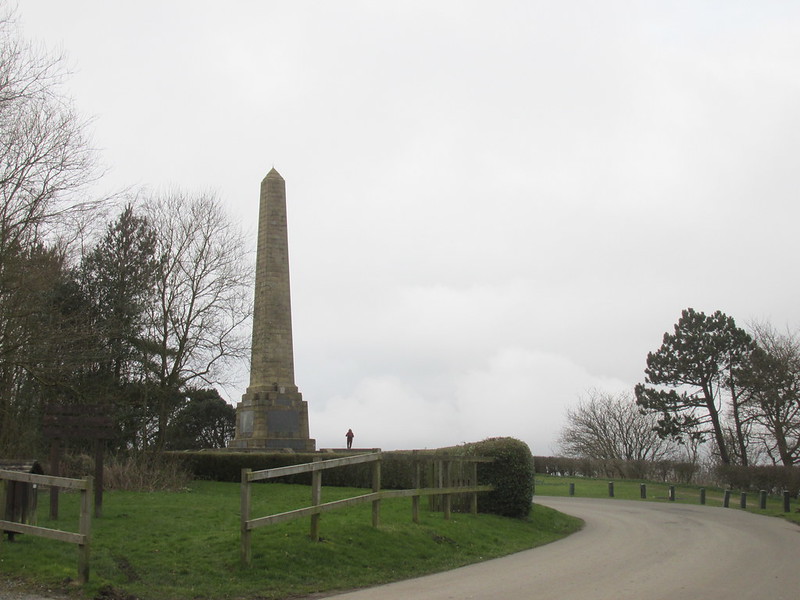
Oliver's Mount
Here's a close up view of the monument that stands on top of Oliver's Mount overlooking the town. You can see it easily from a lot of the area. It's the town's war memorial and I have many memories of my father laying a wreath on behalf of St John Ambulance back in the day. He looked smart in his black and white uniform and always brought much dignity to the act of remembrance. I can still picture him.

December 23, 2016

Gold

We're short of Frankincense and myrrh, but just for you this Christmas here's five pieces of archaeological gold, for my last Five on Friday until next year. (Not sure if anyone else is doing one this week, but if they are you'll find the link here.)


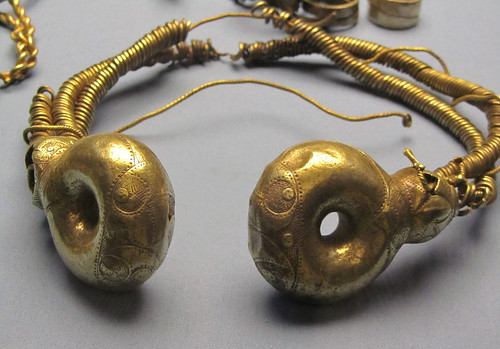
Number 1 is a torc (neck ornament) from the Snettisham hoard. It's one ofmore than 150 pieces of Iron Age gold found in the 1950s in a field near the Norfolk seaside town of Snettisham,. It's not clear where the items came from originally, but it's been suggested that they were part of the royal Iceni treasure. (Queen Boadicea's tribe.)


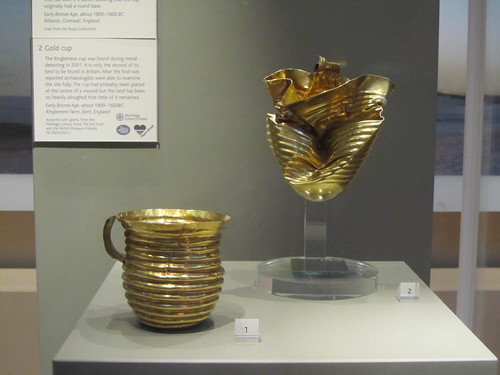
Here's the Rillaton Cup. Found in a Bronze Age round barrow in Cornwall. Excavated in 1837 and containing a centrally-placed inhumation in a stone cist measuring 2m by almost 1m. Human remains were found along with grave goods including the Rillaton Gold Cup, a bronze dagger, beads, pottery, glass and other items. The squashed cup above is from Ringlemere in Kent. Found in 2001 by metal detectorists.

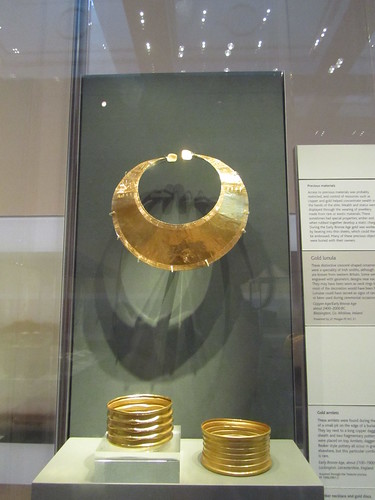
This is a lunula, a moon-shaped neck decoration dating from the Neolithic onwards. Mostly found in Ireland, but they have been discovered across Europe. They were probably signs of status, altough no-one is exactly sure. They appear to have been phased out and replaced by torcs in the Bronze Age,
.
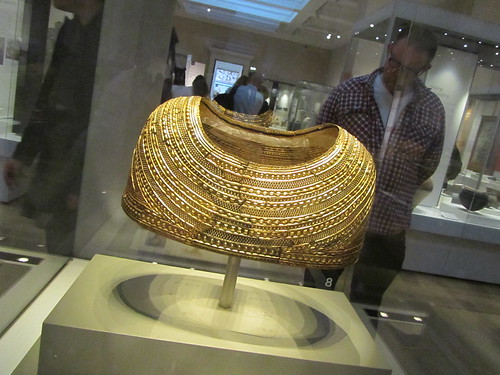
The Mold cape, from near Mold in North Wales. Found in 1833 in a Bronze Age burial. The cape is clearly ceremonial since wearing it would make it impossible to move the arms. It is extremely narrow and almost certainly worn by a woman. 


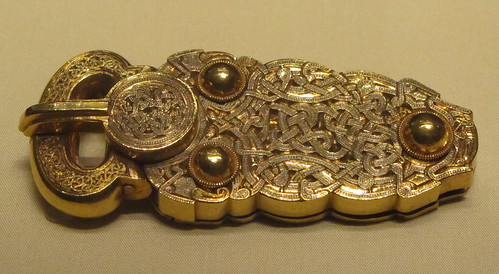
This is the magnificent belt buckle found in the best preserved Anglo-Saxon boat burial at Sutton Hoo in Suffolk. The site was excavated in 1939 and is one of the richest graves dating from the period (early 7th century). The grave is possibly that of Rædwald, the ruler of the East Angles, and there are many parallels with the poem Beowulf. 

Merry Christmas one and all!

November 11, 2016

Ghosts

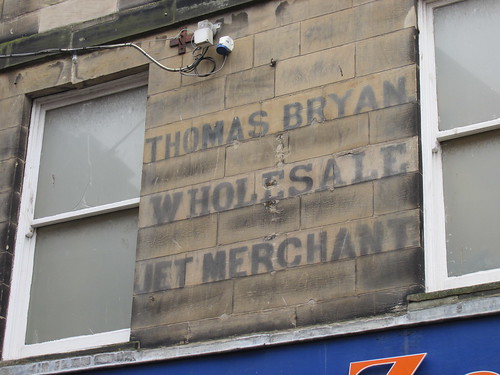
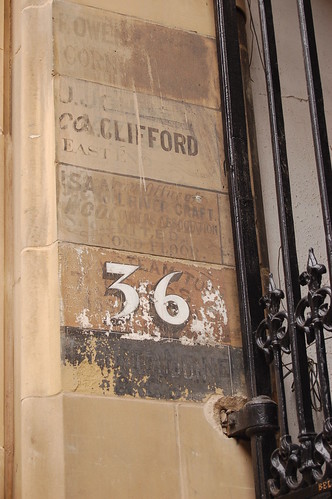
You're bound to have seen them, but you've probably not taken too much notice of them. They can be found all over most towns and many villages. They are advertisements for trades and businesses long gone. They're known as ghost signs - and they offer a glimpse into the past.

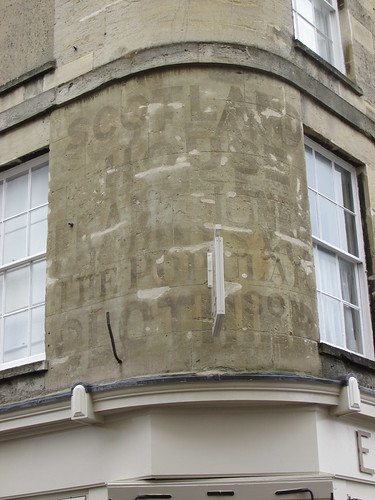
Let's start with this one from the corner of Market Place in Cirencester. With a bit of effort you can see it says Scotland House Frank Jones The Popular Clothier
There's also at least one '& Co' and something that looks like it ends with ...nson  and a VERY faint extra 'ouse', which I assume was an earlier rendering of House.


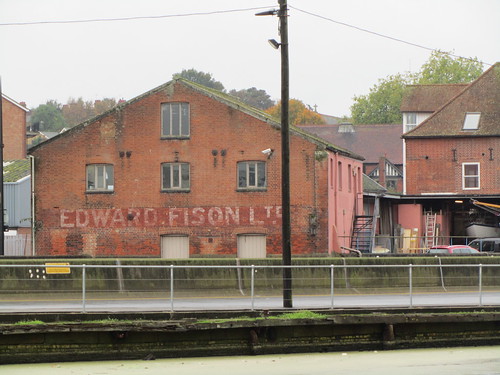
Here's a fine example from the harbourside in Ipswich. Fison's were well known as an agricultural chemicals company and they started life in this Suffolk town.


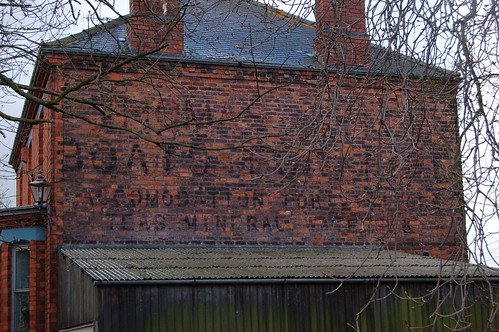
This one is near the River Trent by Sawley, Nottinghamshire. It's a bit of a pleasure spot these days and from what you can decipher on this wall that's been the case for a while. Thomas someone (I can't make out a second name) offered boats for hire, accommodation, teas and mineral waters.

One of my favourites. It could only be in one town. Wholesale jet merchants were a feature of Whitby, where the rare black gemstone appears in the local rocks. You'll find this one close by the swing bridge.

And here's another beauty from round the back of the East Riding Museum in Hull. It's a lovely slice of the town's history. Among the words you can just make out are "Hull River Craft Owners"  "Steam Tug Owners" and there's a wool merchant in there somewhere.

This post was for Five on Friday run by Amy at Love Made My Home. Sadly, Amy has 'stuff' to deal with and Five has been suspended temporarily.

October 21, 2016

Five from Leeds

Last weekend went went to Leeds to see a concert by the magnificent Bad Company, fronted by the voice of rock, Paul Rodgers. Of course I thought about Amy and Love Made My Home while I was there and took some photos.
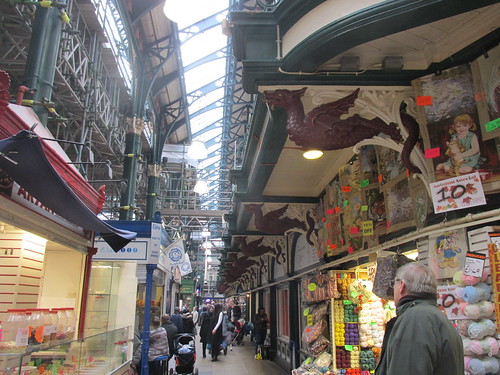
The magnificent Kirkgate Market stands on the site of an earlier market. Originally it was the home of Leeds vicarage but a fruit, vegetable and cattle market was begun there. In 1857 the city erected a covered market but it was swept away in 1904 to make way for the spectacular building you see today. If anyone happens to be in the area, the wool shop on the right offers very good value!

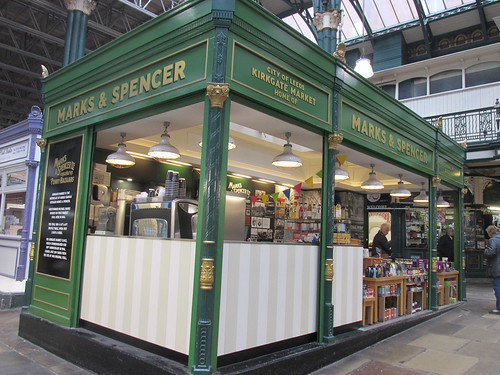
While you're in the market you might spot this, because Kirkgate is where Mr Marks and Mr Spencer first got together to launch their now internationally-regarded chain of stores. This isn't just any market..........


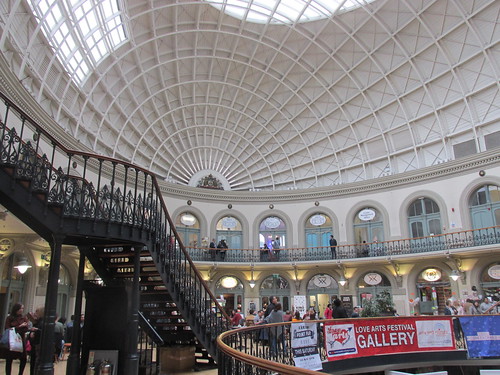
Just down the road you'll find the magnificent Corn Exchange, now a collection of little independent shops and a gallery space, but once the place where merchants gathered to agree the price of grain. The domed roof was designed to allow in as much as possible of the clean, northern light, because it gave a true image of the goods being traded. Built in 1861 and in use until the 1950s.

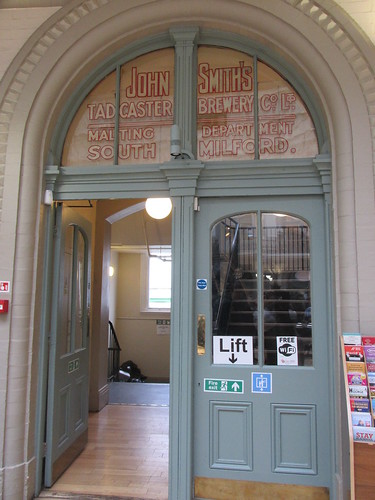
It wasn't just pure grain that was traded. Local (ish) brewer John Smith needed malt to produce his fine ales and so had an office in the Leeds Corn Exchange where experts could assess and buy what was required.

If you look very carefully at the photo of the Corn Exchange roof you will see a coat of arms, and if you have extremely good eyesight you might be able to make out a pair of owls that flank it. There are owls all over the city. This one is outside the town hall. (And I admit I took the picture on an earlier trip to Leeds a couple of years ago.)

Now please drop by at Amy's blog to see what other fives have been featured there this week.

September 16, 2016

Blackpool

Welcome to Five on Friday in association with Amy at Love Made My Home. Click on the link at the bottom to see more - when you're done here.
You might know we've been on holiday. Here's five things from somewhere we visited: Blackpool.


The Tower
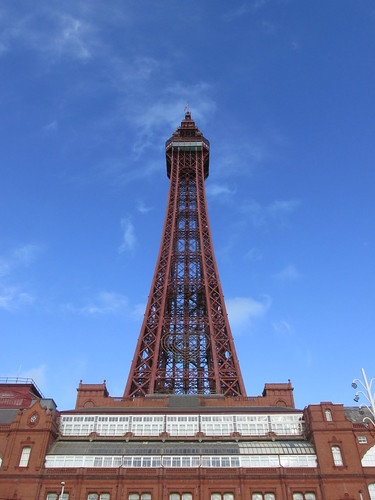
Blackpool Tower is possibly the most famous of the town's many attractions. It stands at 518 feet (158 metres) high and was inspired by the Eiffel Tower. It opened in 1894 and is apparently the 103rd tallest free standing tower in the world. Except it isn't free standing by my definition. It stands set into the entertainment complex below - circus, ballroom, etc - so I don't think it counts. It's Grade I listed, so whatever you think about it, it's important.


The Lights
Giving the Tower a run for its money in the fame stakes are the annual Illuminations. They are a huge light show that runs along a stretch of coast known as The Golden Mile, but they actually cover nearly six miles. They began in 1879 with the grand total of just eight arc lamps. Promoters called it "artificial sunshine" and attracted in excess of 70,000 visitors.  It wasn't until 1912 that anything approaching the modern show was introduced. Then 10,000 bulbs were hung in garlands along and across the road to commemorate the opening of a new stretch of the Promenade. Today "The Lights" are lit for 66 nights each September and October and attract around three and a half million people.


The Comedy Carpet
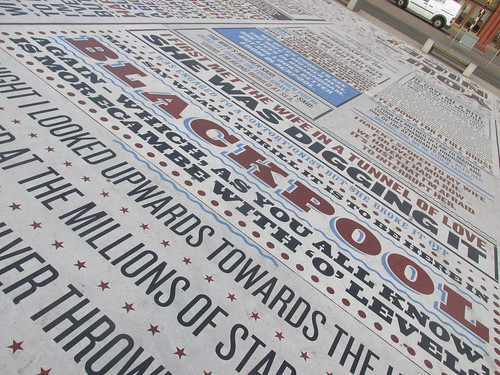
One of Blackpool's newer attractions, right next to the Tower, is the Comedy Carpet. It's a lot of words, phrases, catchphrases and jokes that refer to more than 1,000 comedians and comedy actors. None of the scripts are attributed to specific acts, although famous names appear around the edge for you to make up your own mind. It contains more than 160,000 granite letters in many different type faces, embedded into concrete. Some are large enough to read from the top of the Tower, others you just have to wander across and find for yourself.

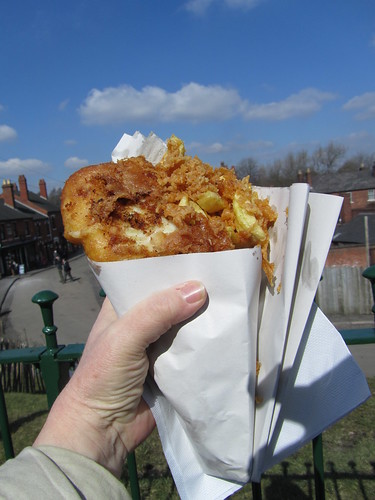
Not seaside fish and chips! (Black Country Museum)
Fish and chips
You can't go to the seaside without having fish and chips. There must be hundreds of places to buy them in Blackpool, among the newest being the flagship of chip chain Harry Ramsden. (The original Ramsden's flagship in Guiseley, West Yorkshire now belongs to rival chain Wetherby Whaler.)  No-one is really sure where fish and chips started but they've been around since the mid 19th century, thanks to the growth of the railway system that allowed fish to be carried well inland before it rotted. It's been popular ever since, and during World War II it was the only hot food takeaway not to be rationed.


Dodgems on Central Pier
The piers
Many seaside towns have lost a key symbol of their Victorian past - the pier - but Blackpool is lucky enough to still have three. Traditionally the pier was a way to walk out 'into the sea' to take the fresh air away from the town, but these days they tend to be a location for fun fairs, cafes and gypsy palmists.

July 15, 2016

Melbourne

Bit of a lazy Five this Friday. If you read my other blog you'll know I did a post about a beautiful wrought iron arbour in the garden of Melbourne Hall in Derbyshire. It, and several other garden structures, are listed Grade I because of their historic importance. (Read the History Anorak post if you want to know why they're important.)
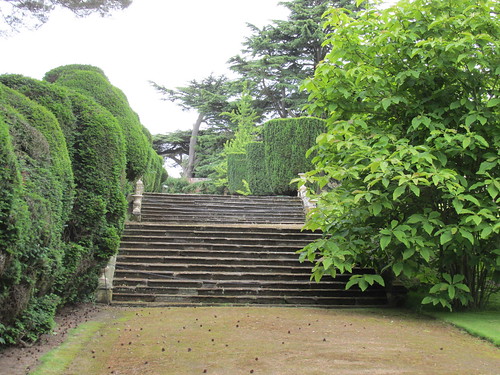
So anyway, I thought you might like a look at some of the other garden ornaments at Melbourne and that's this week's post. But I can't be bothered re-writing the information on them, so I've just cut and pasted the official listing from Historic England.


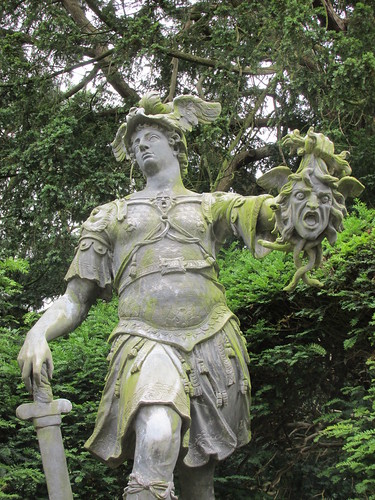
Perseus
Pedestal with Statue of Perseus in Melbourne Hall Gardens. Pedestal with statue of Perseus, c.1700 by Jan van Nost. Erected as part of a French-style garden, designed by Royal Gardeners to Queen Anne, London and Wise, for Thomas Coke of Melbourne Hall. Stone and lead. Panelled stone pedestal on wide square plinth with life-size figure of Perseus holding Medusa's head, clad in Roman style armour with winged sandals and helmet.

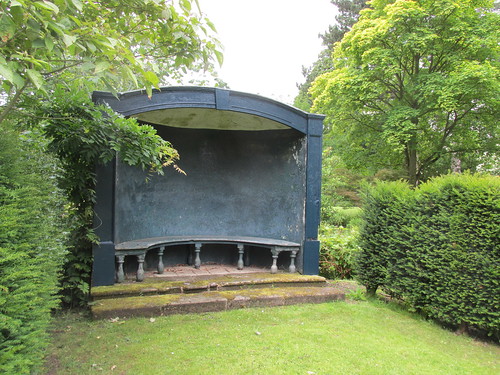
Covered seat
Covered Seat to East of Fountain Pond in Melbourne Hall Gardens (formerly listed with the matching seat as 'Two Alcoves in grounds of Melbourne Hall') Covered garden seat  c.1704 with later repairs. Work carried out by William Cooke of Walcot. Stuccoed brick and timber. Curved timber bench on turned legs fitted into an apsidal structure with stuccoed segmental brick wall covered by domed lead roof, with simple panelled timber jambs and segmental cornice with raised keystone. Built as a pair to similar seat to west.

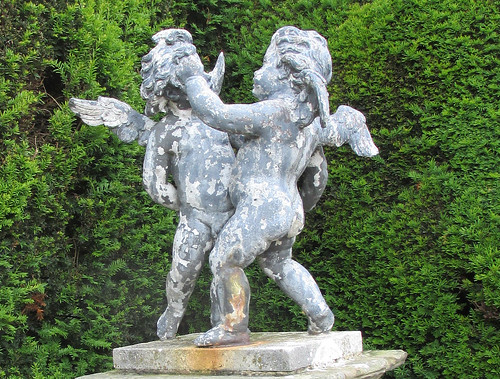
Fighting cherubs

Two Pairs of Cherubs to South-West of the Grand Basin in Melbourne Hall Gardens (formerly listed as 'Pair of pedestals with figures of fighting cupids on south side of garden, Melbourne Hall') Two pairs of cherubs, c.1700 by Jan van Nost. Stone and lead. Each pair of cherubs stands on a panelled stone pedestal with moulded base and cornice. Western pair are kissing and eastern pair are fighting. These form a group with another two pairs of cherubs on the opposite side of the basin and tell the tale of Castor and his brother Pollux fighting over a bunch of flowers and their eventual reconciliation.

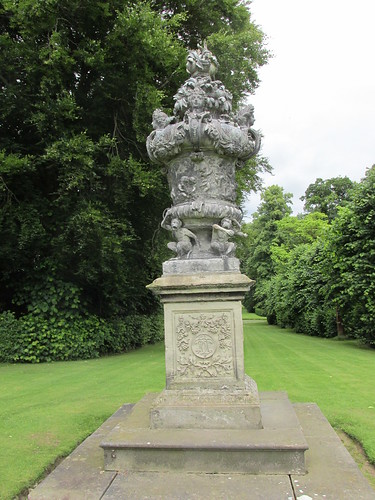
Four Seasons Vase

Pedestal and Four Seasons Vase in Melbourne Hall Gardens. Pedestal with vase, 1705, vase by Jan van Nost and pedestal by Devigne. Stone and lead. Panelled pedestal with moulded base and cornice on stepped square plinth, each panel carved with foliage and swags and with central roundels inscribed 'TC'. Magnificent baroque lead vase over supported by four seated lead monkeys, with gadrooned base to bowl and stem of bowl decorated with frieze of putti and foliage swags. Lid with bulbous base has four scrolled handles, each topped by the head of a Season, with panels between and more swags. The top is surmounted by a lattice work basket bursting with fruit and flowers. The vase was presented by Queen Anne to Thomas Coke.

Sets of steps

Five Flights of Steps between terraces at Melbourne Hall Gardens . Five flights of steps c.1704 with later urns. Work carried out by William Cooke of Walcot. Stone. Two flights of steps to either side of terrace and one central flight. Each flight has ten steps with moulded nosings and low retaining walls to either side terminating in low square piers to either end. The piers are now topped by later gadrooned urns. Each top step is wide and has diamond patterned paving.


Now take a trip over to see Amy at Love Made My Home and find out what other Friday Fives have been submitted this week.