Showing posts with label Hull. Show all posts

December 30, 2016

Moths

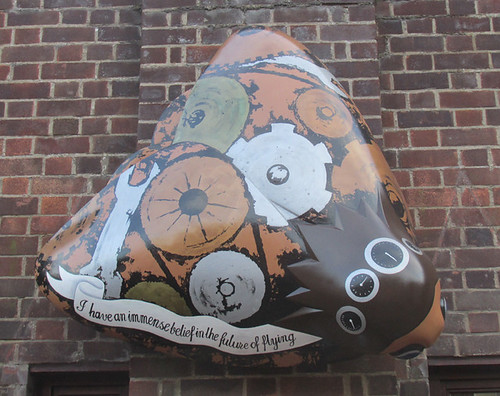
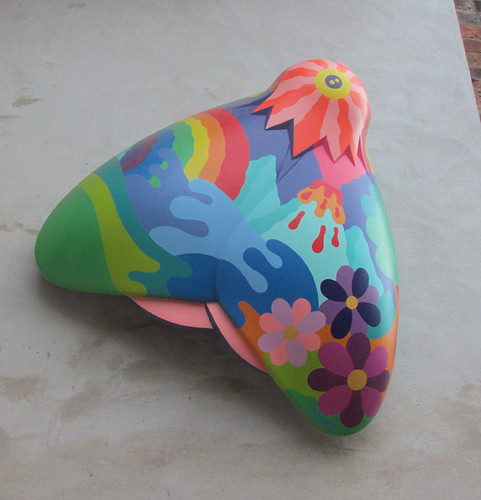
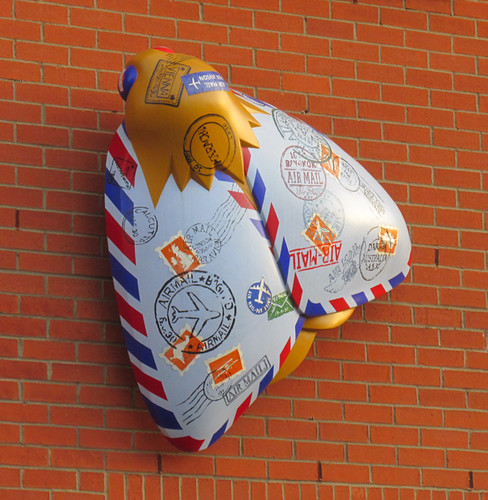
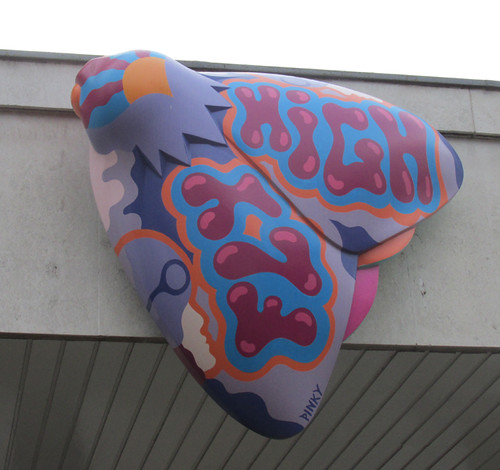
2017 will be Hull's turn as UK City of Culture. It's a well deserved title, because Hull has a lot of public art as well as significant gallery collections. Currently there's a flight of moth sculptures scattered around the city to commemorate aviator Amy Johnson, who was born in the city.  For more about Amy click here.


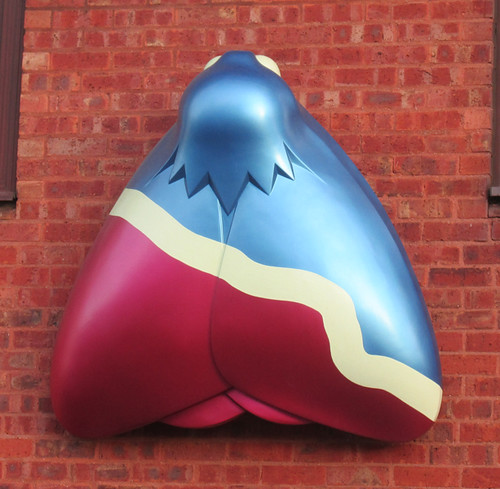
This was the first one we found on our recent trip to Hull. (It's Mr Anorak's home town, of course.) It's called Horizon's Path and was created by artist Sam Tasker. The blue bit represents the freedom of the skies, the maroon bit signifies women's equality, and the white line represents Amy's flight path to Australia.


This is called Engineer, and it was painted by Hannah van Green.  It's a mark of respect for Amy's mechanical skills.


This is World Moth by an artist called Pinky.  It's inspired by the fact that Amy flew half way round the world, and represents some of the landscapes she must have passed along the way.


And here we have Air Mail by David Graham. It charts Amy's flight path and each of the stamps and post marks represents a time and place where she touched down. It also shows various ways that post has taken to the skies over the years - including by pigeon!


And here's Fly High, also by Pinky. It's supposed to represent Amy's achievements, both as a flyer and in her personal life, overcoming attitudes to women at the time.

The exhibition continues until March 2017.

November 11, 2016

Ghosts

You're bound to have seen them, but you've probably not taken too much notice of them. They can be found all over most towns and many villages. They are advertisements for trades and businesses long gone. They're known as ghost signs - and they offer a glimpse into the past.

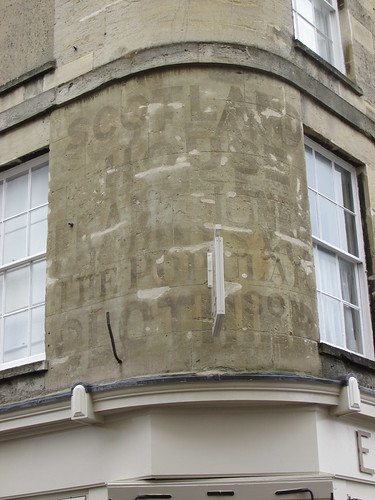
Let's start with this one from the corner of Market Place in Cirencester. With a bit of effort you can see it says Scotland House Frank Jones The Popular Clothier
There's also at least one '& Co' and something that looks like it ends with ...nson  and a VERY faint extra 'ouse', which I assume was an earlier rendering of House.


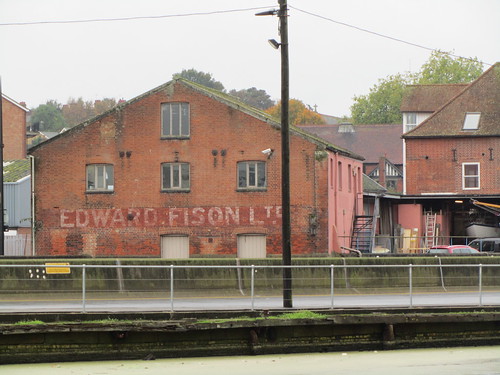
Here's a fine example from the harbourside in Ipswich. Fison's were well known as an agricultural chemicals company and they started life in this Suffolk town.


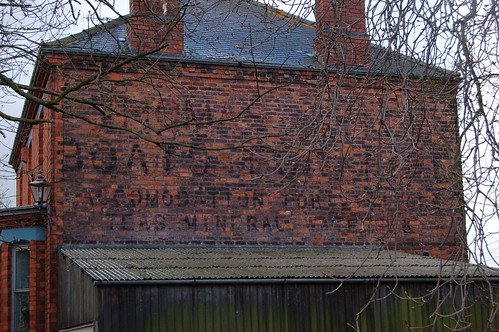
This one is near the River Trent by Sawley, Nottinghamshire. It's a bit of a pleasure spot these days and from what you can decipher on this wall that's been the case for a while. Thomas someone (I can't make out a second name) offered boats for hire, accommodation, teas and mineral waters.

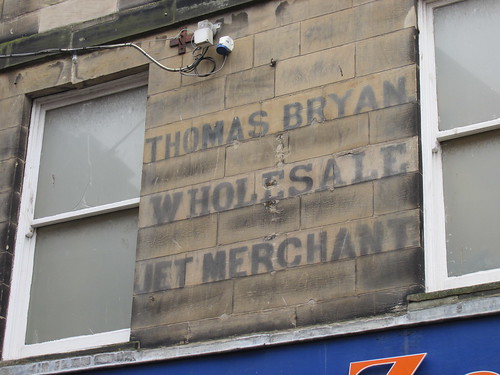
One of my favourites. It could only be in one town. Wholesale jet merchants were a feature of Whitby, where the rare black gemstone appears in the local rocks. You'll find this one close by the swing bridge.

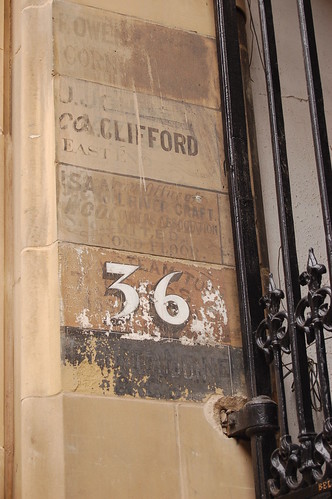
And here's another beauty from round the back of the East Riding Museum in Hull. It's a lovely slice of the town's history. Among the words you can just make out are "Hull River Craft Owners"  "Steam Tug Owners" and there's a wool merchant in there somewhere.

This post was for Five on Friday run by Amy at Love Made My Home. Sadly, Amy has 'stuff' to deal with and Five has been suspended temporarily.

June 17, 2016

What's in a name?

"That which we call a rose
By any other name would smell as sweet."
Romeo and Juliet (II, ii, 1-2)

Well actually there can be quite a lot in a name, if we only know what we're reading. In Juliet's case being a Capulet prevented her from loving a member of the rival Montagues because of the history between their families. And when it comes to other names they often contain much more history than first glance would suggest.

This week, to join in with Amy's Five on Friday at Love Made My Home, I'm looking at street names and the kind of stories they often hold.

Two weeks ago we looked at William Wilberforce and noted that Hull has named a street after him as a memorial to his achievements. Many such streets exist around the country (and probably the world) and often the memory of what the person did is long forgotten. But the fact that it represents a person is usually obvious. Other names are less clear. Let's have a look at a few.

Moat

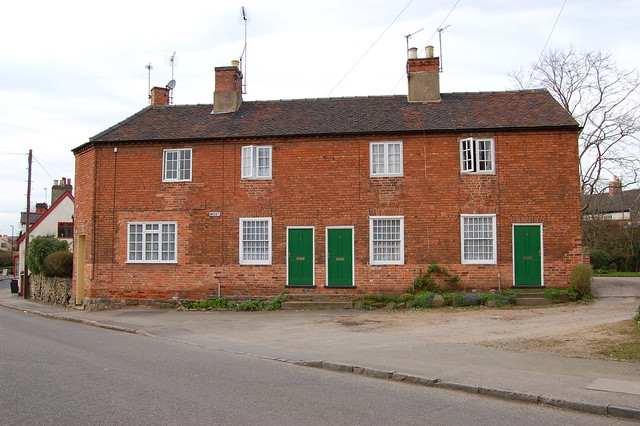
This one's in Castle Donington, Leicestershire, and although you can't see it easily in the photo the street is called Moat. It's one of the last remaining signs, other than the village name itself, that a castle ever stood in Donington. There are other strange street names in Donington that might be assumed to be castle references, for example The Biggin, which just translates from Middle English as "the building". But one never knows.

The Mutton Shut

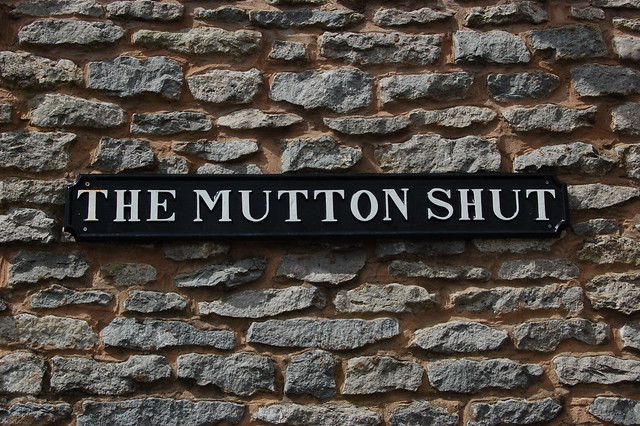
This one's in Much Wenlock, Shropshire. The word 'shut' refers to a shortcut and is one of many such terms used to describe this kind of narrow alley. Depending on where you live in the UK you might know such a way as a snicket, a ginnel, a jennel, a jitty. Often the words describe the narrow walkway leading to the rear of a street or house.  In Hull, for example, where we have spent the last two weeks of Five on Friday, it's called a tenfoot. Other places call it entry, jigger, pend or ennog.  In Much Wenlock's case the Shuts give you a clue to what you'll find at the other end. Often they are named after pubs! The Mutton Shut connects up with George and Dragon Shut, if anybody fancies a pint.


Bashful Alley

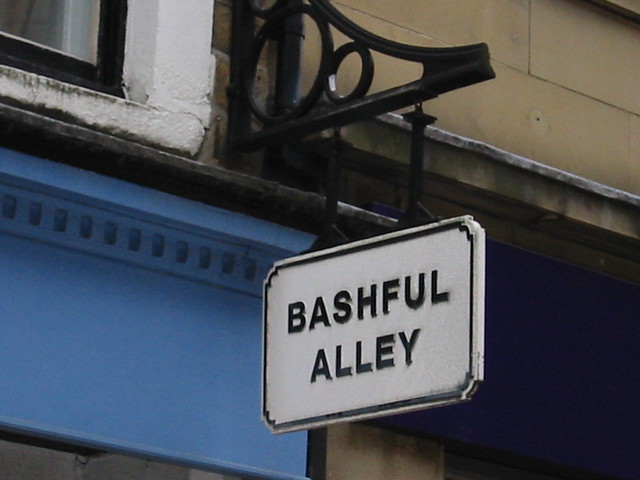
This one is fun. In spite of being a very old (and narrow) street in Lancaster, the name is relatively new. Its previous moniker Swap Cunt Alley, was much more open about what went on there. It was renowned as the place to find a prostitute - useful information for a sailor newly disembarked from a long voyage.

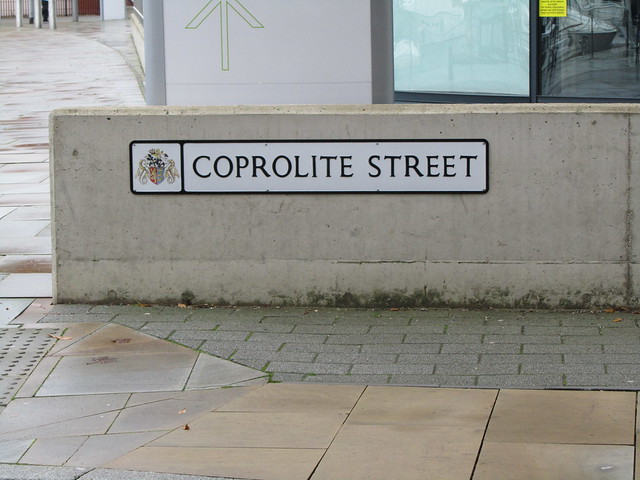
Coprolite Street

And while we're on seedy subjects here's a lovely illustration of the phrase "where there's muck there's money". A coprolite is fossilised animal dung. It translates from the Greek and basically means 'shit stone'. Coprolites have been known as a potentially rich source of minerals for many centuries and garden product manufacturer Fisons exploited the local source around Ipswich in Suffolk for its phosphate content. Near the docks, where part of Fisons factory once stood you can still find Coprolite Street - though that's not what the students at nearby University Campus Suffolk (UCS) call it!


That's novel


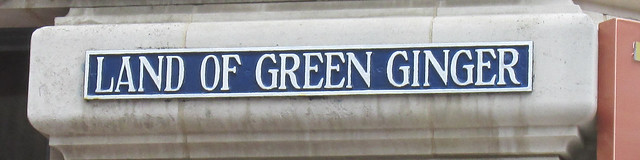
And now let's go back to Hull. This is probably one of the oddest names you'll ever find. Writer Winifred Holtby (South Riding) used it as the title of one of her novels, but it pre-dates her as a street name. A blue plaque nearby says its origin "remains a mystery".  Fun though, isn't it?

Now take yourself off to Love Made My Home to see what other fives are on offer this Friday.


June 10, 2016

Five more from Hull

*

Here we are again on a a Friday and it's time to join in with Amy at Love Made My Home to discuss five things that have some relevance to us.  As you know we recently went to Hull and I've done a number of posts on both blogs about the visit and the city.

This week I'm taking a look around the Marina, which used to be Hull's heart and the centre of the port. It's still a busy harbour, but the kind of large pleasure craft it handles today don't need the heavyweight support systems that were in regular use when heavy shipping paid call.

As you walk around the area look down at your feet and you'll find plenty of these. Back in the days when cargo ships brought in and took out heavy loads many goods were transported by rail - right to the harbourside. The rails are still in place in many of the cobbled streets leading to the old dock.

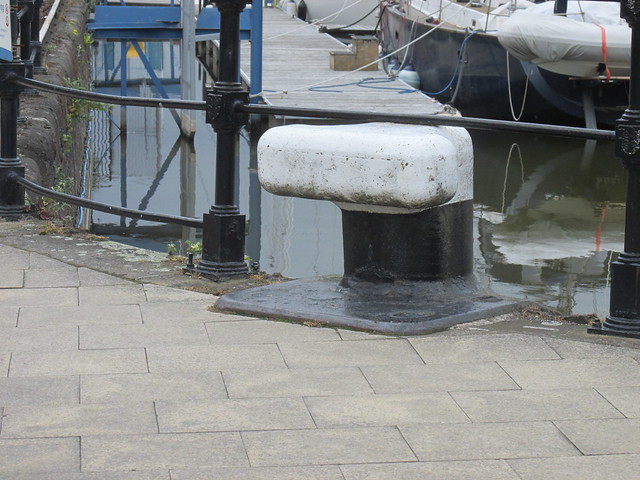
This mooring post gives you some idea of the size of ship that used to call in to Hull. There's not a lot of clues for size until you realise that's a fence post. So yes, the bollard is about 18" to 2ft high.

Then there's this amazing bit of kit that stands inside a glass shelter by the quay. I apologise for the reflections. It's a horizontal steam engine that used to stand by the slipway leading to the Victoria Dock half tide basin. It was used to haul ships out of the river when they needed bringing in for repair.

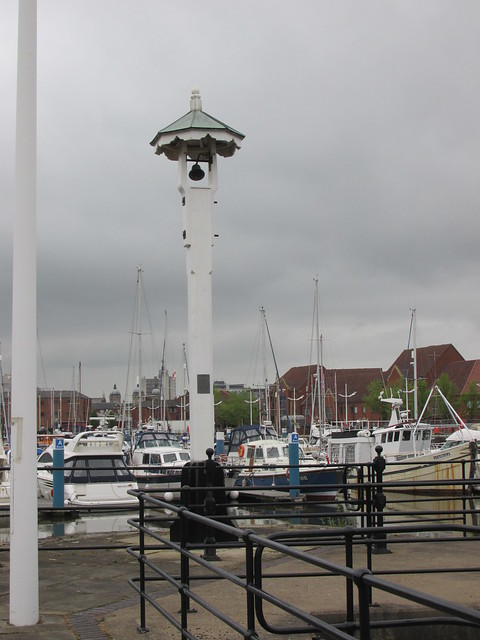
This bell stood close by Victoria Dock too. It was used to warn people when the swing bridge over the lock (where ships gained entry to the dock) was about to open.  It's silent now, which is a shame.

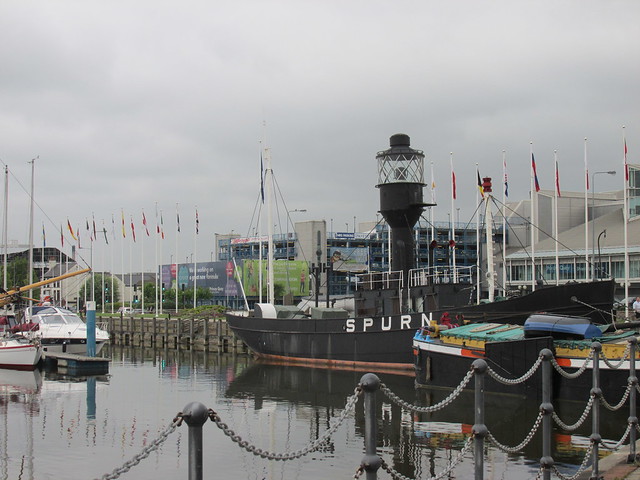
And finally we have the Spurn light ship.  Spurn point is the end of the land spit that separates the Humber from the North Sea.  One of the problems with a tidal river is that silt, mud and sand gets moved around by the flow of water coming in and out of the estuary. Consequently the channel can be difficult to navigate because of the constantly changing hazards. The Spurn light ship was one of several fixed lights and moveable beacons that helped ships find safe passage to and from the sea.

So now you've had a wander around Hull Marina, pop over to Love Made My Home to see other Friday fives!

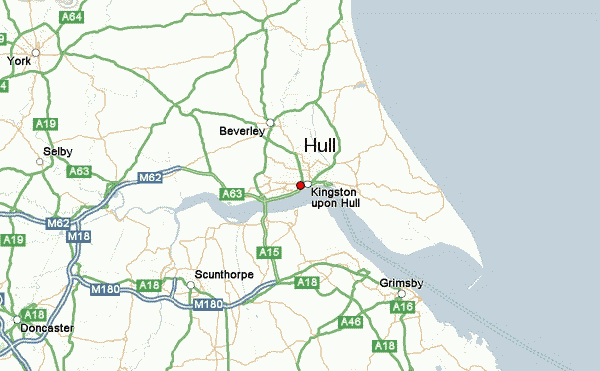
* Map borrowed from http://www.weather-forecast.com/ with thanks.

June 03, 2016

Five instances of Wilberforce

As you know if you read last week's post, Mr Anorak and I went to Hull last weekend to celebrate his birthday.  You might think it's an odd place to go, but it's where he comes from. Actually it's also a fascinating old city and has been named as next year's Capital of Culture. Not without reason. You're probably going to be inflicted with several Hull posts over the next few weeks because there's lots to see there. And I spent a lot of my "tourist time" thinking about Amy at Love Made My Home and potential posts for her Five on Friday challenge.

Now you might or might not have heard of William Wilberforce, but unless you're a native of Hull (or very close to someone who is) you probably don't know that he was born there. If you don't know who he was you can find out more on my other blog. But a brief explanation is that he was England's leading anti-slavery campaigner who dedicated his life to bringing an end to the cruel trade.

Hull is very proud of him. Once you visit the city you can't avoid him.

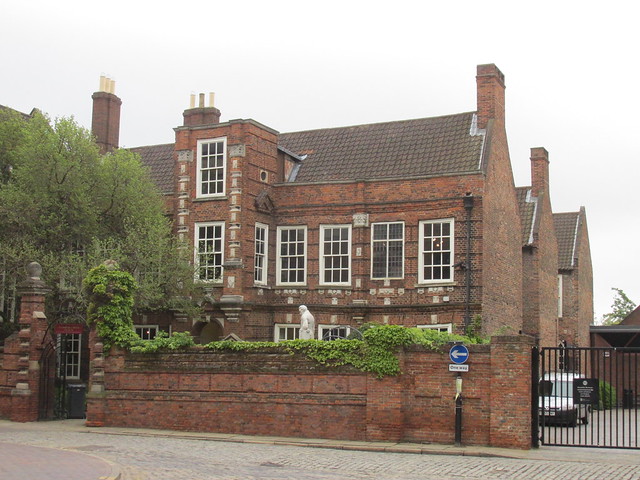
He has his own museum (in the house where he was born).

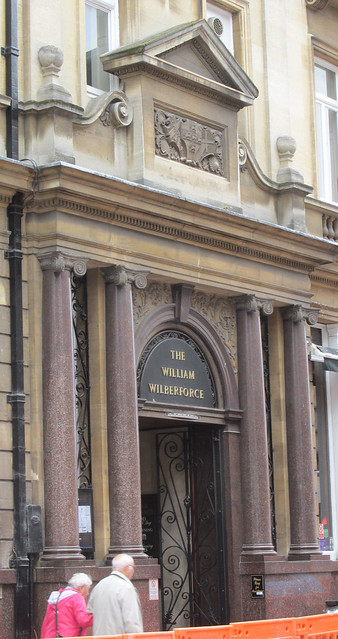
There's a William Wilberforce pub.

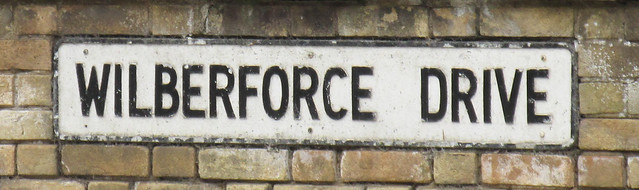
They name streets after him.

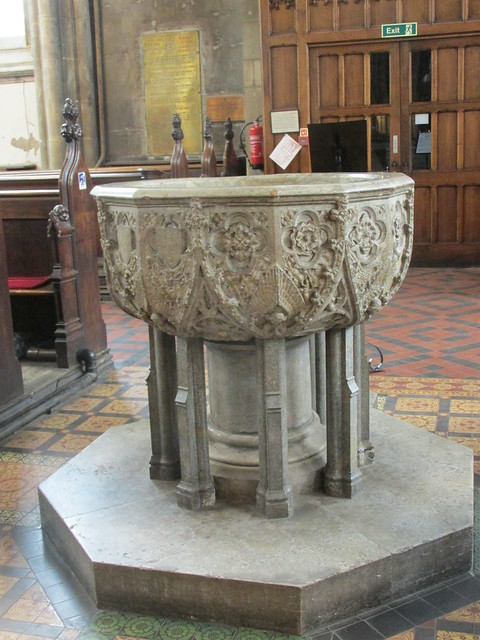
If you visit Holy Trinity Church they show you the font where he was baptised.

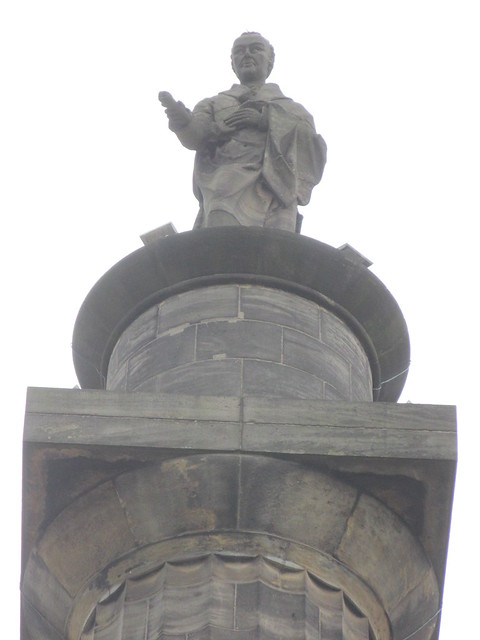
And if you walk past Hull College you'll find him standing at the top of a very high column.

Now I'd like you to hop over to Amy blog and check out other Friday Fives. Click here.