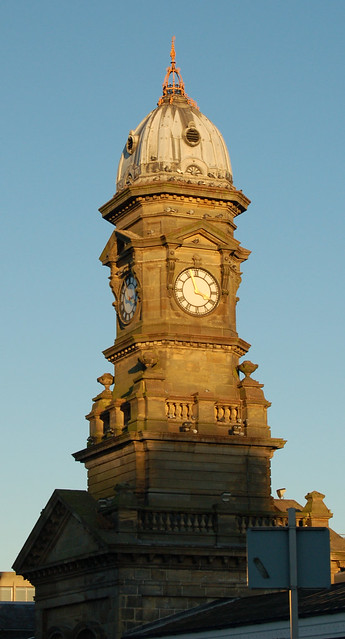
Yes, it's a clock. Specifically it's the clock on the top of Scarborough railway station. It's a symbol from my teen years because it stands opposite the old Odeon Cinema (which is now the Stephen Joseph Theatre where Alan Aykbourn plays are always premiered) and many's the evening or afternoon that I've stood looking at this clock while waiting to meet a date. (You get to know it particularly well on the occasions that said date doesn't turn up. How much longer do I leave it before I accept that I've been stood up?)
Scarborough station opened on Monday 7 July 1845, following the completion of the line from York. The station clock was added in about 1884, and was built by Potts of Leeds costing £110, or around £10,000 at today's prices. The whole building is Grade II listed. Interestingly (and something I didn't know until I began my research) it has the longest station bench in the world, at a staggering 95 yards long.
It was needed to accommodate the hundreds of tourists who flocked to the town to drink the spa waters and enjoy the sea air.
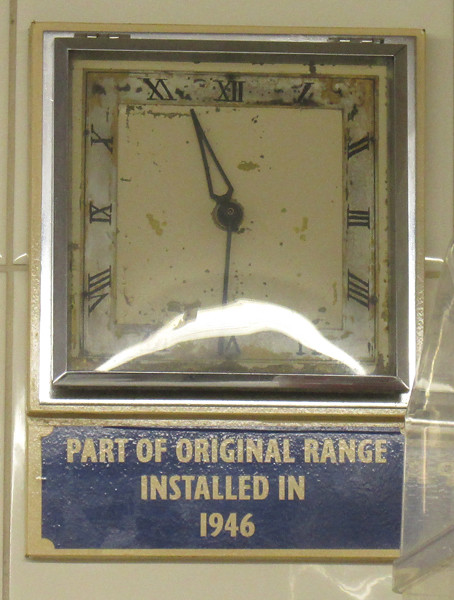
You might have seen this wonderful thing before if you read my blogs regularly. It's clearly labelled with its date and purpose. What's a range you ask? It's the thing you cook fish and chips in, and this was the clock that I used to stare at while waiting for my "six penn'orth of chips and scraps" at my local chippy.
The old range didn't meet modern catering hygiene standards and was replaced by a shining stainless steel construction a few years back. I can still remember the beautiful green and off-white sunray back plate in wonderful art deco style. I'm pleased to say that they kept the clock.
Except it isn't a clock, it's a timepiece. What's the difference? A clock chimes. It has a bell. Indeed the word clock derives from various old Germanic, Celtic and French words for bell - like clocca and glocken.
Here's one for my transatlantic friends. It is, of course, the clock in the heart of Grand Central Station in New York. Grand Central is a rapid transit railroad station and you can find it at 42nd and Park. They use the word 'iconic' a lot these days but this thing truly is. Wikipedia says: "The four-faced brass clock on top of the information booth was designed by Henry Edward Bedford (1860–1932) and cast in Waterbury, Connecticut. Each of the four clock faces is made from opalescent glass, though urban legend has it that the faces are made of opal and that Sotheby's and Christie's have estimated their value to be between $10 million and $20 million."
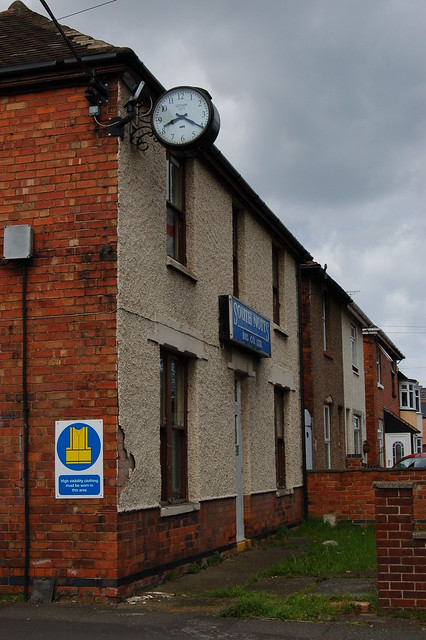
You'll need to look very closely at this one even to spot the clock, let alone see why it's important. It's in the Nottinghamshire village of Gotham (pronounced Goat-um. Sorry to disappoint you.) and it's on the side of the bus depot. Look really closely though......
Yes - it does say Gotham City and that is the bat symbol above the six!
Which brings us to five.
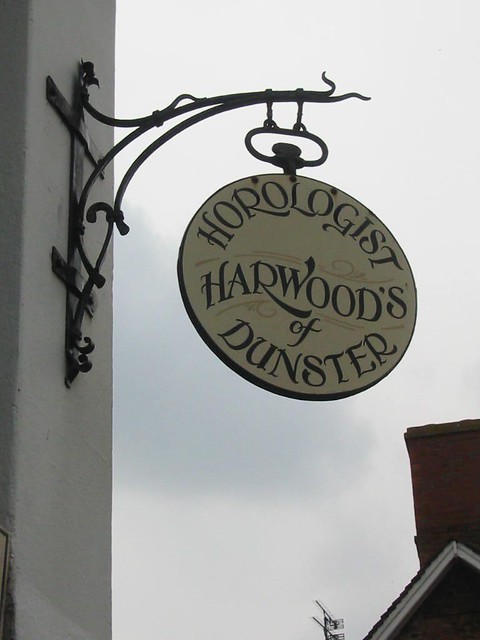
This one is self-explanatory. A horologist is a clock maker and repairer. Literally 'one who studies the hours'. I've always loved this sign. It's in the gorgeous Somerset village of Dunster and it's just so perfect for the shop. A huge pocket-watch hanging over the door.
So there you are. Now the clocks are saying it's time for you to travel over to
Tricky's FAST Blog to see other Fives this Friday.