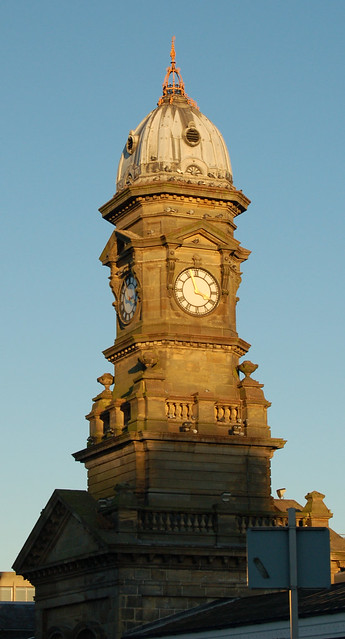
Yes, it's a clock. Specifically it's the clock on the top of Scarborough railway station. It's a symbol from my teen years because it stands opposite the old Odeon Cinema (which is now the Stephen Joseph Theatre where Alan Aykbourn plays are always premiered) and many's the evening or afternoon that I've stood looking at this clock while waiting to meet a date. (You get to know it particularly well on the occasions that said date doesn't turn up. How much longer do I leave it before I accept that I've been stood up?)
Scarborough station opened on Monday 7 July 1845, following the completion of the line from York. The station clock was added in about 1884, and was built by Potts of Leeds costing £110, or around £10,000 at today's prices. The whole building is Grade II listed. Interestingly (and something I didn't know until I began my research) it has the longest station bench in the world, at a staggering 95 yards long.
It was needed to accommodate the hundreds of tourists who flocked to the town to drink the spa waters and enjoy the sea air.
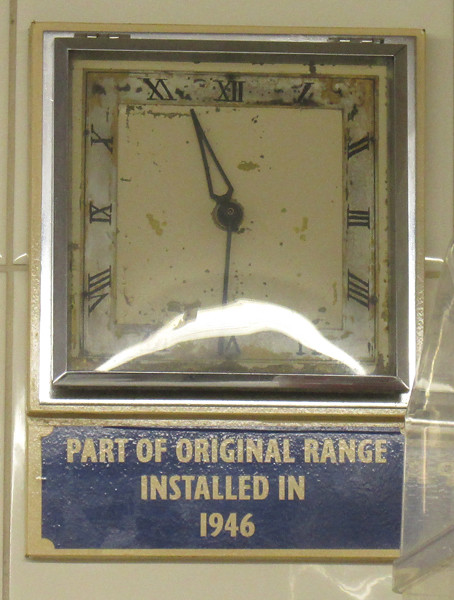
You might have seen this wonderful thing before if you read my blogs regularly. It's clearly labelled with its date and purpose. What's a range you ask? It's the thing you cook fish and chips in, and this was the clock that I used to stare at while waiting for my "six penn'orth of chips and scraps" at my local chippy.
The old range didn't meet modern catering hygiene standards and was replaced by a shining stainless steel construction a few years back. I can still remember the beautiful green and off-white sunray back plate in wonderful art deco style. I'm pleased to say that they kept the clock.
Except it isn't a clock, it's a timepiece. What's the difference? A clock chimes. It has a bell. Indeed the word clock derives from various old Germanic, Celtic and French words for bell - like clocca and glocken.
Here's one for my transatlantic friends. It is, of course, the clock in the heart of Grand Central Station in New York. Grand Central is a rapid transit railroad station and you can find it at 42nd and Park. They use the word 'iconic' a lot these days but this thing truly is. Wikipedia says: "The four-faced brass clock on top of the information booth was designed by Henry Edward Bedford (1860–1932) and cast in Waterbury, Connecticut. Each of the four clock faces is made from opalescent glass, though urban legend has it that the faces are made of opal and that Sotheby's and Christie's have estimated their value to be between $10 million and $20 million."
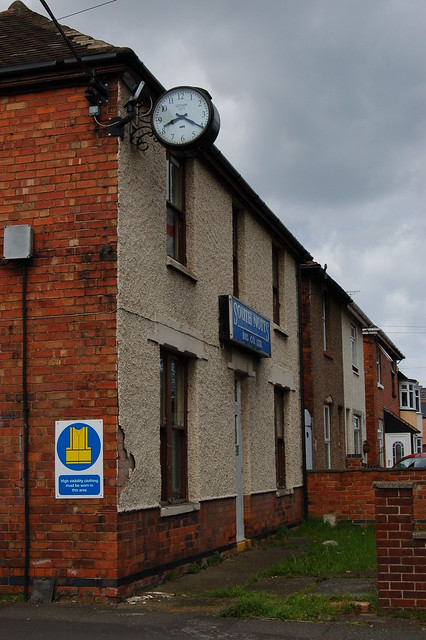
You'll need to look very closely at this one even to spot the clock, let alone see why it's important. It's in the Nottinghamshire village of Gotham (pronounced Goat-um. Sorry to disappoint you.) and it's on the side of the bus depot. Look really closely though......
Yes - it does say Gotham City and that is the bat symbol above the six!
Which brings us to five.
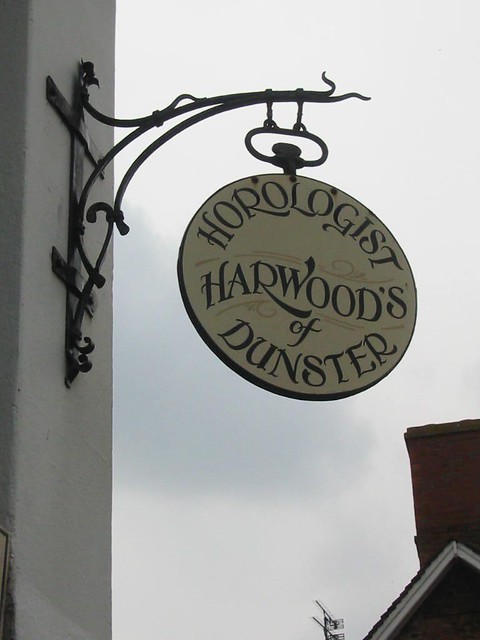
This one is self-explanatory. A horologist is a clock maker and repairer. Literally 'one who studies the hours'. I've always loved this sign. It's in the gorgeous Somerset village of Dunster and it's just so perfect for the shop. A huge pocket-watch hanging over the door.
So there you are. Now the clocks are saying it's time for you to travel over to Tricky's FAST Blog to see other Fives this Friday.
Some chat about historical things. Some of it is inspired by topics on the associated History Anorak blog.
Showing posts with label Scarborough. Show all posts
June 09, 2017
March 10, 2017
Scarborough Five
For Five on Friday (which is still hosted by Amy at Love Made My Home, for the next couple of weeks) we have five historic-ish things to be found in and around Scarborough, North Yorkshire. It was,of course, The Anorak's home town and is still regularly visited by us when we hear the call of the sea.
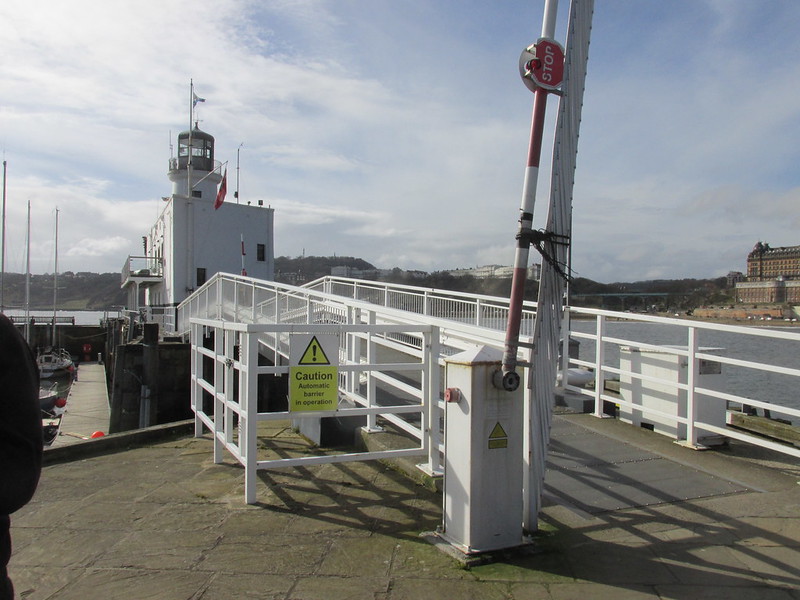
Captain Sydney Smith Bridge
Named after a former Deputy Harbour Master who was also editor of Olsen's Fishermen's Nautical Almanac. He was decorated for his daring during WWII. The bridge, which lifts to allow craft in and out of the harbour, was erected in 2000.
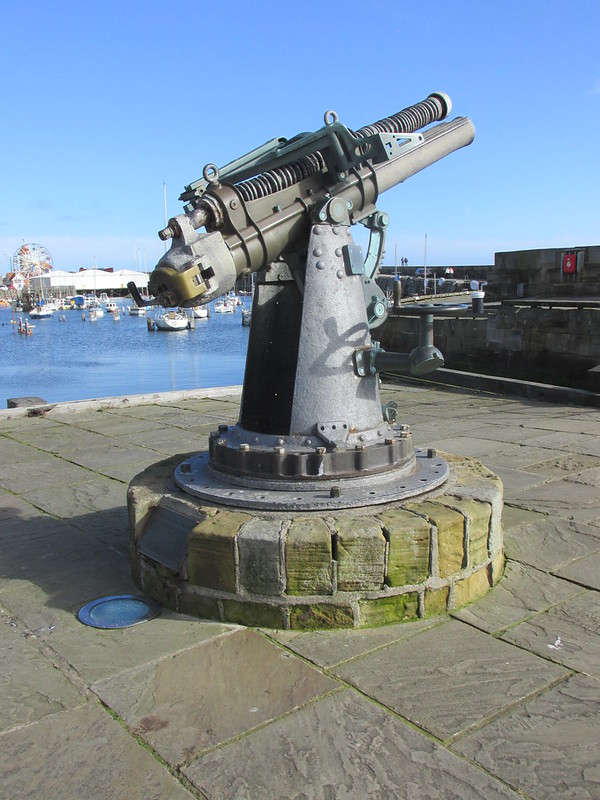
The Vickers gun
In 1914 Scarborough was the target of a German attack from the sea when a huge number of shells fell on the town causing extensive damage. While this gun dates from the time it was not involved in defending Scarborough then. It was sited on the cargo ship SS Hornsund, which was sunk by torpedo in 1917 about two miles off shore. The gun was recovered by the local sub aqua club in 1982 and now stands close to the lighthouse.
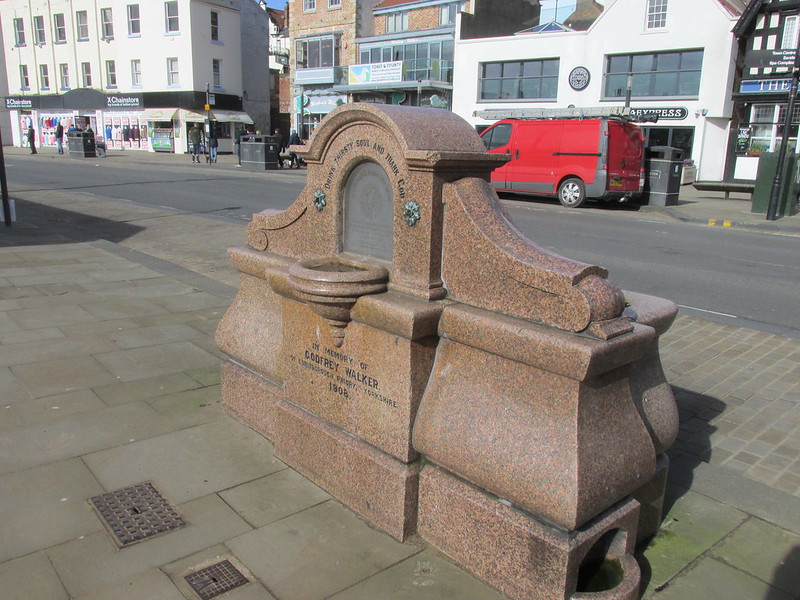
The horse trough
This granite trough has stood on the harbour road since 1908, erected in memory of Godfrey Walker of Conisborough Priory, Yorkshire. One side was a drinking fountain for humans and the other side was a trough for horses. These days it's a flower pot.
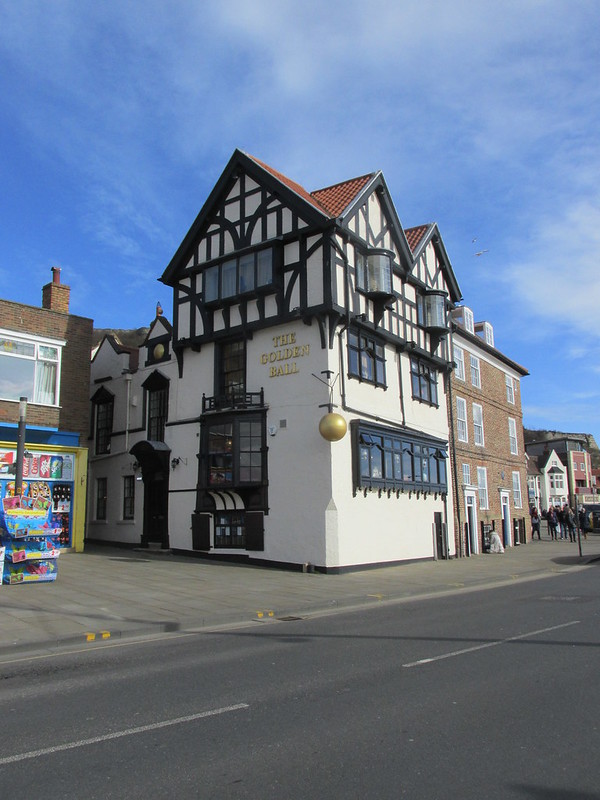
The Golden Ball Inn, Quay Street
According to the Scarborough Maritime History Centre website: "The Golden Ball, in Quay Street, was one of the better known inns. Of great age, it was noted for the "prime old ales" produced on the 30th September every year, St Jerome's Day, and the occasion for the election of new bailiffs at the nearby town hall. A brewery adjoined the house, where in 1821, Mark Coates fell into the mash tub."
More recently I'm prepared to admit it was the site of The History Anorak's early forays into pub attendance. I'm even prepared to admit that it might have been the site of some underage drinking! When my mother found out she was appalled - not because I'd been breaking the law by imbibing alcohol at 16, but by the fact that the pub was by the harbour and I must have been in close proximity to riff-raff mariners!
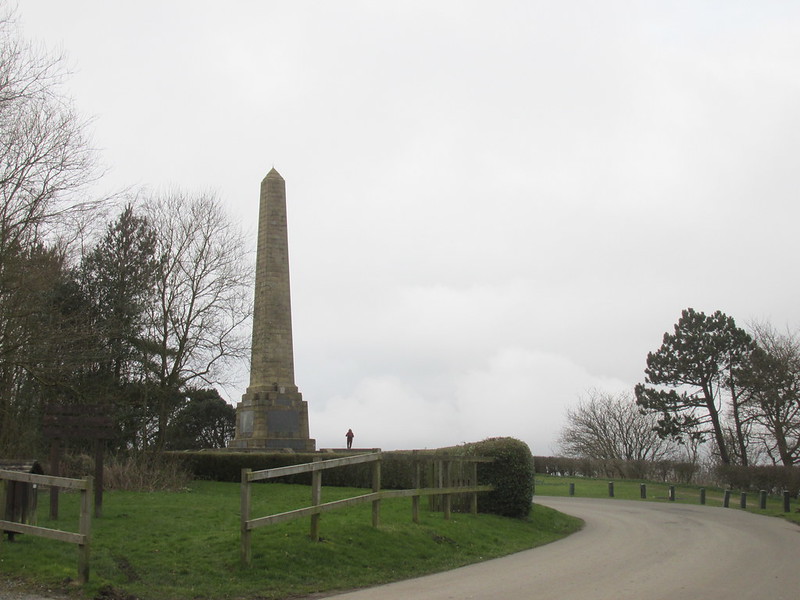
Oliver's Mount
Here's a close up view of the monument that stands on top of Oliver's Mount overlooking the town. You can see it easily from a lot of the area. It's the town's war memorial and I have many memories of my father laying a wreath on behalf of St John Ambulance back in the day. He looked smart in his black and white uniform and always brought much dignity to the act of remembrance. I can still picture him.
Captain Sydney Smith Bridge
Named after a former Deputy Harbour Master who was also editor of Olsen's Fishermen's Nautical Almanac. He was decorated for his daring during WWII. The bridge, which lifts to allow craft in and out of the harbour, was erected in 2000.
The Vickers gun
In 1914 Scarborough was the target of a German attack from the sea when a huge number of shells fell on the town causing extensive damage. While this gun dates from the time it was not involved in defending Scarborough then. It was sited on the cargo ship SS Hornsund, which was sunk by torpedo in 1917 about two miles off shore. The gun was recovered by the local sub aqua club in 1982 and now stands close to the lighthouse.
The horse trough
This granite trough has stood on the harbour road since 1908, erected in memory of Godfrey Walker of Conisborough Priory, Yorkshire. One side was a drinking fountain for humans and the other side was a trough for horses. These days it's a flower pot.
The Golden Ball Inn, Quay Street
According to the Scarborough Maritime History Centre website: "The Golden Ball, in Quay Street, was one of the better known inns. Of great age, it was noted for the "prime old ales" produced on the 30th September every year, St Jerome's Day, and the occasion for the election of new bailiffs at the nearby town hall. A brewery adjoined the house, where in 1821, Mark Coates fell into the mash tub."
More recently I'm prepared to admit it was the site of The History Anorak's early forays into pub attendance. I'm even prepared to admit that it might have been the site of some underage drinking! When my mother found out she was appalled - not because I'd been breaking the law by imbibing alcohol at 16, but by the fact that the pub was by the harbour and I must have been in close proximity to riff-raff mariners!
Oliver's Mount
Here's a close up view of the monument that stands on top of Oliver's Mount overlooking the town. You can see it easily from a lot of the area. It's the town's war memorial and I have many memories of my father laying a wreath on behalf of St John Ambulance back in the day. He looked smart in his black and white uniform and always brought much dignity to the act of remembrance. I can still picture him.
July 29, 2016
What's in a name?
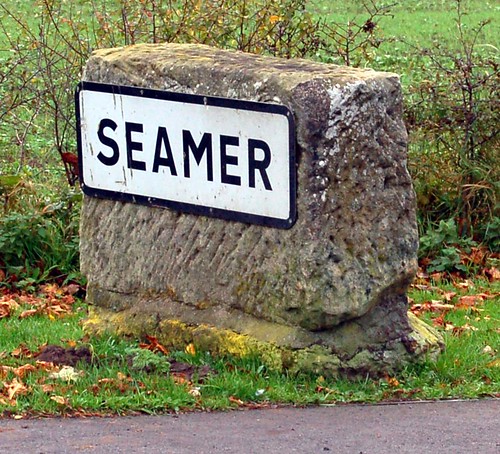
![]() |
| Sea+mere = large lake |
For this week's Five on Friday (to join in with Amy at Love Made My Home) I'm going to take a look at a few place names to show you how to get more out of your travels. As we drive along even the swiftest motorway we see signs for all kinds of places that we've never been and are never likely to visit. But we can probably glean some information about them - just from those signs.
(Don't assume the photos match the text!)
| Streetview snip |
Let's start with one of my favourites. Driving along the A64 through North Yorkshire, near Malton, you'll pass a sign for Huttons Ambo. There are lots of places in England called Hutton but, as far as I know, only one Huttons. There's a reason for that. Hutton comes from two Old English words, hoh and tun meaning a hill spur and a farmstead. Hence Hutton is a farmstead near a hill spur. Now, if you drive along the side road that's signposted Huttons Ambo you will find High Hutton and Low Hutton but you'll never find the mythical Huttons Ambo, because it doesn't exist. Ambo is Latin for 'both', so the sign is directing you to 'both Huttons', rather than a single place.
Stiffkey
Of course you can't always tell much from the name as it appears today. Modern place names have been handed down for many years, In the case of some towns that existed in Roman times that can be as long as 2,000 years. One of the earliest written records of English places was the Domesday Book; a survey of towns and villages carried out on the orders of William the Conquerer in 1086, very shortly after he won the Battle of Hastings. He wanted to know exactly how many people he now ruled and exactly what they were worth (for tax purposes). Domesday is a useful, although sometimes misleading, source about place names. On the other hand it can be surprisingly enlightening.
Over the intervening period the pronunciation of place names can have changed dramatically, and their spelling has often changed beyond recognition. Take Stiffkey, for example, on the Norfolk coast. How would you pronounce it? I'm willing to bet you'd be wrong! Domesday lists it as Stiuekai, which is much more like what the locals call it today - Stukey. On the other hand, the actual word comes from two Old English terms styfic and eg, meaning an island in a marsh, with tree stumps. (Now try the nearby town of Happisburgh and see how long it takes you to come up with the modern pronunciation of Hazebruh. No, I don't understand either!)
![]() |
| Skarthi's Burh |
A note for my Transatlantic readers. There are lots of towns that end with the suffix -borough in the UK. Please note, they are not pronounced 'borrow'. Borough (and similar endings like Edin-burgh) are all pronounced 'bruh' like the first syllable of brother. There's a reason for that. It's because all those endings come from an Old English word burh, meaning a stronghold or fortified town. The first half of the name then tells you something else about the place. In Scarborough's case it's the name of the guy who founded it - one Skarthi (sometimes written Skardi because of the nordic rune 'thorn' that looks like d but is pronounced th) who was the Viking lord who turned up in 966 and established a settlement there. Previously it had been the site of a Roman signal station, but Skarthi's Burh was the first town. There are other 'borough' towns, such as Boroughbridge, where the etymology is obvious, but beware. Borough Green, for example, is thought to stem from beorg, meaning hill.
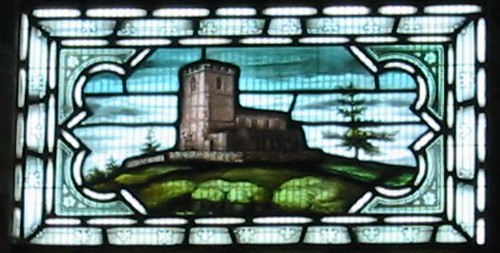
Breedon on the Hill
![]() |
| The church, Breedon on the Hill |
Now imagine a Saxon settler wandering through the land that would later be known as Leicestershire and spotting a high hill that looks like a safe place to set up a village. The conversation possibly went a little like this.
Saxon: "Excuse me good man, what is the name of that fine cliff in the distance?"
Celt: "Bree"
Saxon: "Thank you, my woad-painted friend. I shall settle my village there and I shall call it Bree Hill."
(Or in his language, Bree Don, because that's the old Saxon word for hill.)
Many years later the village has become known as Breedon and map makers, to distinguish it from lots of other Breedons in the country, call it Breedon on the Hill - or Hill Hill on the Hill. You can't miss it. Just drive up the A42 through Leicestershire and you'll see it without any trouble at all. (Of course the village is actually at the BOTTOM of the hill because it's too steep to make living at the top workable. Only the church is at the top.)
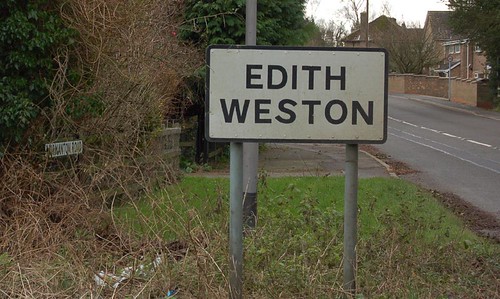
![]() |
| West farmstead owned by Queen Edith. (Wife of Ed the Confessor) |
So how can I round this up? There are so many different place names, and so many reasons for those names, that limiting myself to just five is almost impossible. I could pick another favourite at random. Marsh Gibbon sounds exotic, doesn't it? But actually it just means marshy land owned by the Gibwen family. Higham Ferrers? Main (high) enclosure (ham) belonging to the Ferrers family. You'll find such manorial suffixes all over the country. Many of them are French-sounding. That's because the people who first wrote down the names in any meaningful way were French Normans, remember? Domesday and all that. Of course, the previous names were often possessive too. Goadby Marwood, for example, means farmstead of a man called Goadi, now owned by the Marwood family.
So now you know. Next time you go on a journey take note of any interesting places you spot, then see if you can find out how they got their names. But first go visit Amy at Love Made My Home and see what other fives people have found for you this week.
References
*What's in a name? That which we call a rose. By any other name would smell as sweet. Shakespeare. Romeo and Juliet.
Huttons Ambo Village Website. http://huttonsambo.blogspot.co.uk/p/about-huttons-ambo.html
Mills, A. D. 1998 Dictionary of English Place-Names. Oxford University Press.
January 28, 2016
Who knew?
My new year's resolution was to start studying garden history. January isn't the best time to make that kind of decision, unless you live in Australia, of course. But I don't.
Recently I found myself wandering in the grounds above the Spa in Scarborough. To be fair, I get to Scarborough quite a lot, but I rarely visit the Spa end. I took the opportunity to take a stroll through the Italian Gardens, which are part of the South Cliff Gardens area. To get there I passed through what's known as the 'historic Victorian rose garden'.
For someone at the very start of studying garden history it was an informative day. For example, I had chance to get a good look at the layout of the rose garden beds without the hindrance of all those bright flowers to obstruct the view. (And I've got a good excuse to go back in the summer and see it in full bloom.)
Turns out that the winding paths leading down the cliff side, that we followed from the Esplanade to the foreshore, were laid out by Sir Joseph Paxton in the 1850s to rectify a landslip that swamped the back of the Spa buildings. Who knew?
Well, I do now, and I'll have a deal more studying to undertake as a result.
Recently I found myself wandering in the grounds above the Spa in Scarborough. To be fair, I get to Scarborough quite a lot, but I rarely visit the Spa end. I took the opportunity to take a stroll through the Italian Gardens, which are part of the South Cliff Gardens area. To get there I passed through what's known as the 'historic Victorian rose garden'.
For someone at the very start of studying garden history it was an informative day. For example, I had chance to get a good look at the layout of the rose garden beds without the hindrance of all those bright flowers to obstruct the view. (And I've got a good excuse to go back in the summer and see it in full bloom.)
Turns out that the winding paths leading down the cliff side, that we followed from the Esplanade to the foreshore, were laid out by Sir Joseph Paxton in the 1850s to rectify a landslip that swamped the back of the Spa buildings. Who knew?
Well, I do now, and I'll have a deal more studying to undertake as a result.
Subscribe to:
Posts (Atom)