At the place of execution, a hill near Verulamium, Alban prayed to god to provide him with a drink, and a fountain sprang from beneath his feet. The execution place later became the site of an abbey, later the cathedral of St Alban. The former Roman town was renamed after him.
And that's where we went last weekend. Here's five things we found in the cathedral.
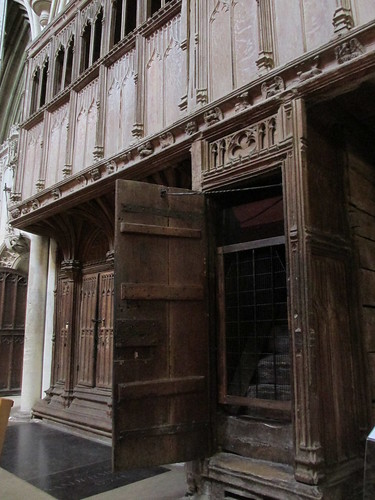
The only surviving example in Britain of a medieval watching loft. It was here that priests, monks and townsfolk kept watch over the shrine of St Alban. It dates from around 1400 and is richly carved.
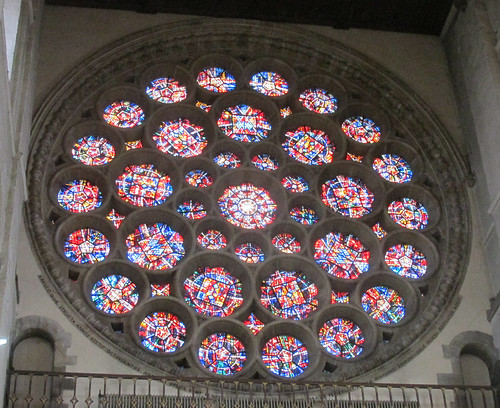
Victorian architect Lord Grimthorpe made various changes to the abbey church, including reinstating the original pitch of the nave roof and replacing the crumbling west front. He also replaced an original perpendicular window in the north transept with a rose window of his own design.
The window contains modern glass, and was unveiled in 1989 by Diana, Princess of Wales.
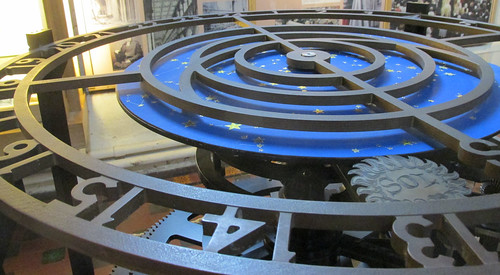
Replica of the Wallington Clock. The original was designed and built by Richard of Wallington who was Abbot from 1327 to 1336. In addition to striking the hours the clock showed the positions of the sun, moon and stars, and could even predict lunar eclipses.
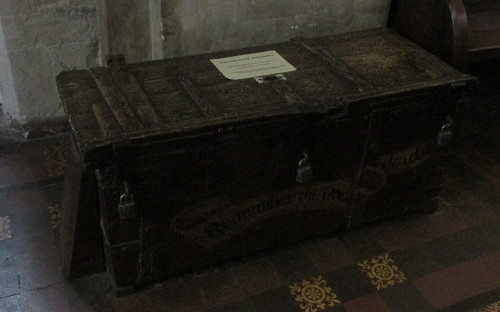
The original parish poor box still stands in the cathedral. It dates from around 1650.
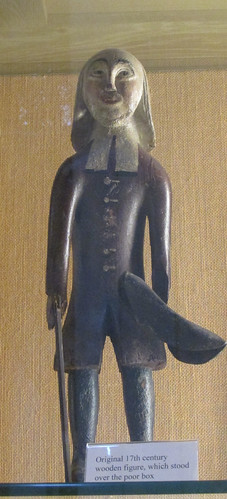
This wooden figure used to stand above the poor box, begging for alms.
This post was for Five on Friday, organised by Amy at Love Made My Home.
