Showing posts with label porcelain. Show all posts

September 23, 2016

Fancy a cuppa?

Anyone who uses Google will have noticed today's doodle is dedicated to the UK's love of tea - or more specifically to the appearance 358 years ago of the first advert for tea.  It was described as "a China drink", which is the phrase Samuel Pepys used a few years later when he first tried the beverage.

Tea, when it first arrived on these shores, was incredibly expensive. Only the richest toffs could afford it, and they kept it locked away in ornate caddies. The lady of the house would keep the caddy key so that the servants couldn't get their filthy mitts on the precious leaves.

So this morning I have five tea/cup related photos for you.  Why don't you brew up a cuppa, sit down, and visit Amy at Love Made My Home to enjoy other people's fives.


This is lovely, isn't it?  I can imagine sipping the cup that cheers out of it - but in Victorian society I'd have been frowned upon - it's  for drinking coffee, and it's called a can, because of its straight sides. Tea was originally drunk from a bowl, Chinese fashion, and so tea cups are more bowl-shaped, even though they have handles now.

Can't brew proper tea without a pot, so how about this lovely specimen?  It's in the Potteries Museum in Stoke on Trent and I would really love something this ornate to make my morning cuppa.

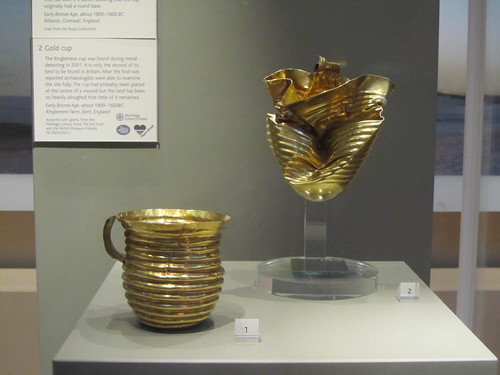
How about a touch of opulence for your tea?  This one wouldn't have been for the China drink either. It dates from the Bronze Age and was found in a round barrow (grave mound) in Cornwall. It's in the British Museum, though technically it belongs to the royals because it was found on Duchy of Cornwall land.


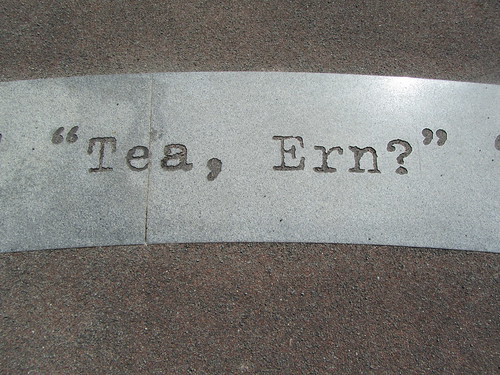
Last week I showed you an extract from Blackpool's comedy carpet. Well this one's just up the coast in Morecambe, and it's in front of a statue of the town's famous son Eric. There are lots of his catch phrases set into the floor around the sculpture, but I think this is my favourite.

Can you guess what language this is?  It's so close to home, and yet a significant proportion of the natives don't even speak it. It's Welsh. Paned o te, Cariad?


September 02, 2016

Five at random

Here we are back at Five on Friday after the summer break. Don't forget when you've read this post to go to visit Amy at Love Made My Home and see what others have for you.

This week we have five random objects from Derby Museum and Art Gallery.  In date order:

1
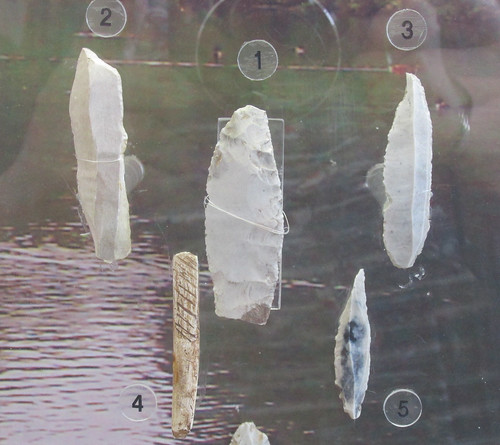
Prehistoric points from Creswell Crags caves in Derbyshire.
1. Leaf point, probably a spear head,made from worked flint and possibly 35-38,000 years old.
2. Another flint, possibly a hafted knife blade. A type of point found only at Creswell.
3. Scraper/burin. A tool for scraping and piercing bone and hide. Around 14-15,000 years old.
4. Mammoth ivory spear tip around 12,500 years old.
5.Very early arrowhead, 14-15,000 years old.


2
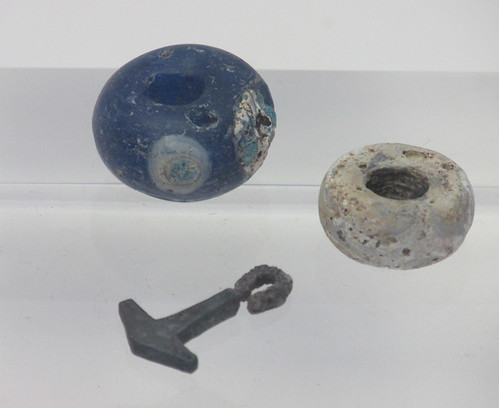
Two glass beads and a Thor's hammer, forming part of a necklace found in the grave of a viking at Repton in Derbyshire.


3
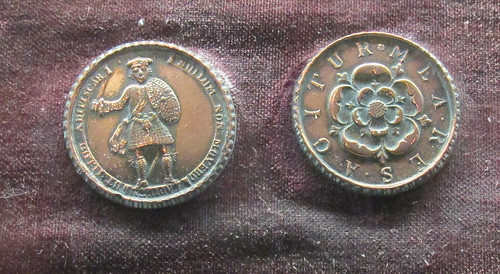
Medal issued to supporters of Bonnie Prince Charlie during the campaign to establish him on the British throne. Known as the Young Pretender, Charles Edward Stuart was believed by his family and supporters to be the rightful king of England. A year long campaign - the Jacobite Rebellion - failed to secure the throne for him and he fled to France to live out the remainder of his life.


4
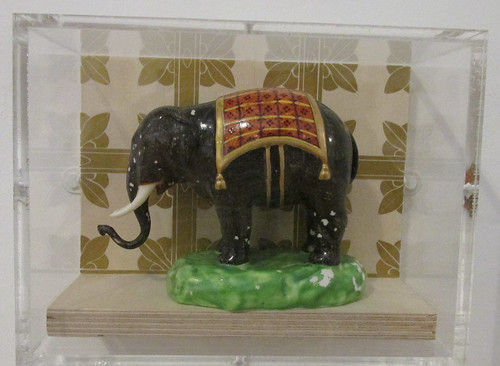
Elephant figurine in Derby porcelain made approximately 1830 at the Nottingham Road factory.


5
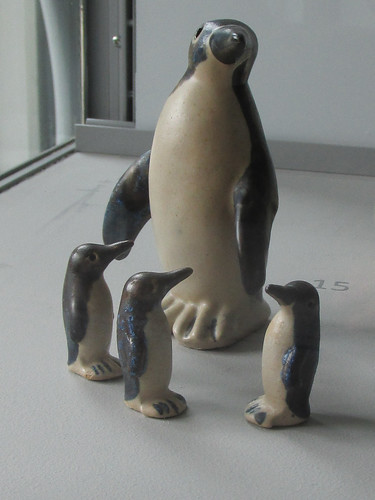
Penguin family dating from 1930s - 40s and made at the Denby factory.

July 08, 2016

Five Blue Pots

We recently had a trip to Derby Museum and Art Gallery because I have a picture in this summer's open art exhibition. (Don't get excited - they accepted everything that was submitted!) The cafe also holds the newly-arranged ceramics gallery, from which I've chosen a selection of blue things for this week's Five on Friday. Joining in with everyone at Amy's Love Made My Home. Click on the link at the bottom to see other people's Fives.

1775

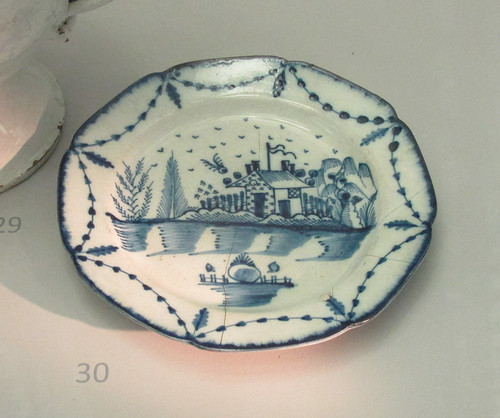
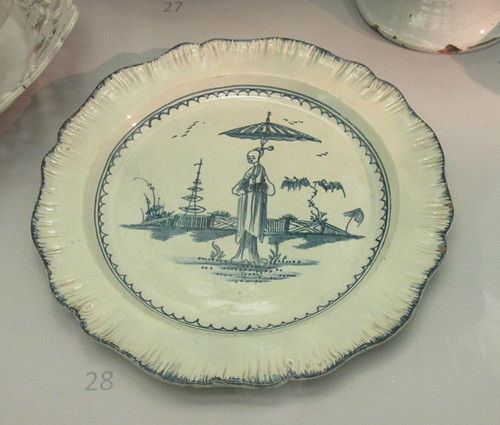
Two plates - known as Pearlware - made at the Cockpit Hill factory in Derby about 1775. This kind of ware was made between about 1740 and 1820. It was designed to look like more expensive porcelain imported from China but was more affordable. This is the kind of porcelain that gave rise to the Willow Pattern.

1795-1800 
Coffee can and saucer with a view of Matlock High Tor. Made at the Derby Porcelain Factory in Nottingham Road. Dates can be identified from the production mark on the base of objects. Between 1788 and 1801 the mark was a crown and crossed batons over the letter D.

1820

A pair of vases from the same Nottingham Road factory, decorated by William Watson. The current factory still employs hand painters, although much of the modern porcelain is transfer printed. Factory marks were various designs, but all red, at this stage.

1960

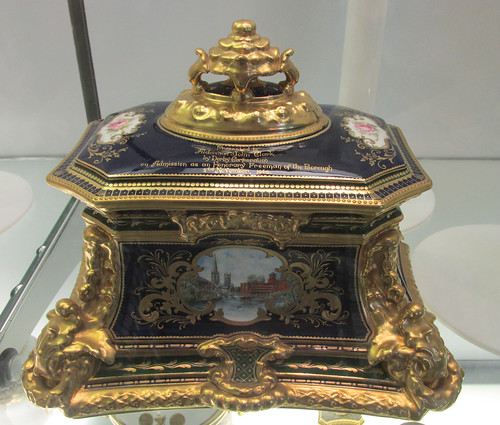
Freedom Casket presented to Alderman John Clark in 1960 when he was given Freedom of the Borough by the city council. I have no idea what he was supposed to keep in it - maybe some sort of proclamation - but there were several of these on display. The painting in the cartouche on the front is a view of the city

1974

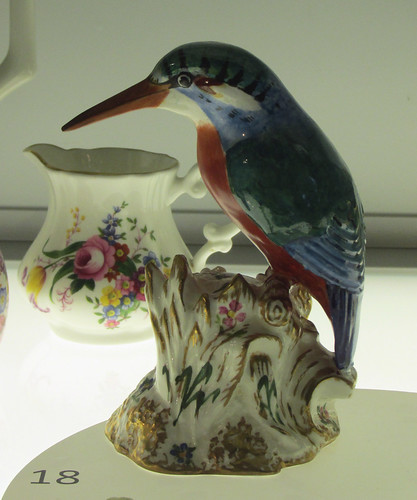
Figure of a kingfisher. I really like this one. Made at the Royal Crown Derby factory in Osmaston Road, which still exists. You can do factory tours and see the beautiful items being made and hand decorated. The visitor centre has an excellent tea room where you can eat cake from Royal Derby porcelain and drink tea from their extremely delicate cups.  Very posh!

Now click here to visit Amy and see the other Friday Fives.