 |
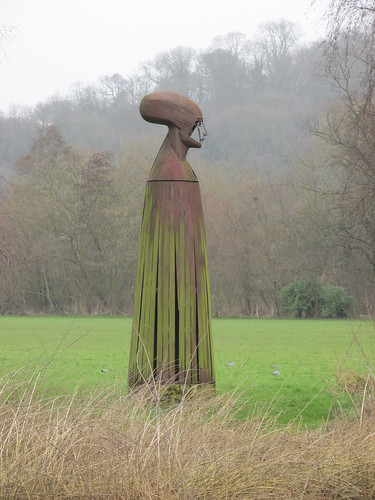
| Statue of St Modwen by John Fortnum |
The earliest written record of the town of Burton on Trent dates from the 7th century, when St Modwen built a chapel dedicated to Saint Andrew on an island in the river. She constructed a well nearby and the water was reputed to cure all ills.
Wikipedia tells us that Modwen, or Modwenna was an Irish noblewoman who became a nun. After setting up the chapel in Burton she and two fellow nuns made a pilgrimage to Rome. On their return they built a church at nearby Stapenhill dedicated to St Peter and St Paul.
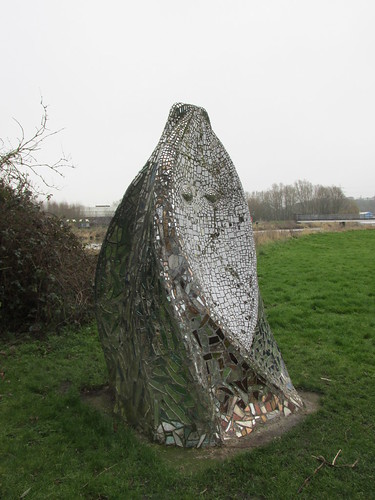 |
| View across the Washlands |
 |
| Sculpture representing the prow of a viking ship |
Much of the town's early history, including the site of St Modwen's chapel, is now covered by a public park called the Washlands. And dotted around the area are sculptures representing key figures and products.
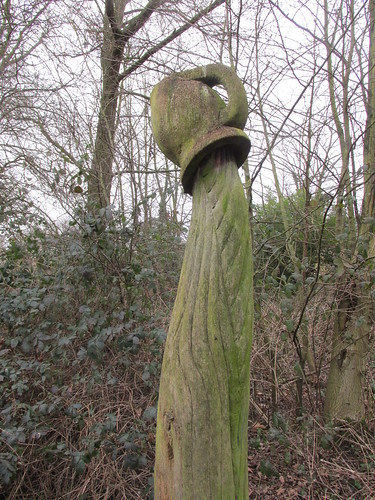
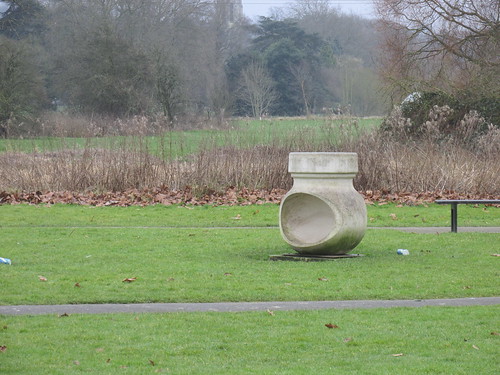
Like Marmite, for example. Apologies to any of my overseas readers who have never tasted the yeasty spread. It's a by-product of the brewing industry and, as the adverts say, you either love it or hate it. Personally I'm a fan. Anyone who knows it will instantly recognise the Marmite jar sculpture standing close to the washlands.
This has been a Five on Friday post, joining in with Amy at Love Made My Home.
