Bit of a lazy Five this Friday. If you read my other blog you'll know I did a post about a beautiful wrought iron arbour in the garden of Melbourne Hall in Derbyshire. It, and several other garden structures, are listed Grade I because of their historic importance. (Read the History Anorak post if you want to know why they're important.)
So anyway, I thought you might like a look at some of the other garden ornaments at Melbourne and that's this week's post. But I can't be bothered re-writing the information on them, so I've just cut and pasted the official listing from Historic England.
Perseus
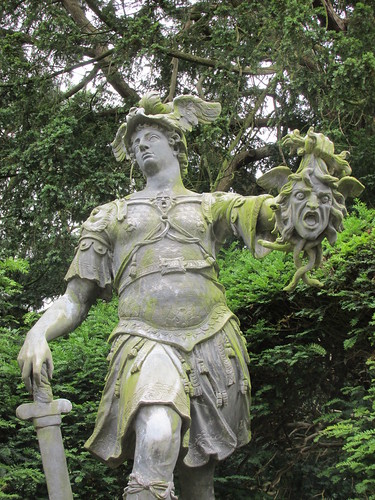
Pedestal with Statue of Perseus in Melbourne Hall Gardens. Pedestal with statue of Perseus, c.1700 by Jan van Nost. Erected as part of a French-style garden, designed by Royal Gardeners to Queen Anne, London and Wise, for Thomas Coke of Melbourne Hall. Stone and lead. Panelled stone pedestal on wide square plinth with life-size figure of Perseus holding Medusa's head, clad in Roman style armour with winged sandals and helmet.
Covered seat
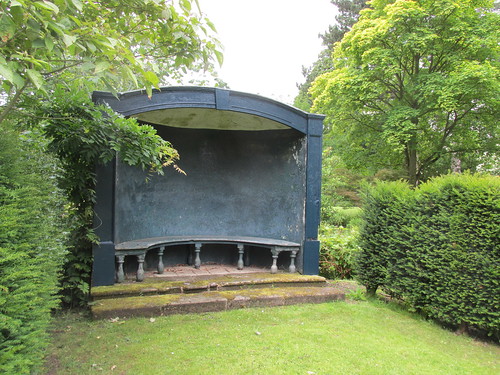
Covered Seat to East of Fountain Pond in Melbourne Hall Gardens (formerly listed with the matching seat as 'Two Alcoves in grounds of Melbourne Hall') Covered garden seat c.1704 with later repairs. Work carried out by William Cooke of Walcot. Stuccoed brick and timber. Curved timber bench on turned legs fitted into an apsidal structure with stuccoed segmental brick wall covered by domed lead roof, with simple panelled timber jambs and segmental cornice with raised keystone. Built as a pair to similar seat to west.
Fighting cherubs
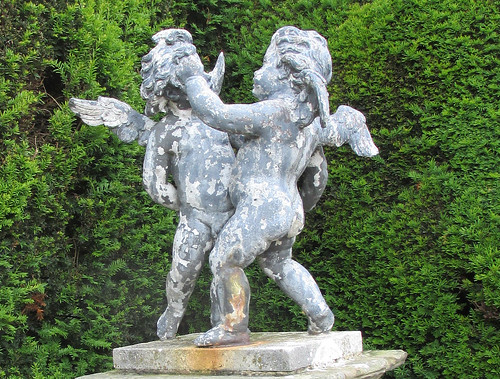
Two Pairs of Cherubs to South-West of the Grand Basin in Melbourne Hall Gardens (formerly listed as 'Pair of pedestals with figures of fighting cupids on south side of garden, Melbourne Hall') Two pairs of cherubs, c.1700 by Jan van Nost. Stone and lead. Each pair of cherubs stands on a panelled stone pedestal with moulded base and cornice. Western pair are kissing and eastern pair are fighting. These form a group with another two pairs of cherubs on the opposite side of the basin and tell the tale of Castor and his brother Pollux fighting over a bunch of flowers and their eventual reconciliation.
Four Seasons Vase
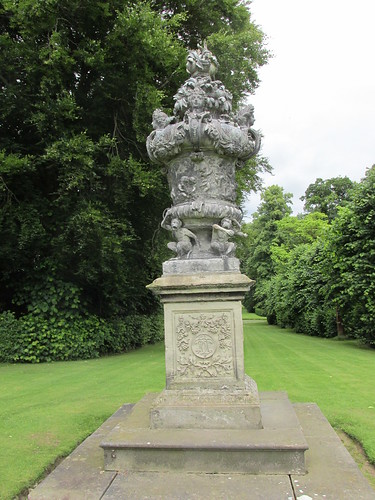
Pedestal and Four Seasons Vase in Melbourne Hall Gardens. Pedestal with vase, 1705, vase by Jan van Nost and pedestal by Devigne. Stone and lead. Panelled pedestal with moulded base and cornice on stepped square plinth, each panel carved with foliage and swags and with central roundels inscribed 'TC'. Magnificent baroque lead vase over supported by four seated lead monkeys, with gadrooned base to bowl and stem of bowl decorated with frieze of putti and foliage swags. Lid with bulbous base has four scrolled handles, each topped by the head of a Season, with panels between and more swags. The top is surmounted by a lattice work basket bursting with fruit and flowers. The vase was presented by Queen Anne to Thomas Coke.
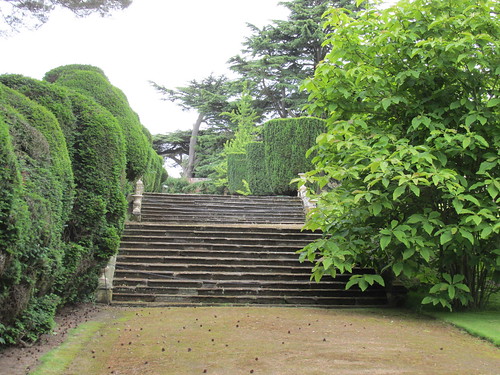
Sets of steps
Five Flights of Steps between terraces at Melbourne Hall Gardens . Five flights of steps c.1704 with later urns. Work carried out by William Cooke of Walcot. Stone. Two flights of steps to either side of terrace and one central flight. Each flight has ten steps with moulded nosings and low retaining walls to either side terminating in low square piers to either end. The piers are now topped by later gadrooned urns. Each top step is wide and has diamond patterned paving.
Now take a trip over to see Amy at Love Made My Home and find out what other Friday Fives have been submitted this week.
Some chat about historical things. Some of it is inspired by topics on the associated History Anorak blog.
July 15, 2016
July 08, 2016
Five Blue Pots
We recently had a trip to Derby Museum and Art Gallery because I have a picture in this summer's open art exhibition. (Don't get excited - they accepted everything that was submitted!) The cafe also holds the newly-arranged ceramics gallery, from which I've chosen a selection of blue things for this week's Five on Friday. Joining in with everyone at Amy's Love Made My Home. Click on the link at the bottom to see other people's Fives.
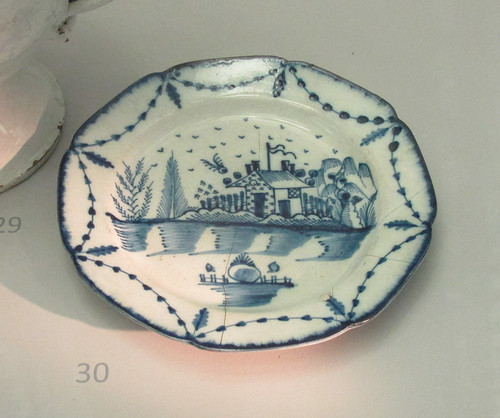
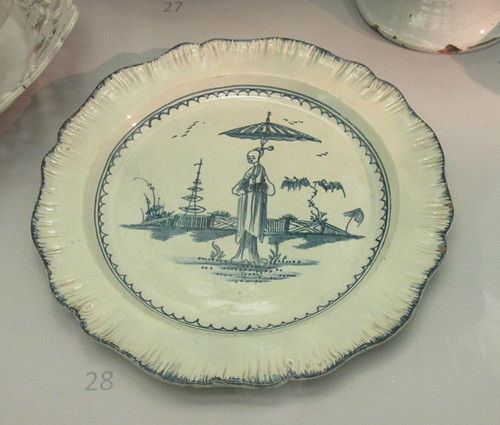
1775
Two plates - known as Pearlware - made at the Cockpit Hill factory in Derby about 1775. This kind of ware was made between about 1740 and 1820. It was designed to look like more expensive porcelain imported from China but was more affordable. This is the kind of porcelain that gave rise to the Willow Pattern.
1795-1800
Coffee can and saucer with a view of Matlock High Tor. Made at the Derby Porcelain Factory in Nottingham Road. Dates can be identified from the production mark on the base of objects. Between 1788 and 1801 the mark was a crown and crossed batons over the letter D.
1820
A pair of vases from the same Nottingham Road factory, decorated by William Watson. The current factory still employs hand painters, although much of the modern porcelain is transfer printed. Factory marks were various designs, but all red, at this stage.
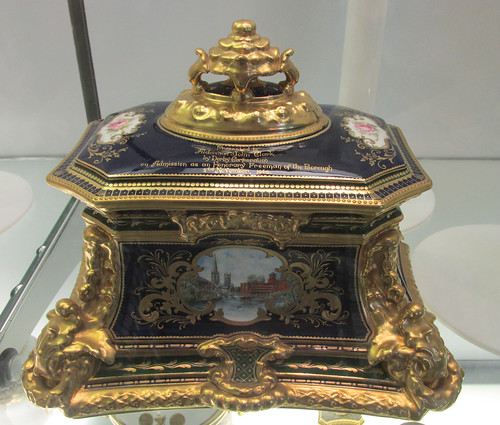
1960
Freedom Casket presented to Alderman John Clark in 1960 when he was given Freedom of the Borough by the city council. I have no idea what he was supposed to keep in it - maybe some sort of proclamation - but there were several of these on display. The painting in the cartouche on the front is a view of the city
1974
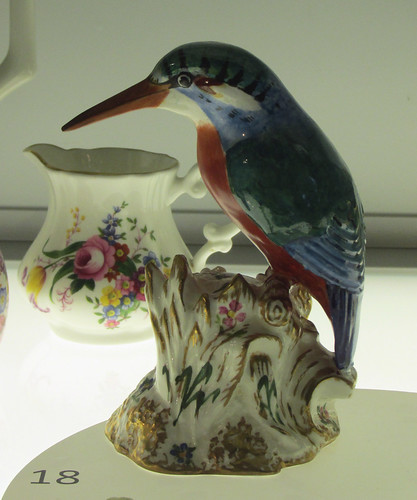
Figure of a kingfisher. I really like this one. Made at the Royal Crown Derby factory in Osmaston Road, which still exists. You can do factory tours and see the beautiful items being made and hand decorated. The visitor centre has an excellent tea room where you can eat cake from Royal Derby porcelain and drink tea from their extremely delicate cups. Very posh!
Now click here to visit Amy and see the other Friday Fives.
1775
Two plates - known as Pearlware - made at the Cockpit Hill factory in Derby about 1775. This kind of ware was made between about 1740 and 1820. It was designed to look like more expensive porcelain imported from China but was more affordable. This is the kind of porcelain that gave rise to the Willow Pattern.
1795-1800
Coffee can and saucer with a view of Matlock High Tor. Made at the Derby Porcelain Factory in Nottingham Road. Dates can be identified from the production mark on the base of objects. Between 1788 and 1801 the mark was a crown and crossed batons over the letter D.
1820
A pair of vases from the same Nottingham Road factory, decorated by William Watson. The current factory still employs hand painters, although much of the modern porcelain is transfer printed. Factory marks were various designs, but all red, at this stage.
1960
Freedom Casket presented to Alderman John Clark in 1960 when he was given Freedom of the Borough by the city council. I have no idea what he was supposed to keep in it - maybe some sort of proclamation - but there were several of these on display. The painting in the cartouche on the front is a view of the city
1974
Figure of a kingfisher. I really like this one. Made at the Royal Crown Derby factory in Osmaston Road, which still exists. You can do factory tours and see the beautiful items being made and hand decorated. The visitor centre has an excellent tea room where you can eat cake from Royal Derby porcelain and drink tea from their extremely delicate cups. Very posh!
Now click here to visit Amy and see the other Friday Fives.
July 01, 2016
Five famous people
Here we are again on Friday taking part in Amy's Five on Friday. This week I've been trawling the photo collection for some sculptures of famous people. Be warned - I have enough of these to make it into several "Five" posts so you might get more in the future.
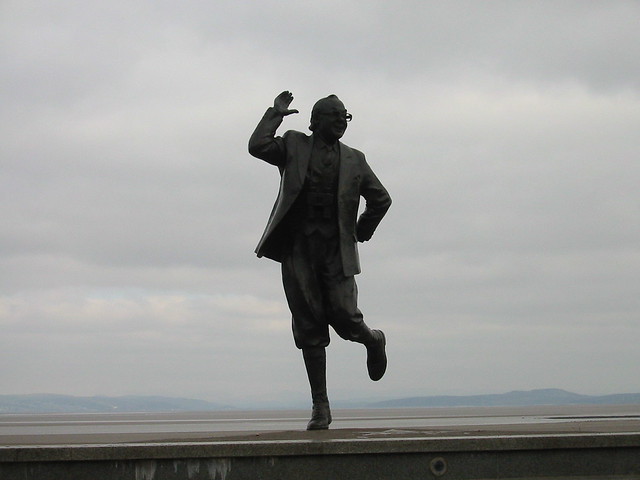
Meanwhile, let's start with someone you should recognise, even if I got the light very wrong and he's little more than a silhouette in this shot.
Sorry to my overseas readers if this guy isn't familiar to you but his name was Eric Morecambe, and he was half of a comedy duo who were very famous from the 60s onwards in the UK. In actual fact his name was Eric Bartholomew, but he took his stage name from his home town, Morecambe in Lancashire. And that's where this statue stands. That's Morecambe Bay in the background.
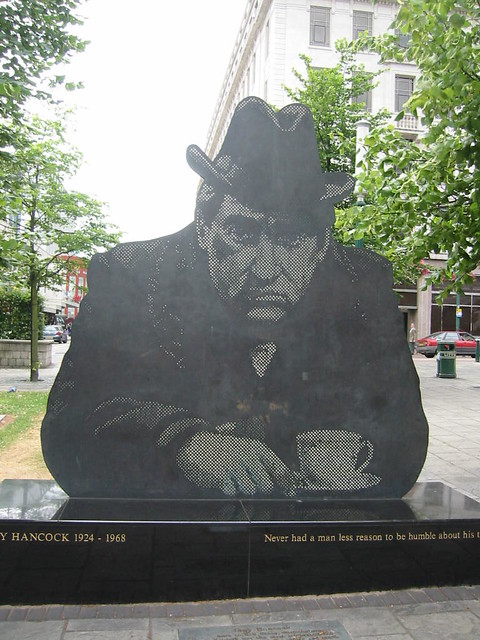
Another comedian - Tony Hancock. You don't really get the full effect here but the sculpture is sheet steel and the image is created by holes of various sizes drilled into it to let light pass through. (Much like an old print plate.) You don't get the scale in this shot either. But the plinth is big enough to sit on. It's in Old Square, Birmingham, close to where he was born. Hancock was known for his dry humour and comedy programmes on TV and radio. Remember The Blood Donor?
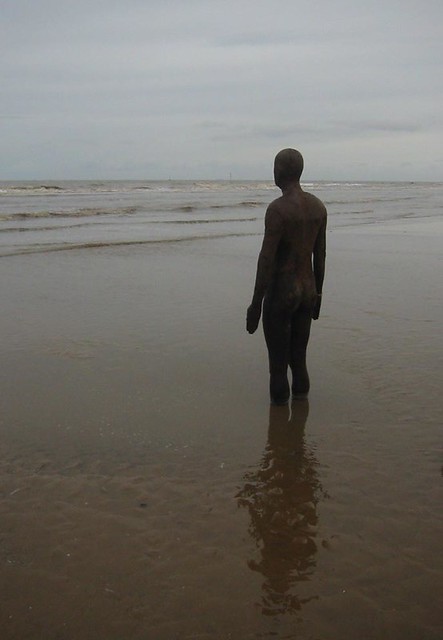
Even if you recognise this work you might not realise why I've included it among famous people. Much of Antony Gormley's work is based around nude figures similar to this. The photo is one of the Another Place installation on Crosby Beach near Liverpool. He's one of hundreds of cast iron figures standing looking out to sea. You might be more familiar with his Angel of the North, another - much bigger - cast iron figure, this time with airplane wings, that stands by the A1 near Gateshead. Whatever the size, these Gormley sculptures are actually self portraits. He bases all of these works on his own body. Hence its inclusion as somebody famous!
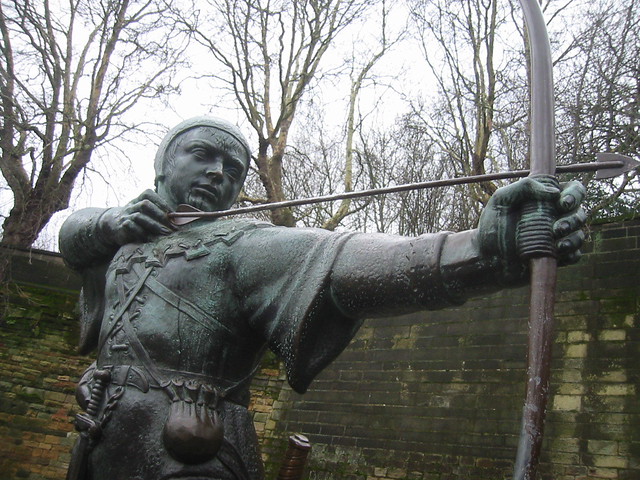
Famous, but not real. This stands near the gate of Nottingham Castle and tourists flock to see it. He's not one of my favourites. Raised on Errol Flynn movies, I find this child-like face bears no resemblance to the image of Robin Hood I have in my imagination. The locals seem to like him though, and his arrow frequently disappears during student Rag Week.
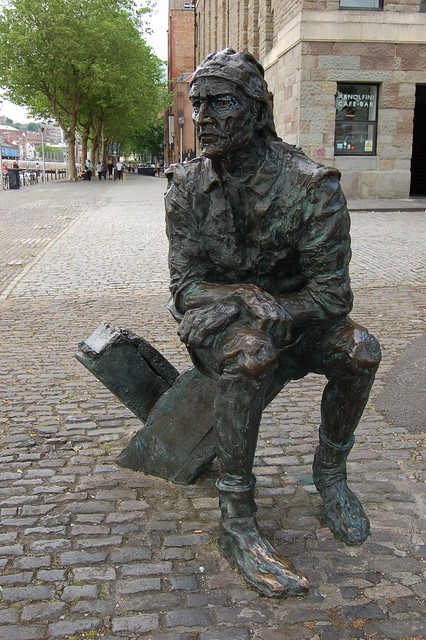
This chap sits on the quayside in Bristol, contemplating a long sea voyage. I don't know how accurate a portrait it is, but it represents John Cabot, explorer and navigator, who is credited with discovering parts of North America in the late 15th century during the reign of Henry VII. That's how they came up with the name Newfoundland. He's life size, and on a good day you can share a seat with him while you sip a takeaway coffee from the Arnolfini Gallery behind him.
Now please go and visit Any's blog at Love Made My Home to see what other people are sharing this week.
Meanwhile, let's start with someone you should recognise, even if I got the light very wrong and he's little more than a silhouette in this shot.
Sorry to my overseas readers if this guy isn't familiar to you but his name was Eric Morecambe, and he was half of a comedy duo who were very famous from the 60s onwards in the UK. In actual fact his name was Eric Bartholomew, but he took his stage name from his home town, Morecambe in Lancashire. And that's where this statue stands. That's Morecambe Bay in the background.
Another comedian - Tony Hancock. You don't really get the full effect here but the sculpture is sheet steel and the image is created by holes of various sizes drilled into it to let light pass through. (Much like an old print plate.) You don't get the scale in this shot either. But the plinth is big enough to sit on. It's in Old Square, Birmingham, close to where he was born. Hancock was known for his dry humour and comedy programmes on TV and radio. Remember The Blood Donor?
Even if you recognise this work you might not realise why I've included it among famous people. Much of Antony Gormley's work is based around nude figures similar to this. The photo is one of the Another Place installation on Crosby Beach near Liverpool. He's one of hundreds of cast iron figures standing looking out to sea. You might be more familiar with his Angel of the North, another - much bigger - cast iron figure, this time with airplane wings, that stands by the A1 near Gateshead. Whatever the size, these Gormley sculptures are actually self portraits. He bases all of these works on his own body. Hence its inclusion as somebody famous!
Famous, but not real. This stands near the gate of Nottingham Castle and tourists flock to see it. He's not one of my favourites. Raised on Errol Flynn movies, I find this child-like face bears no resemblance to the image of Robin Hood I have in my imagination. The locals seem to like him though, and his arrow frequently disappears during student Rag Week.
This chap sits on the quayside in Bristol, contemplating a long sea voyage. I don't know how accurate a portrait it is, but it represents John Cabot, explorer and navigator, who is credited with discovering parts of North America in the late 15th century during the reign of Henry VII. That's how they came up with the name Newfoundland. He's life size, and on a good day you can share a seat with him while you sip a takeaway coffee from the Arnolfini Gallery behind him.
Now please go and visit Any's blog at Love Made My Home to see what other people are sharing this week.
June 24, 2016
Round and round
1 Inspiration
![]() |
| Rotunda museum |
We're starting with one that played a very important part in my life. As you can tell from the photo, it's a museum. In fact it's the first museum that I consciously remember visiting. It's in my home town of Scarborough and it's called The Rotunda.
It was set up to house the rock collection of one William "Strata" Smith, the man who drew the first geological map of Britain. He collected some 8,000 specimens, including numerous 'type' fossils (the ones used to define species for comparison with future finds) while studying the Yorkshire coast in the 1820s.
But it's the later, archaeological, collection that set me on course to become known as The History Anorak. Among the exhibits on show is a Bronze Age coffin, complete with skeleton, now known as Gristhorpe Man. In my innocence as a child I was fascinated by the fact that the 'man' seemed to be too big for the coffin displayed with him. This was actually a side effect of the way his skeleton had been reconstructed. The wiring at the joints had added a few millimetres between each of the bones, with the result that the finished body was about six inches taller than it would have been in life. (Yes, I know I just mixed my measurements, but you can probably imagine them better this way.)
My fascination with the body led to a childhood interest in all things archaeological, and that later led to a degree in archaeological science. In turn that led to a job studying the history of the Midlands canal system, and eventually the History Anorak website and blogs, and you reading this!
2 Perspiration
![]() |
| Bottle kilns |
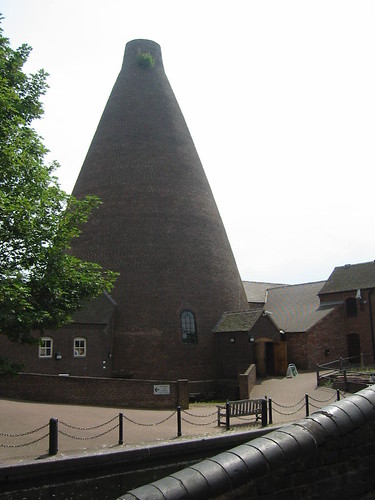
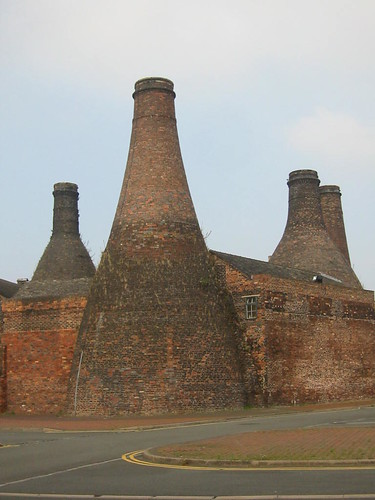
Pictures two and three are of buildings associated with industry and, in particular, industries that need a lot of heat. Left is of a group of bottle kilns that can be found at the Gladstone Pottery Museum in Stoke on Trent. It'll be familiar if you watched any of the Great British Pottery Throwdown. These huge chimneys are actually kilns. The pots to be fired are stacked inside. Delicate items are placed into big pots called saggars to protect them. Then a fire is laid inside the kiln and sealed in with bricks to bake the clay.The photo on the right looks similar but is significantly different. It's a glass cone at Stourbridge in the West Midlands. Unlike potters, glassmakers have to be able to work on their material while it's still molten and pliable. So their kilns are created at the heart of a huge brick cone, but they are inside with it while it's lit. It's hot work, as visitors to Red House Cone Museum can feel for themselves. There's a resident glass blower who makes wonderful items that can then be bought in the museum shop.
3 Hydration
This building isn't a museum. It isn't round either, but it's close. Although it's no longer in use, it was originally a water tank. The keen-eyed among you, and anyone who's ever been there, will recognise the south coast town of Rye. You'll find it just below St Mary's Church. There's a plaque nearby that says it was completed in 1735. According to the British Water Tower Appreciation Society (yes, such a thing exists) it's not technically a water tower because the water isn't raised above the ground. The lower, brick portion stored water but the upper section possibly contained a pump to lift the water up. The street used to be called Pump Street, but it's now Church Square. And that upright bit to the left is a gauge to show the water level in the tank below.
4 Rotation
I've always thought I'd like to live in a mill, but what do you do with your furniture? It would never fit right along a curved wall, would it?
I've had a fascination with mills for years. I think I got it from my Dad. So whenever we visit somewhere with an interesting mill we have to stop by and take a closer look.
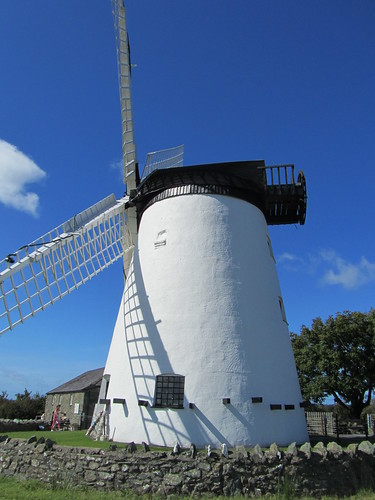
This wonder is on Anglesey in Wales, and I have to say it was one of the best places we found during that week's holiday. It's called Llynnon and there's also a couple of reconstructed Iron Age huts nearby.
The mill was built in 1775/6 when there would have been hundreds in Wales but is now the last remaining working mill in the country. It is classified as a tower mill, which means that the grinding machinery is held inside a stone tower and the cap turns so that the sails can be moved to face into the wind. The tower is 9.3 metres tall, with four floors. It was used to grind corn, oats and barley. It still makes flour that's used to make things on sale in the cafe.
5 Generation
And finally we have a more modern kind of round building. They aren't to everyone's taste but I find them quite attractive. I know they don't exactly fit in the countryside, but I find their lines elegant.
This one's at Ratcliffe on Soar in Nottinghamshire and I call it My Powerstation, because when I catch sight of it on a journey I know I'm nearly home. It's coal powered and was built in 1968.
They aren't popular. Greenpeace is against coal-based power generation because of its contribution to global warming, not to mention air pollution and health hazards. I prefer wind turbines, though they have some drawbacks and aren't popular with everyone. And there's now at least one solar farm within the area covered by this photo.
But I'm not going to get political. There will be enough of that today when the results of the EU referendum come out.
So don't get wound up about today's potential changes. Go over to see Amy at Love Made My Home and see what other fives people have drawn together this week.
June 17, 2016
What's in a name?
"That which we call a rose
By any other name would smell as sweet."
Romeo and Juliet (II, ii, 1-2)
Well actually there can be quite a lot in a name, if we only know what we're reading. In Juliet's case being a Capulet prevented her from loving a member of the rival Montagues because of the history between their families. And when it comes to other names they often contain much more history than first glance would suggest.
This week, to join in with Amy's Five on Friday at Love Made My Home, I'm looking at street names and the kind of stories they often hold.
Two weeks ago we looked at William Wilberforce and noted that Hull has named a street after him as a memorial to his achievements. Many such streets exist around the country (and probably the world) and often the memory of what the person did is long forgotten. But the fact that it represents a person is usually obvious. Other names are less clear. Let's have a look at a few.
Moat
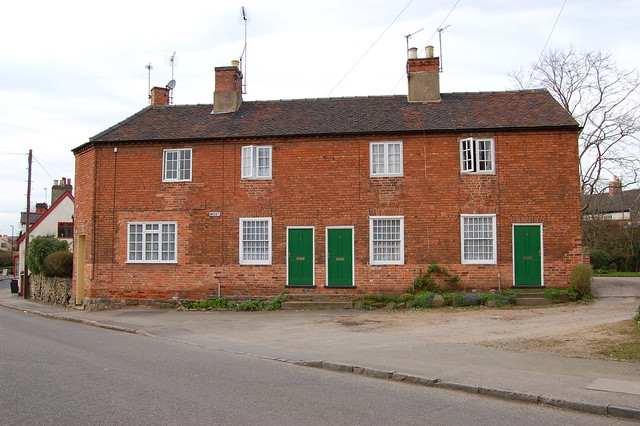
This one's in Castle Donington, Leicestershire, and although you can't see it easily in the photo the street is called Moat. It's one of the last remaining signs, other than the village name itself, that a castle ever stood in Donington. There are other strange street names in Donington that might be assumed to be castle references, for example The Biggin, which just translates from Middle English as "the building". But one never knows.
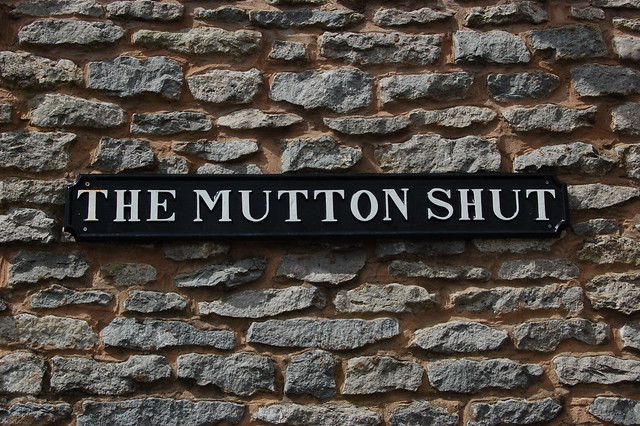
The Mutton Shut
This one's in Much Wenlock, Shropshire. The word 'shut' refers to a shortcut and is one of many such terms used to describe this kind of narrow alley. Depending on where you live in the UK you might know such a way as a snicket, a ginnel, a jennel, a jitty. Often the words describe the narrow walkway leading to the rear of a street or house. In Hull, for example, where we have spent the last two weeks of Five on Friday, it's called a tenfoot. Other places call it entry, jigger, pend or ennog. In Much Wenlock's case the Shuts give you a clue to what you'll find at the other end. Often they are named after pubs! The Mutton Shut connects up with George and Dragon Shut, if anybody fancies a pint.
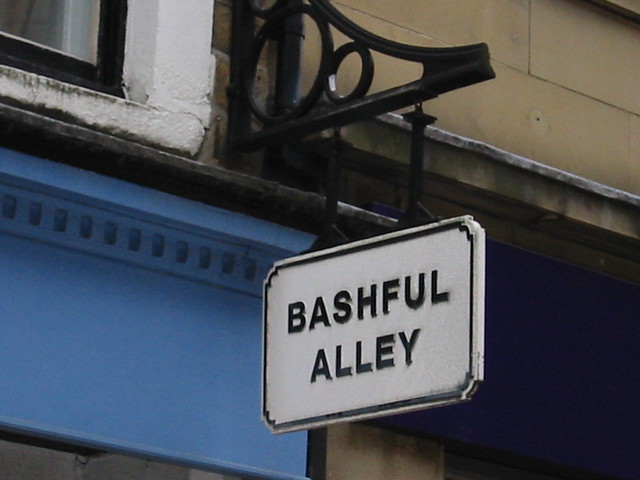
Bashful Alley
This one is fun. In spite of being a very old (and narrow) street in Lancaster, the name is relatively new. Its previous moniker Swap Cunt Alley, was much more open about what went on there. It was renowned as the place to find a prostitute - useful information for a sailor newly disembarked from a long voyage.
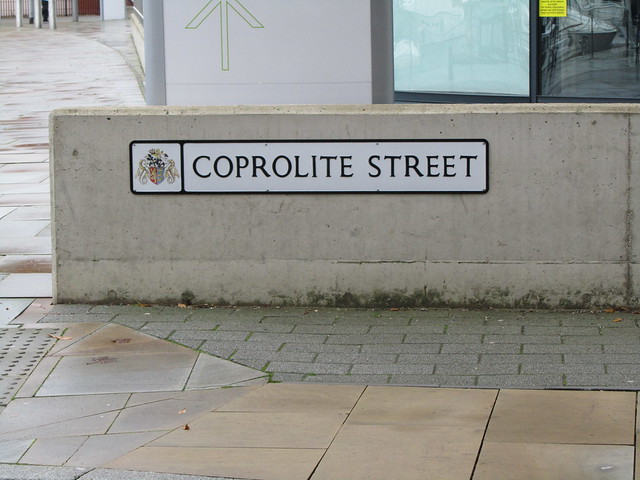
Coprolite Street
And while we're on seedy subjects here's a lovely illustration of the phrase "where there's muck there's money". A coprolite is fossilised animal dung. It translates from the Greek and basically means 'shit stone'. Coprolites have been known as a potentially rich source of minerals for many centuries and garden product manufacturer Fisons exploited the local source around Ipswich in Suffolk for its phosphate content. Near the docks, where part of Fisons factory once stood you can still find Coprolite Street - though that's not what the students at nearby University Campus Suffolk (UCS) call it!
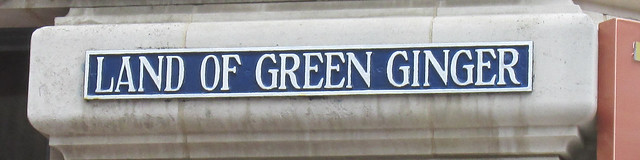
That's novel
And now let's go back to Hull. This is probably one of the oddest names you'll ever find. Writer Winifred Holtby (South Riding) used it as the title of one of her novels, but it pre-dates her as a street name. A blue plaque nearby says its origin "remains a mystery". Fun though, isn't it?
Now take yourself off to Love Made My Home to see what other fives are on offer this Friday.
By any other name would smell as sweet."
Romeo and Juliet (II, ii, 1-2)
Well actually there can be quite a lot in a name, if we only know what we're reading. In Juliet's case being a Capulet prevented her from loving a member of the rival Montagues because of the history between their families. And when it comes to other names they often contain much more history than first glance would suggest.
This week, to join in with Amy's Five on Friday at Love Made My Home, I'm looking at street names and the kind of stories they often hold.
Two weeks ago we looked at William Wilberforce and noted that Hull has named a street after him as a memorial to his achievements. Many such streets exist around the country (and probably the world) and often the memory of what the person did is long forgotten. But the fact that it represents a person is usually obvious. Other names are less clear. Let's have a look at a few.
Moat
This one's in Castle Donington, Leicestershire, and although you can't see it easily in the photo the street is called Moat. It's one of the last remaining signs, other than the village name itself, that a castle ever stood in Donington. There are other strange street names in Donington that might be assumed to be castle references, for example The Biggin, which just translates from Middle English as "the building". But one never knows.
The Mutton Shut
This one's in Much Wenlock, Shropshire. The word 'shut' refers to a shortcut and is one of many such terms used to describe this kind of narrow alley. Depending on where you live in the UK you might know such a way as a snicket, a ginnel, a jennel, a jitty. Often the words describe the narrow walkway leading to the rear of a street or house. In Hull, for example, where we have spent the last two weeks of Five on Friday, it's called a tenfoot. Other places call it entry, jigger, pend or ennog. In Much Wenlock's case the Shuts give you a clue to what you'll find at the other end. Often they are named after pubs! The Mutton Shut connects up with George and Dragon Shut, if anybody fancies a pint.
Bashful Alley
This one is fun. In spite of being a very old (and narrow) street in Lancaster, the name is relatively new. Its previous moniker Swap Cunt Alley, was much more open about what went on there. It was renowned as the place to find a prostitute - useful information for a sailor newly disembarked from a long voyage.
Coprolite Street
And while we're on seedy subjects here's a lovely illustration of the phrase "where there's muck there's money". A coprolite is fossilised animal dung. It translates from the Greek and basically means 'shit stone'. Coprolites have been known as a potentially rich source of minerals for many centuries and garden product manufacturer Fisons exploited the local source around Ipswich in Suffolk for its phosphate content. Near the docks, where part of Fisons factory once stood you can still find Coprolite Street - though that's not what the students at nearby University Campus Suffolk (UCS) call it!
That's novel
And now let's go back to Hull. This is probably one of the oddest names you'll ever find. Writer Winifred Holtby (South Riding) used it as the title of one of her novels, but it pre-dates her as a street name. A blue plaque nearby says its origin "remains a mystery". Fun though, isn't it?
Now take yourself off to Love Made My Home to see what other fives are on offer this Friday.
June 10, 2016
Five more from Hull
Here we are again on a a Friday and it's time to join in with Amy at Love Made My Home to discuss five things that have some relevance to us. As you know we recently went to Hull and I've done a number of posts on both blogs about the visit and the city.
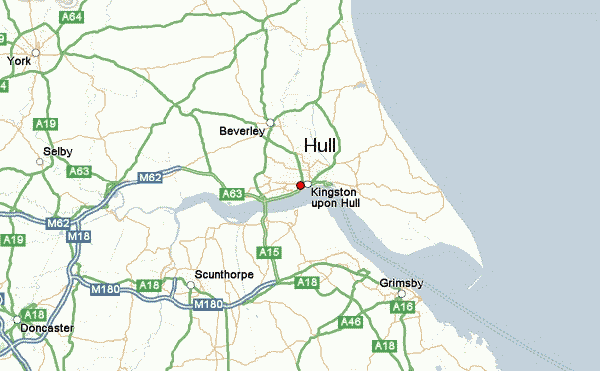
This week I'm taking a look around the Marina, which used to be Hull's heart and the centre of the port. It's still a busy harbour, but the kind of large pleasure craft it handles today don't need the heavyweight support systems that were in regular use when heavy shipping paid call.
As you walk around the area look down at your feet and you'll find plenty of these. Back in the days when cargo ships brought in and took out heavy loads many goods were transported by rail - right to the harbourside. The rails are still in place in many of the cobbled streets leading to the old dock.
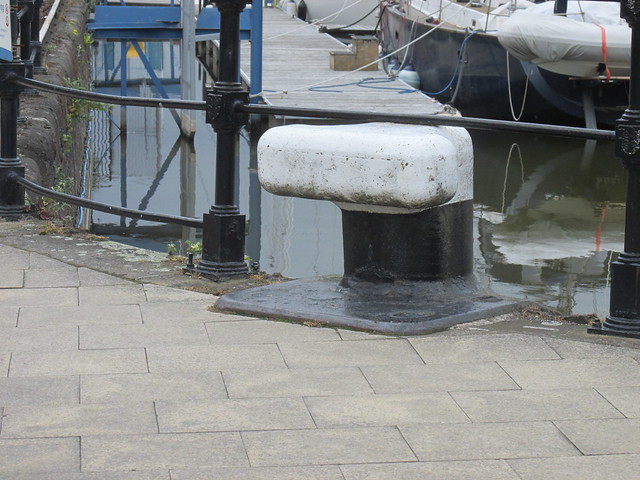
This mooring post gives you some idea of the size of ship that used to call in to Hull. There's not a lot of clues for size until you realise that's a fence post. So yes, the bollard is about 18" to 2ft high.
Then there's this amazing bit of kit that stands inside a glass shelter by the quay. I apologise for the reflections. It's a horizontal steam engine that used to stand by the slipway leading to the Victoria Dock half tide basin. It was used to haul ships out of the river when they needed bringing in for repair.
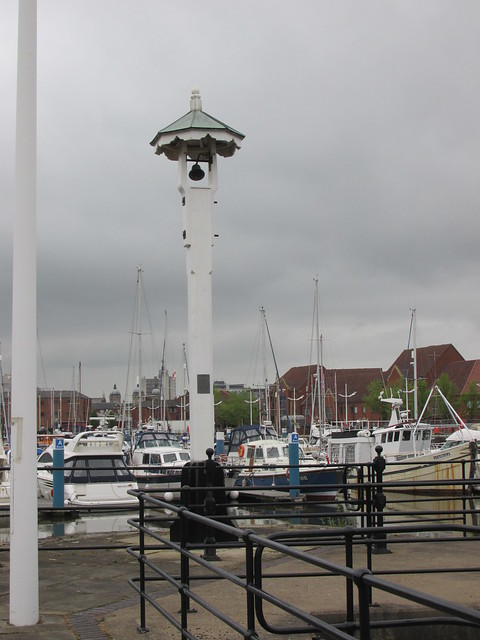
This bell stood close by Victoria Dock too. It was used to warn people when the swing bridge over the lock (where ships gained entry to the dock) was about to open. It's silent now, which is a shame.
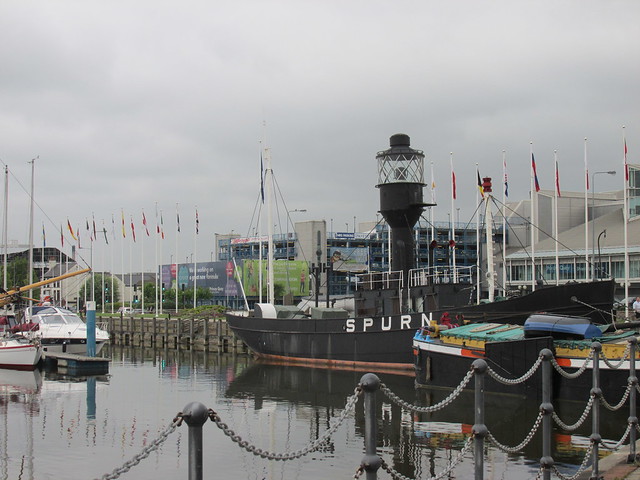
And finally we have the Spurn light ship. Spurn point is the end of the land spit that separates the Humber from the North Sea. One of the problems with a tidal river is that silt, mud and sand gets moved around by the flow of water coming in and out of the estuary. Consequently the channel can be difficult to navigate because of the constantly changing hazards. The Spurn light ship was one of several fixed lights and moveable beacons that helped ships find safe passage to and from the sea.
So now you've had a wander around Hull Marina, pop over to Love Made My Home to see other Friday fives!
* Map borrowed from http://www.weather-forecast.com/ with thanks.
June 03, 2016
Five instances of Wilberforce
As you know if you read last week's post, Mr Anorak and I went to Hull last weekend to celebrate his birthday. You might think it's an odd place to go, but it's where he comes from. Actually it's also a fascinating old city and has been named as next year's Capital of Culture. Not without reason. You're probably going to be inflicted with several Hull posts over the next few weeks because there's lots to see there. And I spent a lot of my "tourist time" thinking about Amy at Love Made My Home and potential posts for her Five on Friday challenge.
Now you might or might not have heard of William Wilberforce, but unless you're a native of Hull (or very close to someone who is) you probably don't know that he was born there. If you don't know who he was you can find out more on my other blog. But a brief explanation is that he was England's leading anti-slavery campaigner who dedicated his life to bringing an end to the cruel trade.
Hull is very proud of him. Once you visit the city you can't avoid him.
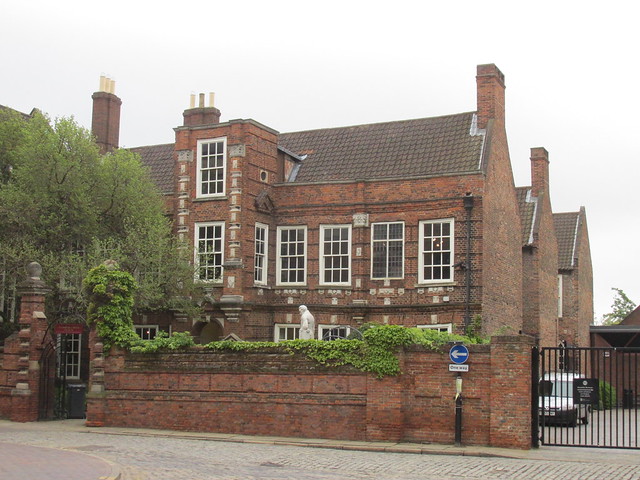
He has his own museum (in the house where he was born).
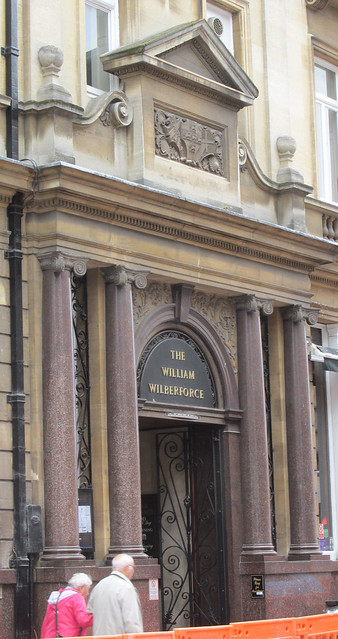
There's a William Wilberforce pub.
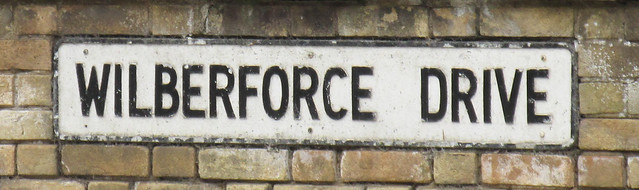
They name streets after him.
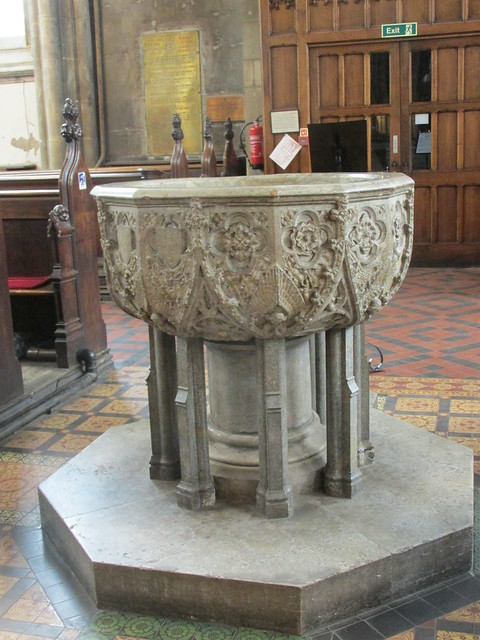
If you visit Holy Trinity Church they show you the font where he was baptised.
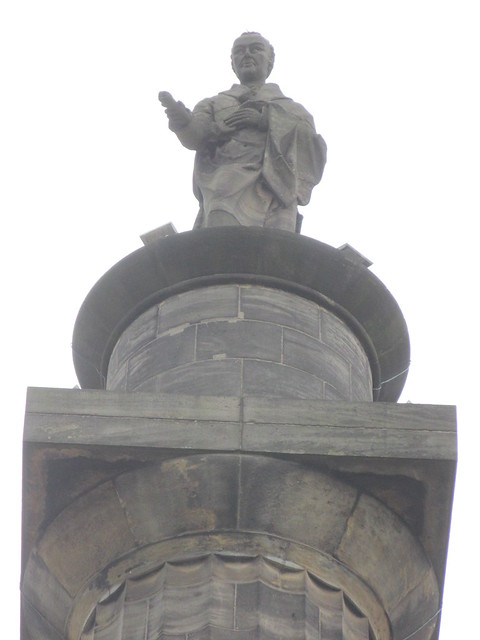
And if you walk past Hull College you'll find him standing at the top of a very high column.
Now I'd like you to hop over to Amy blog and check out other Friday Fives. Click here.
Now you might or might not have heard of William Wilberforce, but unless you're a native of Hull (or very close to someone who is) you probably don't know that he was born there. If you don't know who he was you can find out more on my other blog. But a brief explanation is that he was England's leading anti-slavery campaigner who dedicated his life to bringing an end to the cruel trade.
Hull is very proud of him. Once you visit the city you can't avoid him.
He has his own museum (in the house where he was born).
There's a William Wilberforce pub.
They name streets after him.
If you visit Holy Trinity Church they show you the font where he was baptised.
And if you walk past Hull College you'll find him standing at the top of a very high column.
Now I'd like you to hop over to Amy blog and check out other Friday Fives. Click here.
Subscribe to:
Posts (Atom)