I fully admit that I have nothing prepared for this week's Five on Friday. It's been a tough week.
Here's five photos of post boxes. I can't tell you much about them, other than where they are.
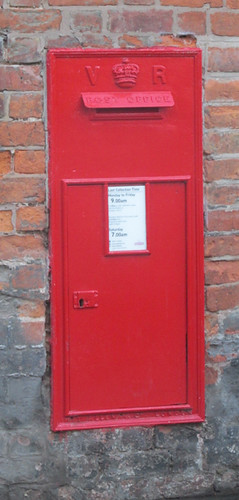
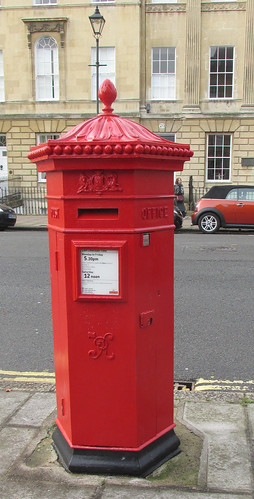
This one's in Bath.We stayed there for a long weekend a couple of years ago and walked past this between town and our hotel. It's Victorian, as you can see from the impression on the front. Pretty, huh?
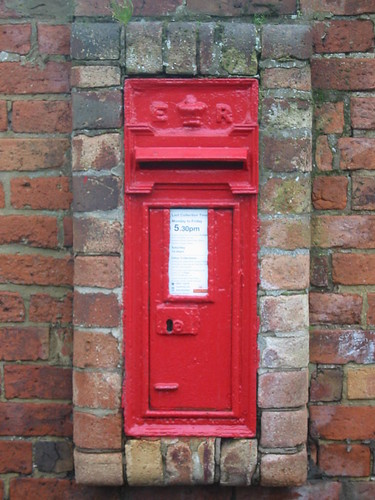
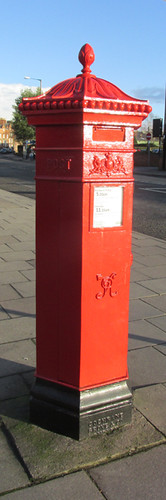
We found this one a few weeks ago in Shrewsbury. It's right next to the Abbey (of Brother Cadfael fame) Also Victorian, but not the same design as the last pic. Taller and narrower. Someone on my Flickr feed has trumpeted this as being 'original' and warned against replica and fake 'Victorian' boxes in other parts of the country. I'd hate to think the Bath one isn't real.
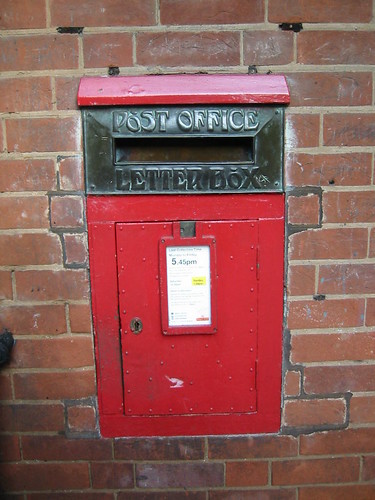
Oddly, this is just round the corner from the Shrewsbury Abbey model. I admit I've never seen a wall-mounted Victorian box before, so it might be what my Flickr pal was warning me about.
Another wall mounted version - this time a lot younger. It's in Castle Donington in Leicestershire. I love the way it's been given its own 'frame', presumably to give it enough space at the back to hold posted letters. Look at the size of its 'mouth'. Letters have clearly got much bigger since Victorian times.
I've saved the best till last. Ignore the ugly brickwork and very poor standard pointing. This one can be found in the old Cadbury village of Bournville just outside Birmingham. George Cadbury cared deeply about his work force and built a special village for them surrounding the factory. It offered much higher standards of living than were available in the city. Green open spaces, large houses, gardens, and relatively clean air. The architecture was also tasteful, as shown by this wonderful post box. As far as I know it's unique.
Sorry this post's pathetic. I promise to try harder next week!
Some chat about historical things. Some of it is inspired by topics on the associated History Anorak blog.
February 16, 2017
February 10, 2017
Snicket - or is it?
![]() |
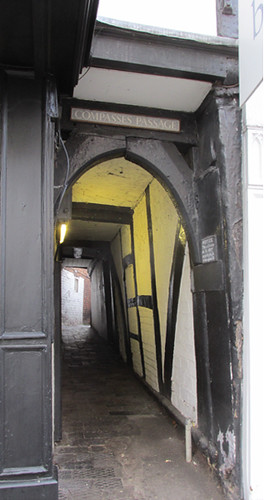
| Compass Passage, Shrewsbury |
Back when I was a young Anorak there was a short cut from our street to the centre of my village. It was a paved gap between two sets of houses and we always referred to it as "the snicket". I grew up in North Yorkshire, close to the east coast, but the word was my mother's, and she came from West Yorkshire; altogether closer to the spine of England. According to my recent research, snicket is actually a north western word, originating from the Lake District.
Ginnel/Jennel
My part of the world is apparently more likely to call such an alleyway a ginnel*, although it's not a word I heard until I moved to South Yorkshire. A friend who now lives in Sheffield (South Yorkshire) but is originally from Derbyshire, calls them jennels, which is clearly from the same source.
* Pronounced like give, not like gin.
Twitchel
I currently live in the East Midlands where, I'm reliably informed by the OED, that the term for a passage between houses is a twitchel. Its earliest recorded use was from the 15th century in Nottingham, and it's believed to be a variant of the Old English word twichen, which was used in Anglo Saxon charters for a place where two roads met.
Chare
Back up north in Durham and Newcastle upon Tyne they call them chares, and evidence comes from a 13th century map of Gateshead that included the street Potter's Chare. However, if you head south to Oxfordshire you'll find the obviously related words tchure, chure and chewer. They're all probably corruptions of the Old English cierr, meaning turning.
Wynd
And that brings us to Scotland, where they spoke a completely different language for many years and still sound as if they do in some parts of the country. Way up there alleyways are called wynds - pronounced like whined - and the origin might be similar to that of the word wind (as in to twist). Incidentally, narrow boat people talk about 'winding' when they turn a boat around. It's pronounced like the North Wind (doth blow, and we shall have snow, etc) and it takes a bit of getting used to when you first hear it regularly. But that's yet another glory of the English language!
Research from: http://blog.oxforddictionaries.com/2014/10/regional-words-alleyway/
This has been a Five on Friday post.
February 03, 2017
History sculptures
One thing I love is public sculpture that is, things that you find on the street, or the side of buildings, rather than having to go into a galery or museum to see.
Here, for Five on Friday, are a selection of statues or sculptures that commemorate something historical.
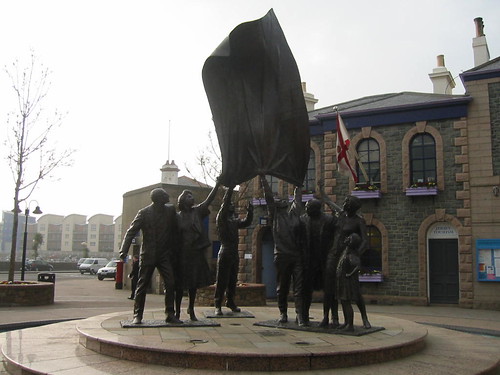
Jersey was the only part of the British Isles to be occupied by Germany during the second world war. This is a sculpture commemorating the liberation. It stands in a square in St Helier where the advance parties of the Royal Navy and British Army landed to drive out the German forces.
The design met with severe criticism from some sources because it shows a group of figures releasing doves of peace. any pointed out that conditions under German rule had been so strict that people were close to starvation and any doves on teh island would have been eaten!
It's by Philip Jackson. One of my favourite sculptors.
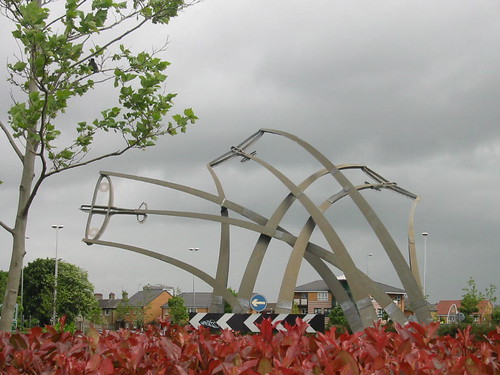
This one stands on a traffic roundabout in Birmingham, outside the Castle Bromwich Jaguar (engine) factory. It's called Sentinel, and it shows a number of Spitfire planes (which had Jaguar engines) taking off. It's by Tim Tolkien, great grand nephew of the Lord of the Rings author.
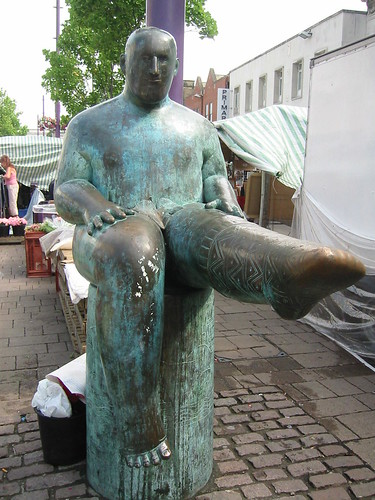
This bronze by Shona Kinloch sits in the market place in Loughborough (which just won an award for being one of the best outdoor markets in the country - and it is) and represents much more than the town's connection with the hosiery industry.
From the national public art record.....
"According to the sculptor, the 'sock pattern echoes the zig-zag of the new bollards in the Market Place, while the surrounding Art Deco buildings (e.g. the Curzon Cinema) inspired his deco hair cut'. On the figure's right arm is an incised tattoo of a heart above the word 'Loughborough' set within a scroll motif. The bollard on which he sits is decorated with incised images from the history of the town: a railway track and train, representing Thomas Cook's first tourist excursion from Leicester to Loughborough in 1842, a canal and barge representing the introduction of the Soar Navigation and Leicester Navigation in the eighteenth century, factories and sheep for the woollen industry, one of local agriculturalist Robert Bakewell's longhorn cattle, bells to represent the town's bell-founding industry, and the towers, etc. of Loughborough University. The sculptor has also commemorated the year in which she began the piece with an image of the Hale Bop comet."
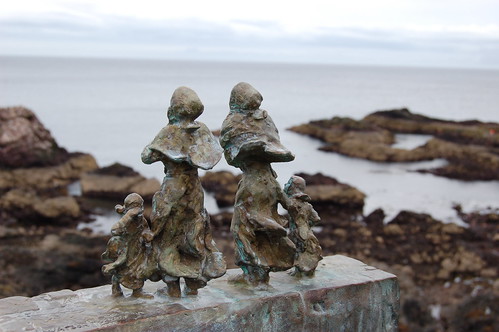
On the night of 14 October 1881 a terrible storm blew up off the east of Scotland that affected almost every fishing village along the coast.
The storm devastated the fishing fleet and 189 fishermen were drowned, many within sight of the shore. 129 were from Eyemouth, 24 from Burnmouth, 15 from Newhaven, 11 from Cove, 7 from Musselburgh, and 3 from Coldingham Shore (now called St Abbs) More than 70 women were widowed and 300 plus children left without fathers as a result.
This is one of a series of monuments that stand along the shore in the villages that lost their men. Erected to mark the 125th anniversary of the disaster. St Abbs Bronze sculpted by Jill Watson.
This photo fails to give any idea of the scale of this piece. It's huge: 35 feet high and 27 feet wide.
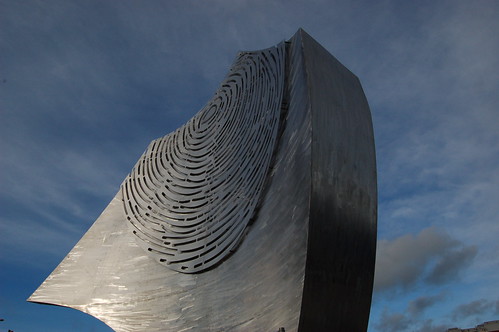
The sculpture in Tunstall, part of Stoke on Trent, stands at the centre of a new shopping precinct, which used to be the site of the old Wedgwood factory. It represents a shard of Roman pottery, carrying the potter's fingerprint, that was found in an underground kiln when the site was redeveloped. Truly this piece marks the centuries of pottery production in the area.
It's by sculptor Robert Erskine who very kindly contacted me after I posted this photo on Flickr wondering why it hadn't been made in ceramic. It wouldn't have worked, apparently, and certainly wouldn't have survived very long. The Tunstall Shard is stainless steel and should be good for a couple of centuries. It's also wonderful.
Here, for Five on Friday, are a selection of statues or sculptures that commemorate something historical.
Jersey was the only part of the British Isles to be occupied by Germany during the second world war. This is a sculpture commemorating the liberation. It stands in a square in St Helier where the advance parties of the Royal Navy and British Army landed to drive out the German forces.
The design met with severe criticism from some sources because it shows a group of figures releasing doves of peace. any pointed out that conditions under German rule had been so strict that people were close to starvation and any doves on teh island would have been eaten!
It's by Philip Jackson. One of my favourite sculptors.
This one stands on a traffic roundabout in Birmingham, outside the Castle Bromwich Jaguar (engine) factory. It's called Sentinel, and it shows a number of Spitfire planes (which had Jaguar engines) taking off. It's by Tim Tolkien, great grand nephew of the Lord of the Rings author.
This bronze by Shona Kinloch sits in the market place in Loughborough (which just won an award for being one of the best outdoor markets in the country - and it is) and represents much more than the town's connection with the hosiery industry.
From the national public art record.....
"According to the sculptor, the 'sock pattern echoes the zig-zag of the new bollards in the Market Place, while the surrounding Art Deco buildings (e.g. the Curzon Cinema) inspired his deco hair cut'. On the figure's right arm is an incised tattoo of a heart above the word 'Loughborough' set within a scroll motif. The bollard on which he sits is decorated with incised images from the history of the town: a railway track and train, representing Thomas Cook's first tourist excursion from Leicester to Loughborough in 1842, a canal and barge representing the introduction of the Soar Navigation and Leicester Navigation in the eighteenth century, factories and sheep for the woollen industry, one of local agriculturalist Robert Bakewell's longhorn cattle, bells to represent the town's bell-founding industry, and the towers, etc. of Loughborough University. The sculptor has also commemorated the year in which she began the piece with an image of the Hale Bop comet."
On the night of 14 October 1881 a terrible storm blew up off the east of Scotland that affected almost every fishing village along the coast.
The storm devastated the fishing fleet and 189 fishermen were drowned, many within sight of the shore. 129 were from Eyemouth, 24 from Burnmouth, 15 from Newhaven, 11 from Cove, 7 from Musselburgh, and 3 from Coldingham Shore (now called St Abbs) More than 70 women were widowed and 300 plus children left without fathers as a result.
This is one of a series of monuments that stand along the shore in the villages that lost their men. Erected to mark the 125th anniversary of the disaster. St Abbs Bronze sculpted by Jill Watson.
This photo fails to give any idea of the scale of this piece. It's huge: 35 feet high and 27 feet wide.
The sculpture in Tunstall, part of Stoke on Trent, stands at the centre of a new shopping precinct, which used to be the site of the old Wedgwood factory. It represents a shard of Roman pottery, carrying the potter's fingerprint, that was found in an underground kiln when the site was redeveloped. Truly this piece marks the centuries of pottery production in the area.
It's by sculptor Robert Erskine who very kindly contacted me after I posted this photo on Flickr wondering why it hadn't been made in ceramic. It wouldn't have worked, apparently, and certainly wouldn't have survived very long. The Tunstall Shard is stainless steel and should be good for a couple of centuries. It's also wonderful.
Labels:
14 October 1881,
Jaguar,
Jersey,
Loughborough,
Philip Jackson,
Robert Erskine,
sculpture,
Sentinel,
Shona Kinloch,
Spitfires,
St Abbs,
Stoke on Trent,
storm,
The Sock,
Tim Tolkien,
Tunstall Shard,
WWII
January 27, 2017
In Memoriam
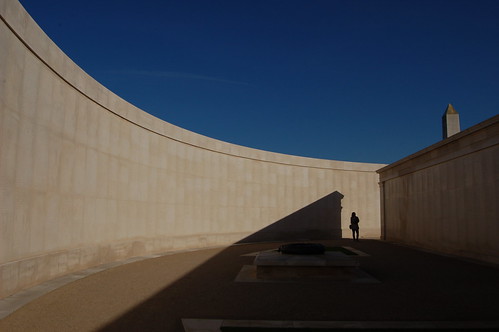
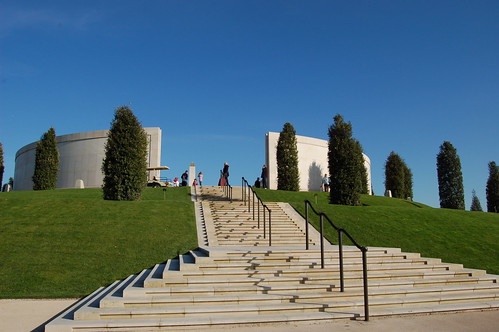
The National Memorial Arboretum at Alrewas in Staffordshire has a monument at its heart, the Armed Forces Memorial, that is still under construction.
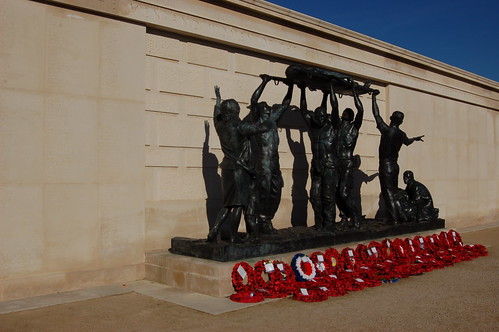
It is a vast enclosed space with sculptures representing the grief and loss that armed conflict causes. It consists of a circular wall with two straight walls across the centre. It is dedicated to the service men and women who have lost their lives in the course of their duty since the end of WWII. There are 224 columns of names with about 80 in each and the list continues to grow.
It is one of the most moving places I have ever been.
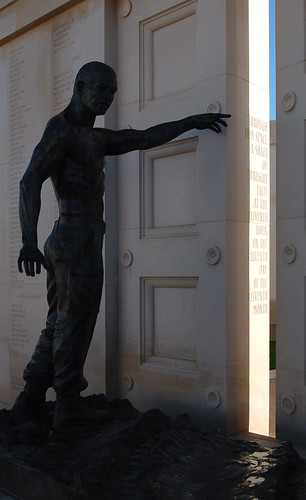
The atmosphere within the memorial is added to greatly by the skill of the sculptor - Ian Rank-Broadley. If you're British you are already familiar with his work, since he designed the portrait of the Queen on UK coinage introduced in 1998. He's one of my personal favourites and I first became aware of his work in 2002 when I saw some of his large pieces in a sculpture exhibition.
You probably can't read the words on the lit side of the wall, but it says: "Through this space a shaft of sunlight falls at the eleventh hour of the eleventh day of the eleventh month." And when it does shine through, it falls onto a bronze wreath.
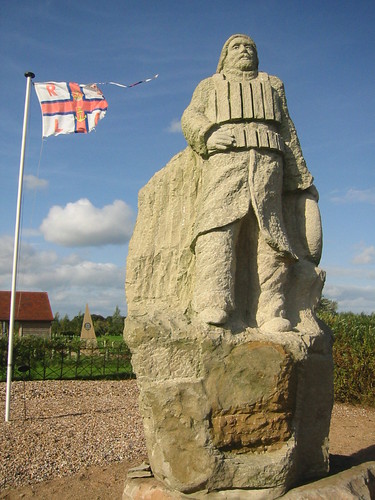
Although the memorial dominates the site, set as it is on top of a large mound, there are other monuments representing various armed forces and voluntary services, like this one commemorating the RNLI.
If you are ever within a sensible distance and you haven't already been, I recommend a visit.
This has been a Five on Friday post.
It is a vast enclosed space with sculptures representing the grief and loss that armed conflict causes. It consists of a circular wall with two straight walls across the centre. It is dedicated to the service men and women who have lost their lives in the course of their duty since the end of WWII. There are 224 columns of names with about 80 in each and the list continues to grow.
It is one of the most moving places I have ever been.
The atmosphere within the memorial is added to greatly by the skill of the sculptor - Ian Rank-Broadley. If you're British you are already familiar with his work, since he designed the portrait of the Queen on UK coinage introduced in 1998. He's one of my personal favourites and I first became aware of his work in 2002 when I saw some of his large pieces in a sculpture exhibition.
You probably can't read the words on the lit side of the wall, but it says: "Through this space a shaft of sunlight falls at the eleventh hour of the eleventh day of the eleventh month." And when it does shine through, it falls onto a bronze wreath.
Although the memorial dominates the site, set as it is on top of a large mound, there are other monuments representing various armed forces and voluntary services, like this one commemorating the RNLI.
If you are ever within a sensible distance and you haven't already been, I recommend a visit.
This has been a Five on Friday post.
January 20, 2017
Bricks
When was the last time you looked at a brick wall? I mean really looked at it. I know what you're thinking: "Why would I?" Well, there's a lot more to brickwork than you'd realise. Anyone who has heard the story of the Three Little Pigs knows that bricks create a safe and stable structure in which to live or store goods. But over the millennia of their history they have often been much more than that.
Back in Tudor times bricks were the preserve of the rich. The amount of work involved, in preparing the clay, shaping individual bricks, and firing them, made them an expensive material. Noblemen across England showed off their status by investing in vast brick mansions, often with contrasting-coloured patterns built in.
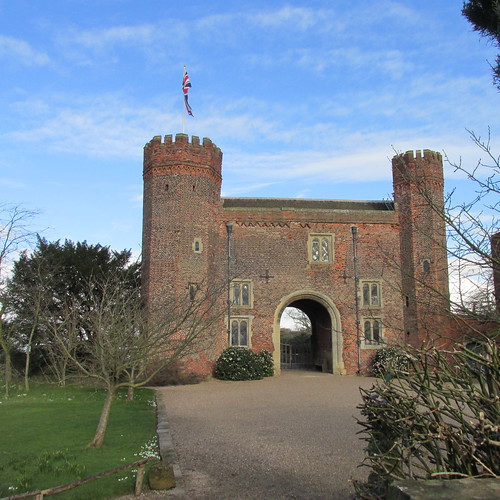
This is the gateway at Hodsock Priory near Blyth in Nottinghamshire. It dates from the early 16th century and gives a hint of how magnificent the actual house must have been. In spite of the name, Hodsock was never a Priory. The current house is a Victorian replacement, unfortunately.
Bricks have various specialist terms connected to them. For example, the long sides are called stretchers. The short sides are headers. The right-angled edges are called arisses. The dent where the mortar goes is called a frog. The brick height is called the gauge. Tudor bricks are typically much shallower gauge than modern ones.
Bricklaying patterns - or bonds - have changed over the years. For example, modern brickwork tends to be what's known as stretcher bond, where all the long edges face the front.
This mostly came about because of the advent of double skin houses with a cavity between the two walls. The idea was that an air gap would help insulate the house, because air is a poor conductor of heat. But the popularity of cavity wall insulation a few years ago has shown that wasn't true.
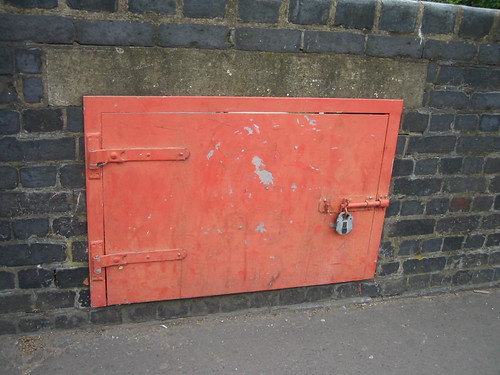
Earlier construction used different patterns. This, for example,
is a classic Victorian era bridge over the canal system in Birmingham. (The gate is to allow fire fighters to put hoses into the canal to use them as a water source.) You will notice that the bricks are in alternate courses of headers and stretchers. This is known as English bond. The wall is, of course, two bricks wide because the headers are twice the length of the stretchers. Other bonds include Flemish, which consists of rows of alternate headers and stretchers, with the headers centred on the mid-point of the stretchers,
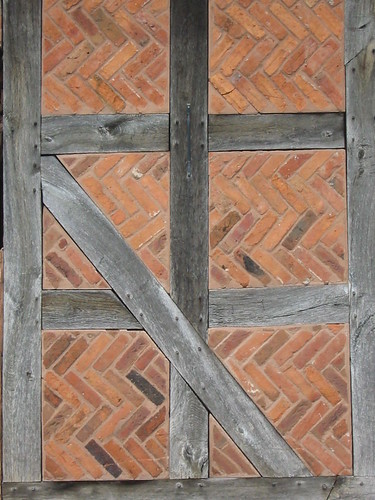
Here's another pattern - called herringbone. As you can see it's the infill in a half-timbered house. This was a Tudor way of having bricks more cheaply than using them for the whole wall. The infill is called nogging. Aren't brick words wonderful?
And finally we come to what is possibly the most interesting thing about bricks altogether. Some of them have names!
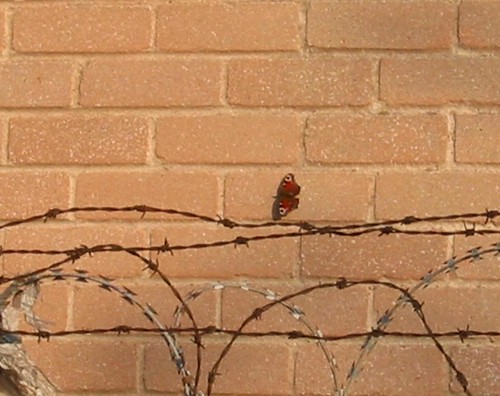
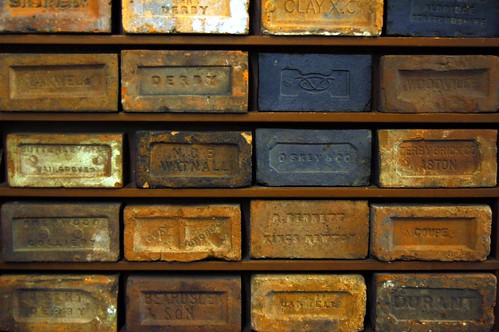
This collection can be found at Derby Silk Mill Museum and shows just a few of the makers who could be found in the area. As you can see, the names are mostly in the frog, or are on the surface that will be cemented against the next course. Not every brick has a name, and a very few have it on a surface that will be visible. And that's where the fun comes in. Sometimes you can find a name on a wall that tells you where the bricks came from. Like this:
(Bonus photo.)
Today's post has been created for Five on Friday.
Back in Tudor times bricks were the preserve of the rich. The amount of work involved, in preparing the clay, shaping individual bricks, and firing them, made them an expensive material. Noblemen across England showed off their status by investing in vast brick mansions, often with contrasting-coloured patterns built in.
This is the gateway at Hodsock Priory near Blyth in Nottinghamshire. It dates from the early 16th century and gives a hint of how magnificent the actual house must have been. In spite of the name, Hodsock was never a Priory. The current house is a Victorian replacement, unfortunately.
Bricks have various specialist terms connected to them. For example, the long sides are called stretchers. The short sides are headers. The right-angled edges are called arisses. The dent where the mortar goes is called a frog. The brick height is called the gauge. Tudor bricks are typically much shallower gauge than modern ones.
Bricklaying patterns - or bonds - have changed over the years. For example, modern brickwork tends to be what's known as stretcher bond, where all the long edges face the front.
This mostly came about because of the advent of double skin houses with a cavity between the two walls. The idea was that an air gap would help insulate the house, because air is a poor conductor of heat. But the popularity of cavity wall insulation a few years ago has shown that wasn't true.
Earlier construction used different patterns. This, for example,
is a classic Victorian era bridge over the canal system in Birmingham. (The gate is to allow fire fighters to put hoses into the canal to use them as a water source.) You will notice that the bricks are in alternate courses of headers and stretchers. This is known as English bond. The wall is, of course, two bricks wide because the headers are twice the length of the stretchers. Other bonds include Flemish, which consists of rows of alternate headers and stretchers, with the headers centred on the mid-point of the stretchers,
Here's another pattern - called herringbone. As you can see it's the infill in a half-timbered house. This was a Tudor way of having bricks more cheaply than using them for the whole wall. The infill is called nogging. Aren't brick words wonderful?
And finally we come to what is possibly the most interesting thing about bricks altogether. Some of them have names!
This collection can be found at Derby Silk Mill Museum and shows just a few of the makers who could be found in the area. As you can see, the names are mostly in the frog, or are on the surface that will be cemented against the next course. Not every brick has a name, and a very few have it on a surface that will be visible. And that's where the fun comes in. Sometimes you can find a name on a wall that tells you where the bricks came from. Like this:
(Bonus photo.)
Today's post has been created for Five on Friday.
January 13, 2017
Unlucky
Today is Friday the Thirteenth. Perhaps that isn't very important to you, but an awful lot of people are scared by the date. Some even go so far as to stay home to avoid potential disaster. But why? Many people think that the superstition is based on beliefs linked to the Last Supper. Indirectly, it is, because it does incorporate the old (17th century) idea that having 13 people sat at a dining table is bad luck. It also takes in the medieval belief that Fridays are unlucky in general. However, the first recorded mention of Friday 13th being specifically bad news is from 1913.1
Now, suppose your shoelace comes undone. Make sure you walk nine paces before you put it right, or you'll be tying bad luck to yourself all day. Don't blame me if you trip up before the nine paces are over. Broken bootlaces as an omen of ill luck date back to the 17th century, particularly if it happens just as you're about to set off on a journey. 2
A couple of weeks from now, 25 January to be exact, is St Paul's Day and you should watch the weather carefully because it forebodes what will happen in the future. Hope that it dawns fair, for that means this year will have a good harvest. However, rain or snow signifies scarcity or famine; clouds and mist will bring pestilence; and winds will blow in war. 3
Most people know better than to open an umbrella indoors, but did you also know that it's considered bad luck to drop a brolly? And under no circumstances should you pick it up yourself, although sources vary on what will happen if you do.1
Finally, you all know that a horseshoe is lucky, right? Well, maybe. It depends which way up you put it. In some parts of the country it should have the points upwards, to stop the luck running out, but i other areas you'll be blamed for offering the devil a seat if you nail it up that way. Always nail it, by the way, which ever way you decide to go, because the nails increase the luck! Family folklore.
1. Roud, Steve (2003) The Penguin Guide to the Superstitions of Britain and Ireland. Penguin, London.
2 Simpson, Jacqueline and Roud, Steve (2000) A Dictionary of English Folklore. Oxford University Press.
3. Various authors (1973) Folklore, Myths and Legends of Britain. Reader's Digest, London.
This post has been written for Five on Friday
January 06, 2017
Happy New Year Friday Fivers! And just for you, here are five 'new' things for your perusal.
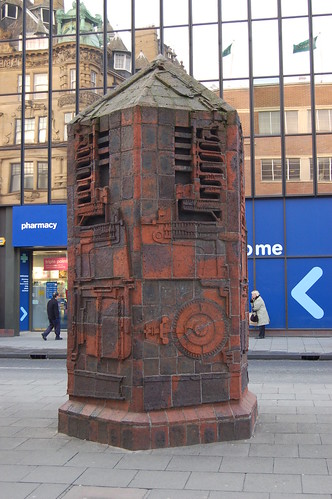
In Newcastle upon Tyne you will find Parsons Polygon. Designed by David Hamilton it's actually a ventilation shaft for Newcastle's Metro system. It commemorates Sir Charles Parsons (1854-1931) who designed Turbinia, a steam powered ship. The shapes in the terracotta tiles are taken from his engineering drawings.
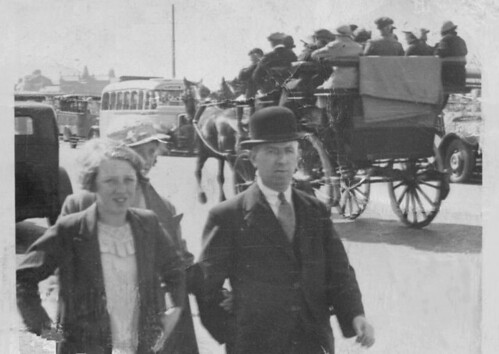
Here's a very old photo of New Brighton. (That's on the Wirral side of the Mersey, in case you don't know.) I estimate it's about 1933, which would make my mum (yes, that's my mum on the left) about 10. Doesn't my grandad look smart in his bowler?
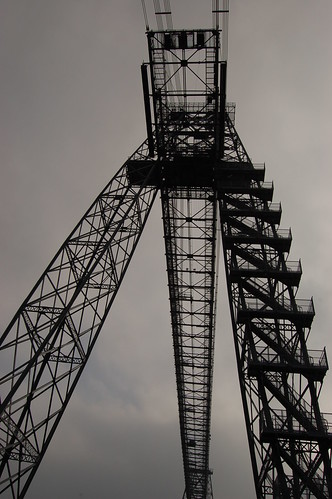
Here's a rather arty shot of the Newport (Gwent) transporter bridge. Opened 1906. Newport transporter bridge crosses the River Usk at a point where an arched bridge would have been too steep and a lifting bridge would have hindered shipping. A gondola is suspended from the deck and is hauled across the river by cable. The towers are 242 feet high and the crossing is 593 feet.
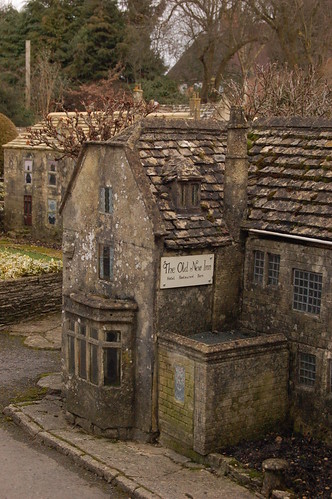
In the Cotswold village of Bourton on the Water you'll find a pub called the Old New Inn (to differentiate it from the New New Inn!) and behind it you'll find a model village. And in the model village you'll find a model of the Old New Inn. (You'll also find a model of the model village, which has its own model village!)
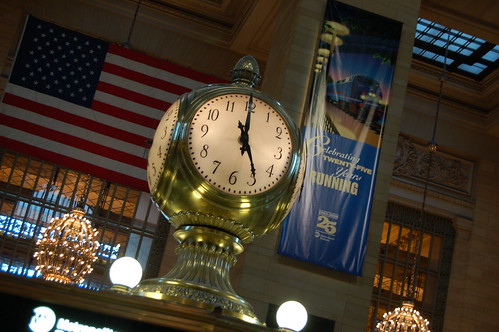
Grand Central Station is possibly New York's most famous transport hub. It began life as Grand Central Depot and served trains from the New York Central and Hudson River Railroad, New York and Harlem Railroad and the New York and New Haven Railroad. It first opened in 1871. Between 1899 and 1900 the main building was overhauled and the edifice was renamed. Here's the iconic clock from the central hall.
For more Friday fives visit Amy's blog, Love Made My Home.
In Newcastle upon Tyne you will find Parsons Polygon. Designed by David Hamilton it's actually a ventilation shaft for Newcastle's Metro system. It commemorates Sir Charles Parsons (1854-1931) who designed Turbinia, a steam powered ship. The shapes in the terracotta tiles are taken from his engineering drawings.
Here's a very old photo of New Brighton. (That's on the Wirral side of the Mersey, in case you don't know.) I estimate it's about 1933, which would make my mum (yes, that's my mum on the left) about 10. Doesn't my grandad look smart in his bowler?
Here's a rather arty shot of the Newport (Gwent) transporter bridge. Opened 1906. Newport transporter bridge crosses the River Usk at a point where an arched bridge would have been too steep and a lifting bridge would have hindered shipping. A gondola is suspended from the deck and is hauled across the river by cable. The towers are 242 feet high and the crossing is 593 feet.
In the Cotswold village of Bourton on the Water you'll find a pub called the Old New Inn (to differentiate it from the New New Inn!) and behind it you'll find a model village. And in the model village you'll find a model of the Old New Inn. (You'll also find a model of the model village, which has its own model village!)
Grand Central Station is possibly New York's most famous transport hub. It began life as Grand Central Depot and served trains from the New York Central and Hudson River Railroad, New York and Harlem Railroad and the New York and New Haven Railroad. It first opened in 1871. Between 1899 and 1900 the main building was overhauled and the edifice was renamed. Here's the iconic clock from the central hall.
For more Friday fives visit Amy's blog, Love Made My Home.
Subscribe to:
Posts (Atom)